What should you look for when choosing?
First decide whether you want to focus on the product’s fat content, the amount you eat at each snack break, how easy it is to take with you, or the ingredients and preparation method.
| What to consider |
What should you check? |
Who is this important for? |
| Fat content and preparation claims |
Compare total fat per 100 g. Assess ‘no added fat’ separately from the total fat content. |
If I want to eat less fat, I check the nutrition table rather than relying on the preparation method alone. Around 36% of consumers prioritise total fat content. |
| Amount per portion |
Weigh out the amount and calculate the fat content using the nutritional information for that exact product. |
If I want to keep eating ordinary nuts, I want to decide for myself how much to take with me. Around 29% of consumers prioritise portion control. |
| Taking it with you and storage |
Check the pack size, whether the packaging can be resealed and the storage instructions on the label. |
If I want to take a snack with me and store it while travelling, I look for packaging that suits my journey. Around 21% of consumers prioritise convenience when travelling. |
| Ingredients and preparation |
Check whether the variety is unsalted, unroasted or roasted, and read the allergen information. |
If the ingredients or preparation method determine my choice, I check the exact variant and its label. Around 14% of consumers make this their top priority. |
Joybuy products for on the go
This selection includes chestnuts with a stated fat content below the European threshold for a ‘low fat’ claim, as well as ordinary nuts that you can portion yourself. Unsalted, roasted or unroasted doesn’t in itself mean low fat.
 No image available
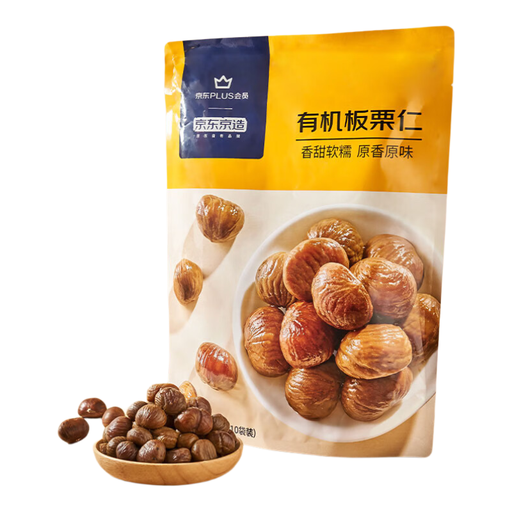
J.ZAO S++ Grade Whole Chestnuts, 1 kg, 10 zakjes
A chestnut alternative for anyone keeping an eye on total fat content; the product information says these peeled chestnuts are ready to eat.
The product information lists 1.7 g of fat and 0 g of salt per 100 g, in 10 bags of 100 g. The European Commission sets a maximum of 3 g of fat per 100 g for solid foods to qualify for a ‘low fat’ claim.
View at Joybuy
 No image available
g’woon Cashew Nuts Roasted & Unsalted, 200 g
A roasted, unsalted cashew option for anyone who wants to take ordinary nuts with them and choose their own portion; this isn’t a low-fat option.
The product information lists 46.67 g of fat per 100 g. Unsalted doesn’t mean that no oil has been added.
View at Joybuy
 No image available
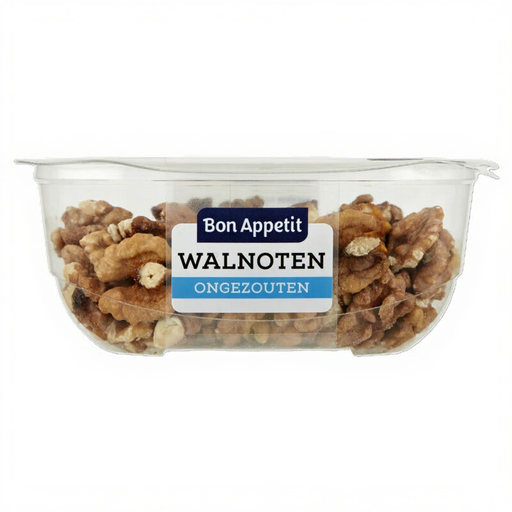
Bon Appétit Walnuts Unsalted, 110 g
Unsalted walnuts for anyone who wants to weigh out their own portion. Bear in mind that, according to the product information, they’re in their shells and need cracking first.
The product information lists 64.3 g of fat per 100 g.
View at Joybuy
 No image available
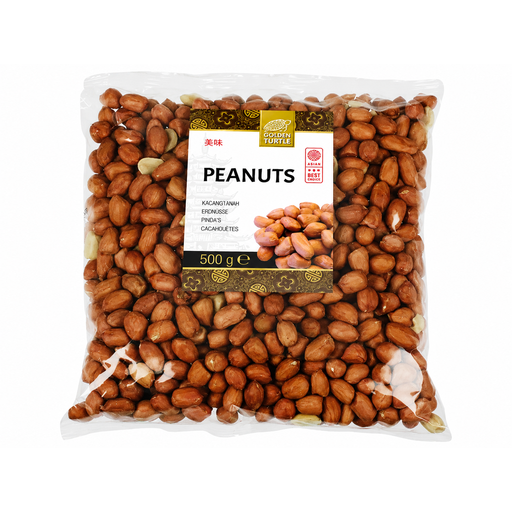
Golden Turtle Premium Raw Peanuts with Skin, 500 g
An option for anyone who wants to prepare and portion their own peanuts; the product information says they’re unroasted and need to be roasted before eating as a snack.
The product information lists 49 g of fat per 100 g. Remember to allow for the extra preparation before taking them with you.
View at Joybuy
 No image available
g’woon Unsalted Peanuts, 250 g
Unsalted peanuts for anyone who wants to take an everyday snack with them and choose their own portion; unsalted doesn’t mean free from added oil.
The product information lists 50 g of fat per 100 g and sunflower oil among the ingredients.
View at Joybuy
Frequently asked questions
When can a nut snack be described as ‘low fat’?
In the EU, a solid food must contain no more than 3 g of fat per 100 g to carry a ‘low fat’ claim, according to the European Commission. This is a condition for making that claim, not personal portion advice.
Does ‘no added fat’ mean the same as ‘reduced fat’?
No. A claim about how a product is prepared, stating that no oil or fat has been added, doesn’t tell you how much total fat it contains. Duyvis makes this claim for Oven Baked Peanuts Original; check the total fat content separately on the packaging.
How do I work out how much fat is in the portion I take with me?
Multiply the fat per 100 g shown on the packaging by the weight of your portion, then divide by 100. Use the nutritional information for the exact product, not a general figure for all nuts.
What should I look out for if I have a food allergy?
Check the allergen information on the packaging of the exact variant. The Netherlands Food and Consumer Product Safety Authority says that allergen information must appear on the label of prepacked products; peanuts and nuts are separate allergens.
Is a 200 or 250 g bag one snack portion?
No. 200 and 250 g are pack sizes, not a guide to a single snack portion. For example, the Netherlands Nutrition Centre uses 25 g as a reference serving for unsalted nuts; weigh out separately the amount you want to take with you.


