
Vandaag of morgen in huis

Kwaliteit gegarandeerd

Welkomstaanbiedingen ontgrendelen: GRATIS bezorging | Tot 80% korting | Gratis 30 dagen JoyPlus-proefperiode
Download de app
A nut mix might seem straightforward: pick a bag, put it on the table and you’re done. But mixed nuts, cocktail nuts and savoury snacks vary widely in their composition, flavour, portion size and allergens. A colourful packet, for instance, tells you very little about the actual nut content. Some products are mostly peanuts, starch or a crispy coating.
Words like “mild”, “natural” or “healthy” also deserve a closer look. So always check the ingredients list and nutritional information table before you buy a nut mix online.
With cocktail nuts and savoury snacks, peanuts often make up the largest share. The rest can be potato or corn starch, oil, sugar and spices. That’s not necessarily a problem, but it does give the product a different character from a mix with almonds, walnuts, cashews and hazelnuts.
Check the quantitative ingredient declaration. If it says, for example, 50% peanuts, you know the mix is mostly peanuts. With a genuine mixed nut blend, you’ll usually see several nut varieties listed with their percentages.
Unsalted nuts contain little or no added salt, but nuts are naturally energy-dense. That’s also true for unroasted or raw nuts. So portion size still matters. A product with small individual sachets can help you avoid eating a large portion of the pack without realising it.
Pay attention to the difference between:
Legally, peanuts are a different allergen from tree nuts. What’s more, wheat, milk, soya, celery, mustard and sesame can be present in the spice layer or flavourings. So read both the bold allergen information and the full ingredients list. If you have an allergy, the current packaging is what counts, because recipes can change.
Start by looking at the first three ingredients. Ingredients are listed in descending order by weight. A product with 30% hazelnuts, 30% walnuts, 20% almonds and 20% cashews has a very different composition from a snack with 50% peanuts and a spiced starch coating.
For a natural nut mix, a short ingredients list and a clear breakdown are practical indicators. For a savoury mix, it might be the spices, coating and extra crunch that make you choose that product.
Compare the values per 100g, not just per portion. Across the range, the stated salt levels vary widely. The g'woon Nut Mix Raw & Unsalted lists 0.01g of salt per 100g, while the g'woon Spicy Cocktail Nuts lists 2.1g. So your flavour choice is also a nutritional choice.
Also check:
These figures aren’t a judgement on the product, but they help you compare salted nuts, unsalted nuts and spiced varieties fairly.
For sharing with several people, 275 to 300g is practical. A 115g pack with five 23g portions fits better in a bag, desk drawer or lunchbox. A pot or bag that reseals well helps keep the contents crunchier for longer. Store nuts according to the label: cool, dry and out of direct sunlight.
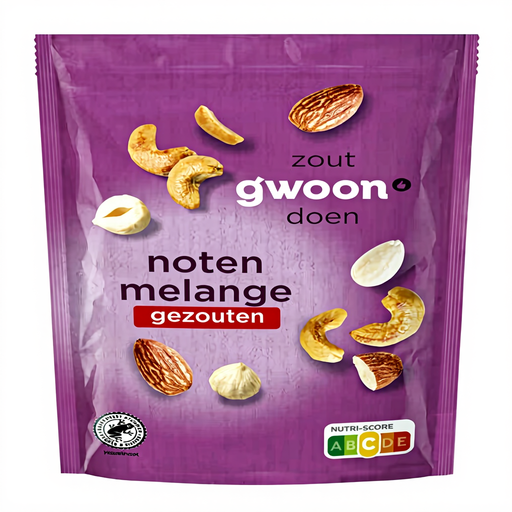
Why this fits the profile: A compact pack for anyone wanting to try a spiced snack without buying a large quantity straight away. The product description mentions a Japanese-style mix, designed for sharing.
The weight is clearly stated. Do check the ingredients list: the product information mentions corn starch, peanuts, wheat, soya and sesame. The allergen information on the product page and the ingredients list don’t appear to match fully, so check the packaging.
150g, resealable for storage according to the product information, and a distinctive spiced flavour.
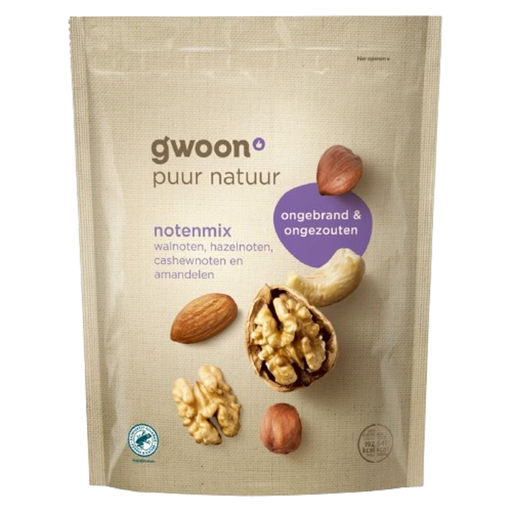
Why this fits the profile: Ideal for anyone looking for an unsalted nut mix with a clear composition for snacking, cooking or adding to yoghurt.
The product information lists four nuts with fixed percentages: 30% hazelnuts, 30% walnuts, 20% almonds and 20% cashews. There’s no extensive spice layer.
200g, raw and unsalted according to the product description; stated salt content 0.01g per 100g.
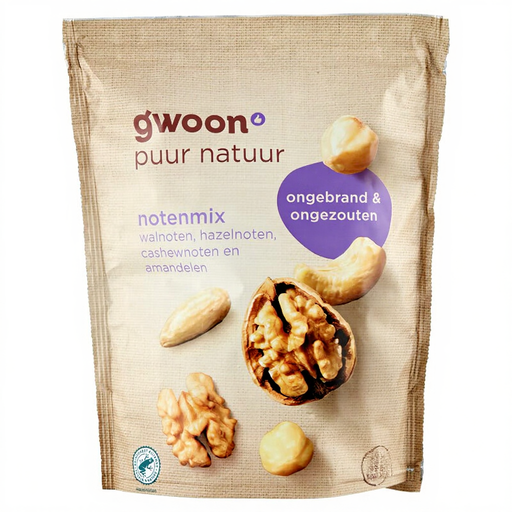
Why this fits the profile: A large size for households, meal preppers or enthusiasts who regularly use nuts in cooking and snacks.
The composition is specific: hazelnuts, walnuts, almonds and cashews. According to the description, the product is unroasted and unsalted. If you have allergies, check the mention of peanuts and other nuts as possible traces.
500g, four clearly named nut varieties and, according to the product information, Rainforest Alliance certified.

Why this fits the profile: Five individual 23g sachets are handy for work, travel or a snack on the go.
The portions are pre-divided, so you don’t have to take the whole pack with you. According to the product information, the mix contains walnuts, cashews, almonds, hazelnuts and dried fruit.
115g total, five portion packs and 0.03g salt per 100g according to the stated nutritional information.
We’ve put together a full, up-to-date list of products that fully meet these strict selection criteria and comply with current European safety regulations.
For a drinks party, salted nuts, cocktail nuts and savoury snacks are common choices. A 275 to 300g pack is practical when several people are sharing. Look at the flavour beforehand: mild, BBQ paprika, Oriental or spicy. Also check allergens if you’re serving the mix alongside cheese, crackers or other nibbles.
Unsalted nuts generally contain little added salt, but they are still energy-dense. So “healthy snack” isn’t a free pass to eat unlimited amounts. Compare the salt content, portion size and ingredients. A simple mix without a coating can suit someone who wants fewer added flavourings or less salt.
Store an opened pack tightly sealed in a cool, dry place, out of direct sunlight and away from heat and moisture. Use the best-before information on the pack as a guide. If in doubt, don’t taste or smell further; a musty smell, soft texture or damaged packaging is a reason not to use the product.
