
Vandaag of morgen in huis

Kwaliteit gegarandeerd

Welkomstaanbiedingen ontgrendelen: GRATIS bezorging | Tot 80% korting | Gratis 30 dagen JoyPlus-proefperiode
Download de app
Making your own nut milk sounds simple: add ingredients, press a button and you’re done. In practice, differences in capacity, programmes, cleaning and materials can have a big impact on how easy it is to use. A nut milk maker can also be used as a soya milk maker, almond milk maker or plant-based drink maker for things like oat and rice drinks.
Before you buy an appliance, it’s therefore wise to look beyond terms like “multifunctional” or “powerful motor”. The product description should make clear what the machine can actually do and what limitations come with it.
A roomy jug might seem handy for families, but always check the usable capacity and the stated minimum and maximum levels. An appliance of around 1 litre is suitable for several glasses, while a 300 ml model is more intended for one person. A larger capacity also takes up more worktop space and can be heavier to clean.
Some machines are marketed as appliances for making nut milk without straining. According to the IAGREEA product description, certain models are designed for a smooth drink without a separate straining step. However, the final texture also depends on the ingredients, the amount of water and the programme selected. So check whether the appliance has a suitable grinding programme and read the instructions before processing hard nuts or grains.
A self-cleaning nut milk machine can save time, but a cleaning programme doesn’t automatically clean every part. Residue can remain around the lid, the seal and the blades. After each use, check whether parts can be removed according to the manual and whether they need to be rinsed by hand. The motor base must not be submerged in water.
For a household, these guidelines are practical:
A larger capacity is particularly useful if you make plant-based milk daily. For occasional use, a smaller model may be sufficient.
If you want to make warm soya milk, oat milk or rice porridge, you need an appliance with a heating function. Check whether heating and grinding are combined automatically and whether the appliance can also make cold drinks.
Useful programmes include:
Bear in mind that a programme for oat milk is not the same as a programme for raw soya beans. Always follow the manufacturer’s preparation method. Claims about taste, nutritional value or a longer motor lifespan are not established facts; treat them as information from the brand’s product description.
For parts that come into contact with the drink, food-safe materials are relevant. The product description of some IAGREEA models mentions BPA-free plastic, and another model has a 304 stainless steel interior. Check whether this specification applies to the whole appliance or only to a specific part.
Also look out for:
A CE marking or mention of food-safe material should not be confused with a guarantee of a particular result. Check the product specifications and documentation yourself.
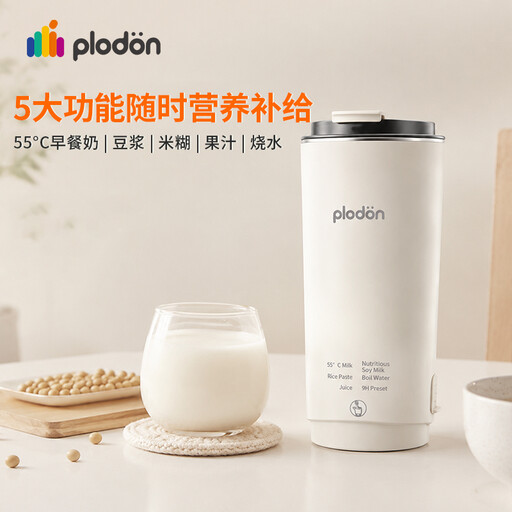
Why this fits the profile: The 300 ml capacity suits one person, a small household, office or student room. According to the product description, the model features functions for soya milk, nut milk, juice, rice porridge and boiling water.
The smaller capacity prevents you from buying a large appliance for portions you don’t need. The automatic cleaning function can reduce maintenance, but check the blades and seal after use.
300 ml capacity, 300 W heating power, 75 W grinding power, 9-hour timer and a 304 stainless steel inner reservoir according to the product description.
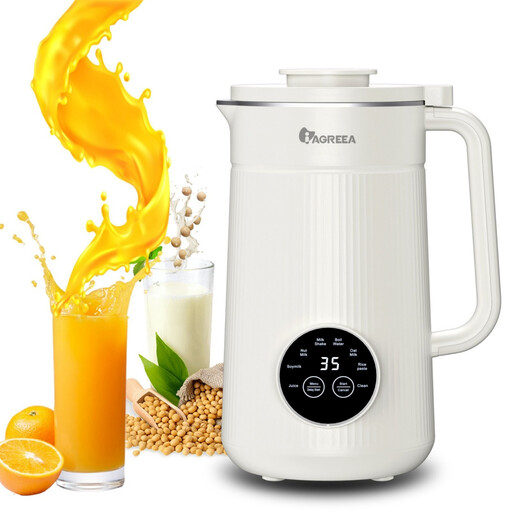
Why this fits the profile: This model is aimed at households that regularly make different plant-based drinks and hot preparations. The product description mentions nut milk, soya milk, oat milk, juice, rice porridge and boiling water, among others.
The stated 1,000 ml capacity and the automatic cleaning programme make daily preparation more manageable. Do check whether the jug is small enough for your worktop and sink.
10 blades, 800 W heating power, a timer up to 12 hours, keep-warm function and, according to the product description, a food-safe 304 stainless steel interior.
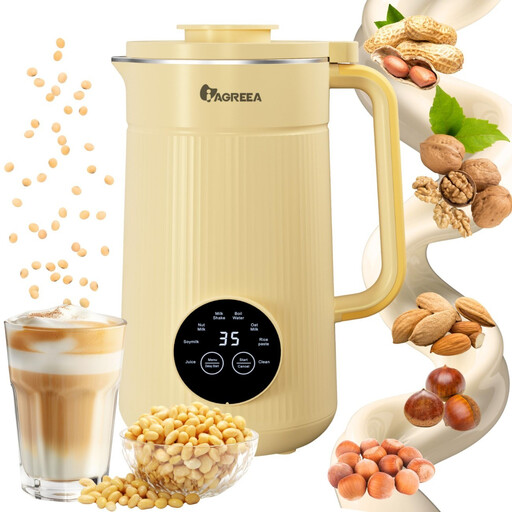
Why this fits the profile: This appliance suits users who want one kitchen gadget for both hot and cold drinks. The manufacturer mentions a 12-hour delayed start and multiple automatic programmes.
The programmes make it clearer what the appliance is intended for, while the timer allows you to prepare the evening before. Check the manual for maximum usage frequency and cleaning.
According to the product description: 1,000 ml capacity, 36,000 rpm motor, 800 W heating, keep-warm function and an automatic cleaning cycle of approximately one minute.
We’ve put together a full, up-to-date list of products that fully meet these strict selection criteria and comply with current European safety regulations.
Start with the amount you actually drink. For almond milk or other nut milks, you can weigh ingredients in advance and add them according to the manual. With a model that has a delayed start, only add the ingredients after you’ve checked that the timer is suitable for the chosen drink.
Keep these points in mind:
Making your own plant-based milk can work out cheaper than shop-bought drinks, but that depends on the price of nuts, beans, oats, electricity and the purchase price of the machine. An appliance with a timer and self-cleaning mainly saves time; it doesn’t automatically reduce the overall cost.
You can if the appliance has an oat milk programme or if the manual allows the use of oats. The structure of oats is different from that of nuts. So use the recommended ratio and don’t process the drink for longer or at a higher temperature than specified.
The lifespan depends on frequency of use, cleaning, motor load and storage. An appliance that processes hard ingredients daily puts more strain on the blades and motor than occasional use. Follow the warnings about consecutive cycles, allow the appliance to cool down when instructed and do not use a damaged jug or cable.
The costs consist of ingredients, electricity and maintenance. Water is generally not the biggest expense; nuts and soya beans are the main factor in the price per litre. So don’t just compare the purchase price of the machine, but also the portion size and how often you’ll actually use the appliance.
