What should you look for when choosing?
Start by setting up a test shot with your current camera or phone. If you then run into a specific limitation, you can choose more confidently between a standard lens for full-book shots and a close-up or macro lens for small details.
Existing smartphone or compact camera
Choose this if: you mainly photograph the whole notebook and want to see what good lighting and a fixed position can do first.
Bear in mind: lens-changing and close-up options vary by device, so test the focus and framing.
Mirrorless camera with standard lens
Choose this if: you take full-book shots regularly and value manual settings or the option to use a different lens later.
Bear in mind: the camera body and lens are separate parts of your decision. Check that the lens can fit the whole book in the frame from your shooting distance.
Mirrorless camera with close-up or macro lens
Choose this if: you want to photograph small details such as stitching or embossing separately, and your current lens can’t focus closely enough.
Bear in mind: check the lens mount and working distance. Focusing becomes more critical at close range.
| What to consider |
What should you check? |
Who is this important for? |
| Consistent full-book shots |
Test whether the whole book fits in the frame, with some room to spare, from the available height. Check that you can position the camera securely above the table. |
If I’m photographing several versions, I want to be able to reproduce the same framing. Around 29% of consumers particularly value consistent full-book shots. |
| Cover and paper colours |
Check whether you can set the white balance. Take a test shot under the lighting you plan to use for the series and compare it with the actual material. |
I want the paper and cover to look true to life in the photos, even when I’m taking a series. For around 29% of consumers, colour reproduction is a top priority. |
| Sharp close-ups |
Compare the maximum magnification and working distance of the exact lens. Check the mount and whether you can light the detail you want to photograph effectively. |
For anyone who mainly wants to show tiny finishing details, lens choice is crucial. Around 21% of consumers focus primarily on close-ups like these. |
| Overall set-up |
First, take a full-book shot and a detail shot with your current equipment. Then compare the camera body, lens, tripod and lighting you need as one complete set-up. |
If I first want to find out whether my current camera or phone is good enough, I want to be able to weigh up the overall cost. Around 21% of consumers are mainly looking to keep additional spending down. |
Cameras at Joybuy
These cameras offer different options for framing and still-life product photography. For each version, check that the lens and controls suit the full-book or detail shots you want to take.
 Image unavailable
Komery W6 digital camera, 12× optical zoom, 4K
The stated 12× optical zoom gives you different framing options. Take a test shot to check whether you can capture the whole notebook in sharp focus.
The product name lists 12× optical zoom and 4K.
View at Joybuy
 Image unavailable
DJI Osmo Pocket 3
The product description mentions focusing for still images. Try it in a test set-up to see whether the camera works well for your fixed product framing.
The description lists a 1-inch CMOS sensor and a 2-inch rotatable touchscreen.
View at Joybuy
 Image unavailable
Sony ZV-E10 + 16-50mm Zoom Black
The included zoom lens gives you framing options. Check whether it can capture the whole notebook from your shooting distance.
The product description lists a 24.2 MP APS-C sensor, Sony E mount and a 16–50mm lens.
View at Joybuy
 Image unavailable
Sony Alpha A6100 + 16-50mm f/3.5-5.6 OSS II
According to the product description, the kit includes a zoom lens for adjusting the framing. Test whether it can also capture the close-up you want in sharp focus.
The description lists a 24.2 MP APS-C sensor, Sony E mount, touchscreen and electronic viewfinder.
View at Joybuy
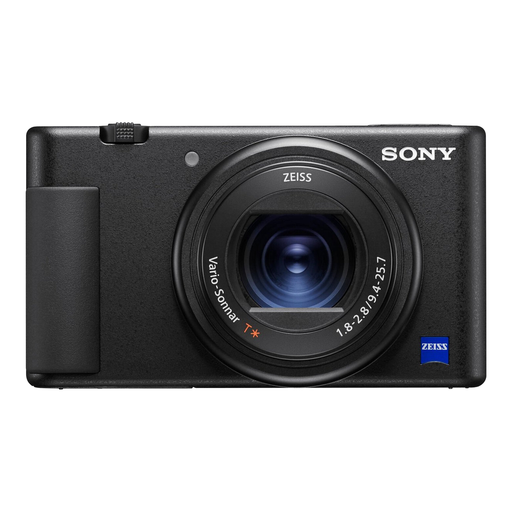 Image unavailable
Sony ZV-1 compact camera
This compact model could be a good option if you don’t want to choose a separate lens. Take a test shot to check whether close-ups are sharp enough to show your details.
The product specifications list 2.7× optical zoom, a tilting screen and RAW recording.
View at Joybuy
Frequently asked questions
Do you need a macro lens to photograph the whole notebook?
No. For a full-book shot, you just need a lens that can capture the whole book in sharp focus from your shooting distance. Consider a higher magnification if small details aren’t clear enough with that lens; 1:1 and 1:2 are different maximum magnifications.
How can you keep the colour consistent across a series of cover photos?
Keep the lighting as consistent as possible, avoid mixing daylight and artificial light where you can, and check the white balance again whenever the lighting changes. Take a test shot next to the actual material before photographing a whole series.
What extra costs and warranty rights should you check when buying a camera?
Check whether you’re buying a body on its own or a kit with a lens, and allow for any studio equipment you may need. According to the Dutch government, there’s no fixed statutory warranty period in the Netherlands; your statutory warranty is separate from any additional manufacturer’s warranty. The 14-day statutory cooling-off period for online consumer purchases doesn’t automatically apply when you buy the camera for your business as a business owner.
Can you post photos of your notebooks online if they show people or images belonging to someone else?
It depends on what’s in the photo and how you use it. According to the Dutch Data Protection Authority, commercial photos featuring identifiable people need an applicable legal basis under the GDPR. Consent is one possible example, but it isn’t the only legal basis. The Dutch government says you need the creator’s permission to publish copyrighted images. This isn’t a general ban on product photography.


