What should you look for when choosing?
Start with the framing you want. Then decide whether your existing equipment will do the job or whether you need a different lens or camera.
| What to consider |
What should you check? |
Who is this most relevant to? |
| Small craft details |
Check how close the specific lens can focus, and test the smallest details you want to photograph from your working distance. |
If I want to show stitching or paper texture on its own, the lens needs to capture that detail clearly on my workbench. Around 33% of consumers give small craft details the highest priority when buying. |
| Paper and cover colours |
Check whether you can adjust the white balance and whether RAW capture is available if you want to edit the images afterwards. |
When I compare paper and cover colours at different times, I want to keep the lighting conditions and colour settings as consistent as possible. Consistent colour reproduction is a priority for around 27% of consumers. |
| Repeatable overview shots |
Check whether a tripod or other stable support will fit in the shared workspace. Also check whether the camera has a self-timer or remote control. |
If I want to photograph several notebooks with the same framing, a fixed camera angle helps me keep my set-up consistent. Around 20% of consumers consider a repeatable shooting angle the most important factor. |
| Space and spending |
First try your existing device with even lighting and an uncluttered background. If you are buying, compare the complete kit, including the lens. |
If I share the workbench with others, I want to be able to pack my equipment away easily and avoid buying a new camera before I know what my current device cannot do. Around 20% of consumers are most keen to limit the space they need and their spending on new equipment. |
Camera brands to consider
The features mentioned apply to the specific kits and lenses below; they are not a general assessment of each brand.
Canon
The EOS R50 kit with RF-S 18-45mm is an option for overview shots if you are looking for a mirrorless camera with a standard zoom lens.
- Canon lists a 24.2-megapixel APS-C sensor and a vari-angle screen for this kit.
- The included RF-S 18-45mm lens is not a dedicated macro lens, so check its close-up capabilities for the details you want to capture.
Nikon
The Z50II kit could suit you if you want the option of choosing a lens for smaller details later on.
- Nikon discusses a separate NIKKOR Z MC 50mm f/2.8 for close-ups and recommends using a tripod for small subjects.
- The Z50II kit described includes two zoom lenses and no specified macro lens. Consider whether you need the extra telephoto zoom for photos at your workbench.
Sony
The ZV-E10 II kit is worth considering if you want to film the making process as well as take photos.
- For the selected kit variant, Sony lists an interchangeable E-mount lens and an included 16-50mm power zoom lens.
- The kit name alone does not tell you whether the lens can capture the smallest binding details clearly from your working distance.
Cameras at Joybuy
This selection includes compact cameras and cameras with zoom lenses to consider for overview shots and different framings of notebooks.
 No image available
KOMERY G7 5K digital camera, 80 MP, 18X zoom
Worth considering if you are looking for a point-and-shoot camera for different framings of complete notebooks.
The product title lists 5K UHD, 80 MP and 18X zoom. These are stated product specifications, not independent measurements. Check the focusing distance if you want to photograph small binding details.
View at Joybuy
 No image available
Komery W6 camera, 12X optical zoom, 4K, 64 MP
The zoom could be useful if you want to try different framings without moving the camera.
The product title lists 12X optical zoom, 4K, 64 MP and Wi-Fi. For close-ups, check that the lens can focus at your working distance; these specifications alone do not tell you that.
View at Joybuy
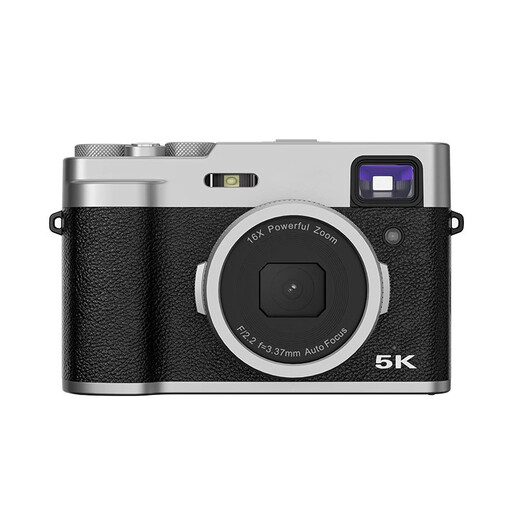 No image available
Songdian compact digital camera, 48 MP
A compact camera to consider if you are looking for an easy-to-store option for overview shots.
The product title lists 48 MP, 5K Ultra HD, a 2.8-inch LCD screen and an optical viewfinder. Check the close-up capabilities of the exact model before photographing small details.
View at Joybuy
 No image available
Sony ZV-E10 with 16-50mm zoom lens
The interchangeable lens could suit you if you want to try different framings and may consider another compatible lens later on.
The product description lists a 24.2 MP APS-C sensor, a vari-angle screen and an included 16-50mm power zoom lens. It also mentions a Product Showcase setting; check whether the camera can focus on your small details.
View at Joybuy
 No image available
Sony Alpha A6100 with 16-50mm f/3.5-5.6 OSS II
The included zoom lens gives you different framings to try for overview shots of notebooks.
The product description lists a 24.2 MP APS-C sensor, 4K video, an electronic viewfinder and a tilting screen. Check the lens’s focusing capabilities before relying on it for close-ups of paper or binding details.
View at Joybuy
Frequently asked questions
Do you need to buy a macro lens for every notebook?
No. Start with the lens you already have and try the framing you want. If the paper texture or binding stitches do not appear large enough, compare that lens’s focusing capabilities with those of a dedicated close-up lens.
How can you keep photos taken under workshop lighting consistent?
Keep the camera angle, background and lighting set-up as consistent as possible. Check the white balance if the colours look different. RAW files can give you more scope to adjust images later, but they do require editing.
What are the rules on returns and warranties in the Netherlands?
When you buy online as a consumer, you generally have up to 14 days after delivery to change your mind; ACM ConsuWijzer notes that exceptions may apply. Check the terms and conditions for your purchase. Your statutory guarantee is separate from any seller’s guarantee and depends on what you could reasonably expect from the product with normal use. If you are buying on behalf of a business, do not automatically assume it counts as a consumer purchase.
Can you take recognisable photos of other people in a shared workshop?
Images of identifiable people may contain personal data. The Dutch Data Protection Authority advises taking account of the rules on capturing and publishing images. Where possible, photograph the notebook without other people being recognisable, and do not assume that sharing the workspace in itself means you have their permission.


