
Vandaag of morgen in huis

Kwaliteit gegarandeerd

Welkomstaanbiedingen ontgrendelen: GRATIS bezorging | Tot 80% korting | Gratis 30 dagen JoyPlus-proefperiode
Download de app
A notebook might seem like a simple purchase, but you often only notice a wrong choice during daily use. The paper can be too thin for your pen, the cover can crease easily, or a spiral binding can become awkward when you write a lot. You might also pay for accessories you never use, while the size or number of pages doesn't match your purpose.
With these points in mind, you can compare a notebook on practical features rather than just its cover and colour.
A pretty cover makes a notebook attractive, but it says little about writing comfort. Always check the paper weight, layout and binding. A decorative hardcover is handy for protection, but can be heavier than a softcover when you carry the book daily.
A product might contain 50 sheets, which usually means 100 printed pages. Other sellers only mention the number of pages. So compare on sheets per book and consider whether you write on one side or both sides.
An A5 notebook is suitable for school, office, meetings and journaling. For quick shopping lists or ideas on the go, A7 can be more practical. An A6 notebook sits somewhere in between. Think beforehand about where you'll write and whether the book needs to fit in your bag or coat pocket.
For everyday writing, the thickness and texture of the paper matter more than marketing terms like "premium". The products mentioned use 80g offset paper and 100g offset paper. Heavier paper generally feels sturdier and, according to product descriptions, is intended to limit ink bleed-through. However, results can vary depending on your pen, ink type and writing style.
Do you use a fountain pen, gel pen or dark fineliner? Then test a page before filling the whole notebook. A lined notebook works well for text and notes; squared paper is more practical for diagrams, tables and short to-do lists.
A hardcover notebook offers more protection in a full rucksack and stays flatter on a desk. A softcover is lighter and more flexible. With a softcover notebook, a stitched binding is useful when you want to lay the book flat while writing.
A spiral notebook turns over easily and can be comfortable for one-handed writing. Do pay attention to the position of the spiral. A top-mounted spiral, as on a small A7 model, is practical for short notes but less suitable when you write long texts on your lap.
Also check the number of books in a pack. A set of notebooks is practical when you want separate books for work, study and personal matters.
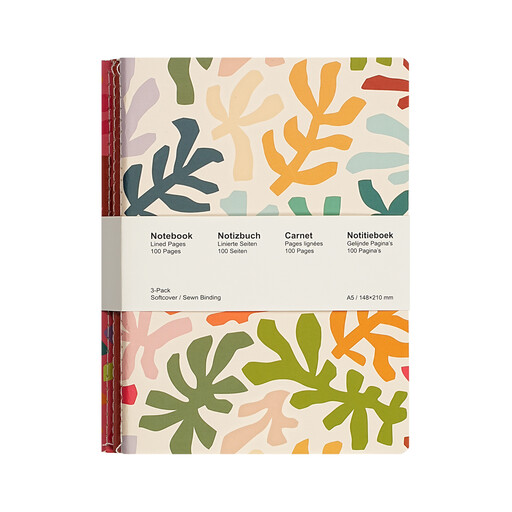
Why this fits the profile: A set of three A5 books is suitable for anyone who wants to separate different subjects without buying one large, heavy book straight away. Each book contains 50 sheets of lined 80g cream offset paper.
The specifications clearly state the number of books, the sheets per book and the paper weight. The stitched binding is designed to let the book lie flat.
A5 size, three copies and a lightweight softcover. Suitable for school, office, journaling and everyday notes.
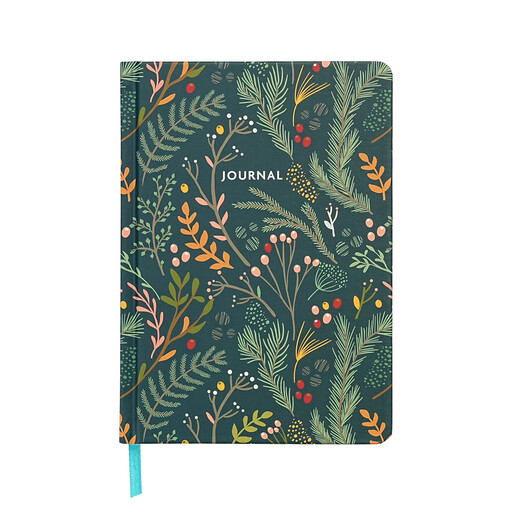
Why this fits the profile: This model combines an A5 hardcover with 96 sheets of 100g cream lined offset paper. The look and built-in features make it suitable for a journal, work notes or use as a gift.
It hasn't been chosen just for its cover: size, paper weight, number of sheets, elastic band and ribbon bookmark are all listed separately.
Hardcover, ribbon bookmark, elastic closure band and 192 pages. The cover has a textured finish according to the product description.

Why this fits the profile: For quick work notes, shopping, tasks and ideas on the go, A7 is compact. The four colours can help you keep subjects or projects separate.
The size is clearly compact and the top-mounted spiral is designed for one-handed use. So it's not an awkward A5 book for short notes.
Four A7 notebooks, squared paper, 50 sheets per notebook and a top-flip spiral binding. Practical for short, separate lists.
We've put together a full, up-to-date list of products that fully meet these strict selection criteria and current European safety regulations.
Store stationery in a dry place and avoid squashing a book for long periods in an overstuffed bag. A hardcover can better withstand daily transport, while a softcover takes up less space. With a spiral binding, don't use excessive force when turning pages. If you want to use a notebook as a diary or journal, set aside space in advance for a table of contents, dates or monthly planning.
For school and office, a separate notebook for each subject or project is clearer than collecting everything in one book. For home workers, an A5 model next to the keyboard can offer enough space for meeting notes and tasks.
A5 is usually a practical middle size. It offers enough writing space for lessons, meetings and planning, while still fitting in a laptop bag or rucksack. Choose A6 or A7 when portability matters more than lots of writing space.
Both weights can be suitable. 80g paper keeps a book light and is practical for pencil, ballpoint pen and standard fineliners. 100g paper feels sturdier and is linked in product descriptions to less bleed-through. Always check the result with your own pen, though.
The lifespan depends on the number of sheets, the binding, transport and how you write. A hardcover and elastic band can help with daily carrying. A stitched binding or sturdy spiral is practical when you open the book often and use it flat. Store the notebook in a dry place and avoid pulling on the cover or binding.
