
Vandaag of morgen in huis

Kwaliteit gegarandeerd

Welkomstaanbiedingen ontgrendelen: GRATIS bezorging | Tot 80% korting | Gratis 30 dagen JoyPlus-proefperiode
Download de app
A The North Face women's outdoor jacket can be suitable for hiking, camping and everyday use, but not every model is designed for the same conditions. A lightweight shell protects against rain and wind, while a fleece or insulated mid-layer mainly adds warmth. If you focus only on the brand name, colour or a prominent technical term, you could end up buying a jacket that is too warm, too cold or not water-resistant enough in practice.
A jacket with a Durable Water-Repellent finish can temporarily make raindrops bead up and run off. That does not automatically mean it will keep out prolonged rain completely. Check whether the product description mentions a waterproof membrane or a specific hydrostatic head rating. Also pay attention to the hood, zips, cuffs and seams.
The product description for The North Face model NF0A8EGV mentions DryVent, with features the brand describes as waterproof, windproof and breathable. The outer fabric is made from 100% polyester and has a non-PFC Durable Water-Repellent finish. Always check the current product information and care instructions before buying.
A women's fleece jacket feels warm and usually works as a mid-layer. However, fleece does not provide the same protection against rain as a waterproof women's jacket. For walks in changeable Dutch weather, combining fleece with a protective shell is often more practical than wearing one heavy jacket.
According to the product description, The North Face women's fleece models such as NF0A8DZY are designed as mid-layers. They are made from 100% polyester fleece, have a full-length zip and zipped pockets. The fleece can be combined with compatible Triclimate jackets, but the product page remains the definitive source for actual compatibility.
A jacket should leave room for a shirt and, if necessary, a fleece, but too much volume can affect freedom of movement and heat loss. So do not look only at S, M or XL. Measure your chest, waist, hips and arm length, then compare those measurements with the size chart for the specific model.
For example, for size M, NF0A8EGV lists a chest measurement of 90–94 cm, a waist of 74–78 cm, hips of 97–104 cm and an arm length of 80–81 cm. For size XL, the chart lists a chest measurement of 103–109 cm. The product description states that the model is true to size, but layering can affect your choice of size.
A hydrostatic head rating in millimetres indicates how much water pressure a fabric can withstand according to a specific test. A higher rating may be relevant in prolonged or heavy rain, but it does not tell you everything about real-world performance. Seams, zips, fit and wear also play a role.
The PELLIOT 3-in-1 jacket lists a hydrostatic head rating of 35.900 mm H₂O according to JIS in the product information. This is a claim from the brand's product specifications and should not be interpreted as a universal guarantee for every situation. The jacket has an outer layer and an inner layer, and according to the description, they can be worn separately or together.
A breathable outdoor jacket helps move moisture from the inside to the outside. Here too, you should compare figures measured using the same method. A high MVTR value does not guarantee that you will always stay dry during intensive walking; temperature, exertion, base layers and ventilation options all have an impact.
According to the product description, the PELLIOT model has a breathability rating of 16.000 g/m²/24 hours according to JIS. Treat this as a verifiable manufacturer product specification, not as a medical or health claim.
For cold walks, a lightweight insulated mid-layer can be more practical than a heavy winter coat. According to the product description, The North Face NF0A8DW6 has synthetic insulation, is designed as a mid-layer and can be packed into its own right-hand pocket. This makes this type of jacket an interesting option for walks where the weather can change quickly.
Also consider:
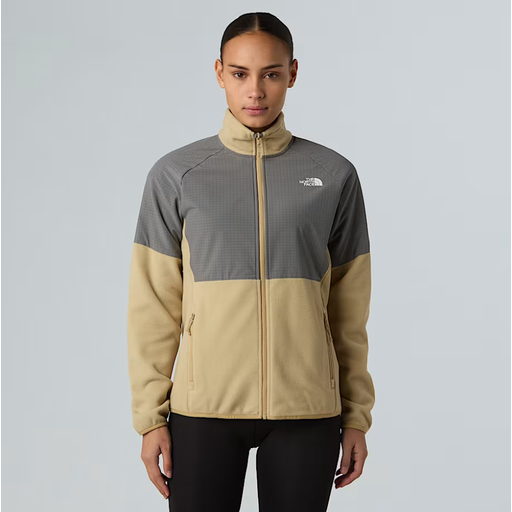
Why it suits this profile: Fleece is an accessible choice for everyday use, gentle walks and as an extra layer beneath a women's rain jacket.
The product description positions this model as a fleece mid-layer, not a waterproof jacket. This makes it clear what function you are buying.
100% polyester fleece, full-length zip and zipped pockets; according to the product information, suitable for layering.
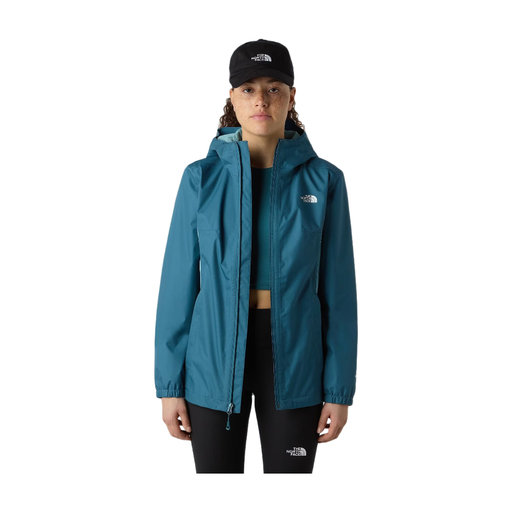
Why it suits this profile: This technical women's jacket is designed for hiking and use in wet and windy conditions, with options for layering.
The description lists specific features: DryVent, adjustable hood, elasticated cuffs and zipped pockets.
100% polyester outer fabric, zip-in compatibility and a design that can be used as a standalone shell or as part of a Triclimate system.

Why it suits this profile: The 3-in-1 design is intended for camping, trekking and commuting in changing seasons.
The jacket specifies separate layers and provides measurements for hydrostatic head, breathability and abrasion resistance instead of relying only on general marketing terms.
According to the product description: 35.900 mm H₂O hydrostatic head, 16.000 g/m²/24 hours MVTR and an inner layer that can be worn separately.
We have compiled a complete, up-to-date list of products that fully meet these strict selection criteria and the applicable European safety regulations.
Measure your chest, waist, hips and arm length, then compare these measurements with the size chart for the exact model. Allow for a fleece or jumper underneath. Choosing your usual size is a starting point, not a substitute for the product-specific measurements.
Fleece is primarily intended as a warm mid-layer. Choose a waterproof women's jacket or shell in rainy conditions, and pair it with a fleece if necessary. A windproof women's jacket may be sufficient in dry, windy weather, but always check the specifications.
Follow the care label, fasten the zips and use the recommended programme. Some fleece models need to air-dry, while an insulated jacket may, according to the product description, be tumble-dried at a low temperature. Incorrect washing or drying can affect the fit, finish and insulation.
