
Vandaag of morgen in huis

Kwaliteit gegarandeerd

Welkomstaanbiedingen ontgrendelen: GRATIS bezorging | Tot 80% korting | Gratis 30 dagen JoyPlus-proefperiode
Download de app
A The North Face jacket could be suitable for walking, travelling, everyday wear or training. However, a well-known brand name doesn’t automatically mean every model will suit your needs. A lightweight shell for a rainy cycle ride, for example, offers little warmth, while a padded jacket may feel too warm during an intense workout.
Focus instead on the construction, fit and intended use of the jacket. Below, you’ll find the key things to consider, along with some specific options for women and men.
A DWR finish helps water droplets initially roll off the fabric. That’s not the same as a fully waterproof jacket. Check whether the description mentions a waterproof membrane, taped seams and a construction designed for rainy conditions.
A waterproof jacket may also become less effective after frequent washing or use. Follow the instructions on the care label and check whether the DWR finish can be reactivated or reapplied.
A breathable jacket moves moisture and heat away from the inside, but it won’t do so equally quickly in all conditions. During a run or workout, a jacket without ventilation zips can still feel warm. Look for a mesh lining, ventilation openings, a suitable base layer underneath and enough room to move.
A women’s The North Face jacket or men’s The North Face jacket shouldn’t just look good; it should also leave room for a jumper or fleece mid-layer. A jacket that’s too tight can pull across the shoulders and restrict arm movement. One that’s too loose may let the wind in and feel less comfortable when cycling or walking.
Always check the size guide for the specific model. Sizing can vary between collections and fits.
For walks in changeable weather, fully taped seams are an important feature to check. Otherwise, seams can be weak points where rain gets in. The Quest models in this selection are described in their product listings as featuring seam-sealed DryVent fabric and a DWR finish.
The term “waterproof” is based on the stated product specifications. The level of protection you get also depends on wear, care, fastenings, and the duration and intensity of the rain.
A windproof jacket doesn’t necessarily have a warm lining. A shell keeps out the wind and rain, but you mainly control warmth with the layers underneath. A fleece-lined jacket may be more comfortable for everyday wear in spring and autumn, while an unlined walking jacket is more versatile in changeable temperatures.
A 3-in-1 jacket could be a good option for cold conditions. According to the product description, you can wear the inner and outer layers separately or together. Check the filling, lining and care instructions too.
Look for practical features such as:
A jacket for walking and training often needs a different balance of features from one for commuting. For sports, low weight, freedom of movement and moisture management matter more than a thick lining.
The options below are based on the stated materials, construction, features and sizing information. Brand claims about performance are not presented here as an independent guarantee.
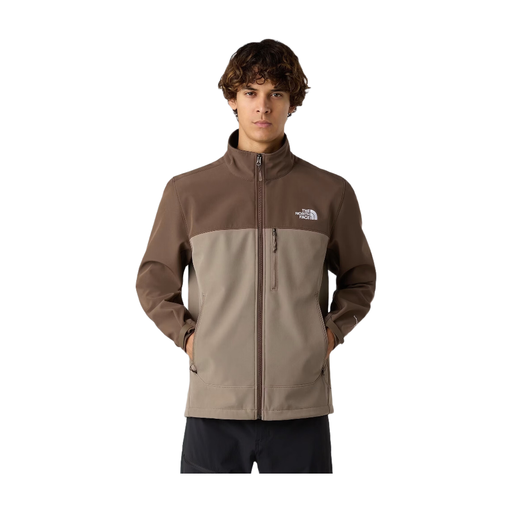
Why it suits this profile: A practical windproof jacket for everyday wear, travelling and light outdoor activities in spring and autumn.
The product description mentions wind protection, adjustable cuffs and a drawcord at the hem. On that basis, don’t expect it to provide full rain protection.
93% polyester and 7% elastane, fleece on the inside, and secure chest and hand pockets.

Why it suits this profile: For anyone looking for a single system to use in changing conditions, with several ways to wear it.
The 3-in-1 design means you won’t need a separate jacket for every type of weather. Check that the weight and warmth suit the way you plan to use it.
Protective outer layer, removable down inner jacket, adjustable hood and underarm ventilation zips.

Why it suits this profile: Designed for running, training and outdoor activities where you need rain protection and freedom to move.
The description mentions seam-sealed DryVent fabric, a hood and elasticated cuffs. These details cover key points for rain and wind protection.
Outer fabric made from 100% recycled polyester, zipped chest and hand pockets, and a fit described as true to size.
We’ve put together a complete, up-to-date list of products that meet these strict selection criteria and the applicable European safety regulations.
Measure your chest over a thin shirt and compare it with the size guide on the product page. You may need extra room for a mid-layer. For example, the women’s Quest jacket is listed as having a standard, comfortable fit, with chest measurements for sizes XS to 3XL.
Fasten zips and hook-and-loop fastenings before washing. Use the care label as your guide and avoid fabric conditioner if the instructions advise against it. In most cases, leave your jacket to air-dry. Only reactivate a DWR finish with heat or a treatment if the care label explicitly allows it.
No. Some models are designed as windproof jackets or lightweight mid-layers. Look specifically for waterproof fabric, taped seams and a rain-ready construction. A DWR finish alone doesn’t automatically make a jacket fully waterproof.
For changeable weather, a breathable shell with an adjustable hood, secure pockets and adjustable cuffs is a practical choice. In colder weather, you can wear a fleece or warm mid-layer underneath. A 3-in-1 jacket can be useful for longer walks if you need versatility.
Its lifespan depends on how often you use it, friction, washing and care. Check the seams, zips and outer fabric regularly. Wash it according to the care label and only treat the DWR finish as directed. This helps prevent the jacket from losing its protective properties too soon.
