
Vandaag of morgen in huis

Kwaliteit gegarandeerd

Welkomstaanbiedingen ontgrendelen: GRATIS bezorging | Tot 80% korting | Gratis 30 dagen JoyPlus-proefperiode
Download de app
A non-stick pan set may seem simple to choose at first. However, small differences in the coating, base and care requirements can have a big impact on everyday use. For example, a pan that works on gas may not be suitable for induction. And a label such as “ceramic” or “healthy cooking” doesn’t automatically tell you everything about the materials or how to care for it.
For families, students and beginner cooks, these are the three main pitfalls to look out for:
Not checking whether it’s “suitable for all hobs”
Check that induction is specifically mentioned. Induction requires a magnetically conductive base. A pan set for all hobs should also be suitable for gas, electric and ceramic hobs.
Assuming a non-stick coating means you don’t need to take care of the pan
Even a ceramic pan set can be damaged by metal utensils, scouring pads or sudden changes in temperature. Always check whether hand-washing is recommended and whether the pan is dishwasher-safe.
Taking PFAS-free claims at face value without checking the details
“PFAS-free” may refer to a particular coating or to intentionally added substances. So read the full product information. For the products below, the claim is presented as part of the manufacturer’s information, not as an independent finding.
A non-stick pan set may have a ceramic coating, a traditional non-stick coating or a textured stainless steel surface, for example. Each material has different characteristics.
According to SENSARTE’s product information, the white ceramic coating is free from intentionally added PFAS, PTFE, PFOA, PFOS, APEO, lead and cadmium. This is a product specification from the brand; always check the latest information on the product page before buying.
Induction requires a magnetic base. A good induction pan set will therefore state explicitly that it is induction-compatible. Also check that the set works with any other hob you have, such as gas, electric or ceramic.
A thick or multi-layer base can distribute heat more evenly, but it also often makes a pan heavier. A lightweight aluminium pan can be handy for everyday cooking. If you often stir-fry at high temperatures or cook larger quantities, a spacious stainless steel wok may be a better choice.
A small frying pan of around 20 cm is handy for eggs or a single portion. For a family, a pan measuring 24 to 28 cm is usually more versatile. A frying pan with a lid or sauté pan with a lid is useful for frying, sautéing and then simmering without needing another pan.
Also look out for:
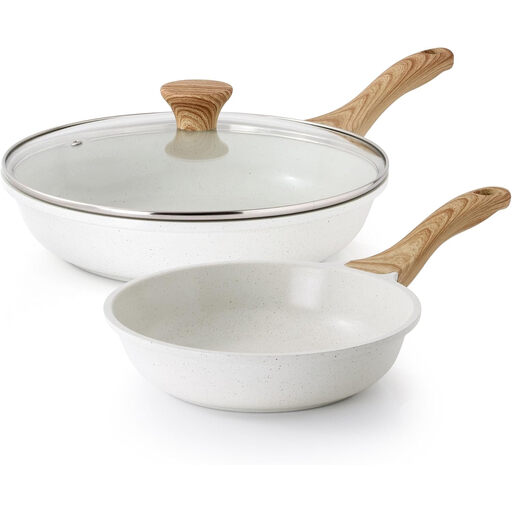
Why it suits this profile: The set includes an 8-inch pan and an 11-inch frying pan with a lid. It’s a practical choice for cooking eggs, vegetables, meat and dishes that need simmering.
The product information states that it’s compatible with induction, gas and electric hobs. Hand-washing and non-abrasive utensils are recommended.
Ceramic coating according to the product specification; glass lid; two different sizes; suitable for several types of hob.
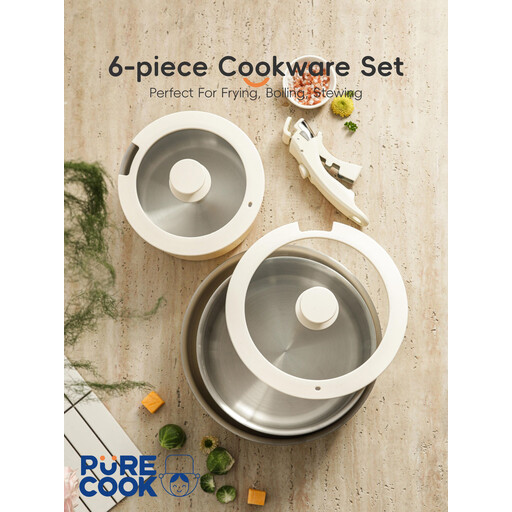
Why it suits this profile: This set is designed for anyone looking for a choice of sizes and a combination of stainless steel, ceramic elements, lids and a detachable handle.
The set specifies 304 stainless steel on the inside and a glass lid with a silicone sealing ring. Before use, check that the detachable handle is securely locked in place.
Multiple pans; detachable handle; glass lids; suitable for a range of cooking methods according to the product description.
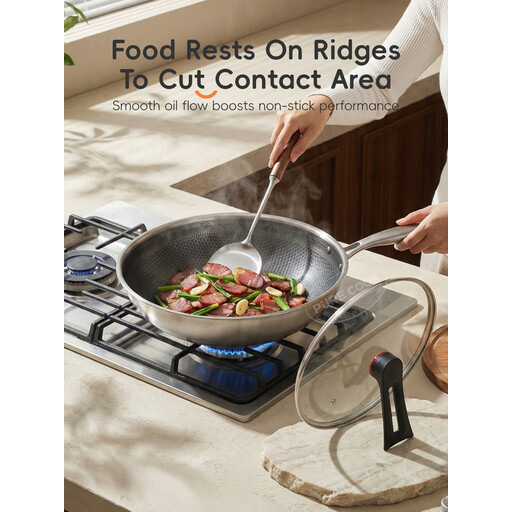
Why it suits this profile: The 32 cm diameter gives you plenty of room for stir-frying, braising and cooking larger portions for a household or dinner party.
The product information states that it’s compatible with gas, induction and electric ceramic hobs. Hand-washing is recommended to protect the texture and handle.
32 cm diameter; multi-layer 304 stainless steel construction; glass lid; suitable for stir-frying, braising and simmering.
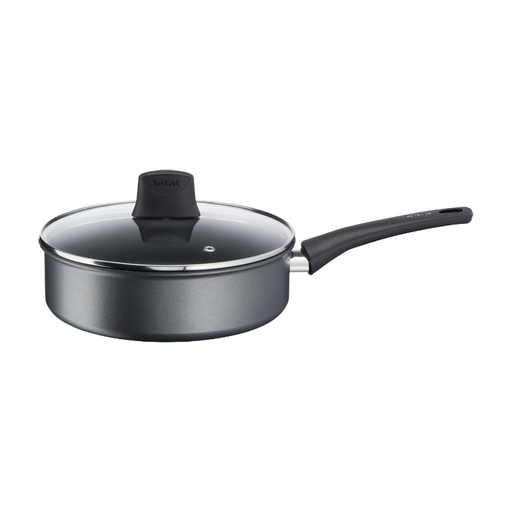
Why it suits this profile: A 24 cm frying pan with a glass lid is a practical choice if you don’t need a full set but want to fry and simmer every day.
The product specification states that it’s suitable for induction, gas, electric, ceramic and halogen hobs. According to the description, the maximum oven temperature is 175 °C.
24 cm size; glass lid; titanium-reinforced non-stick coating according to the product information; suitable for all the hobs listed.
We’ve put together a complete, up-to-date list of products that meet these strict selection criteria and the applicable European safety regulations.
It depends on the model. A ceramic coating doesn’t tell you anything about the base. Check that the product information specifically states induction compatibility. An underside that attracts a magnet is needed for use on an induction hob.
Its lifespan depends on the temperature, utensils and care. Don’t use metal knives or spatulas, avoid heating an empty pan unnecessarily, and let a hot pan cool before washing it. Hand-washing with a soft sponge can help keep the coating in good condition for longer than intensive dishwasher programmes.
Not necessarily. “Healthy pan set” isn’t a technical quality standard. Check the full material specification, care instructions and information about the coating. A brand’s claims, such as PFAS-free or free from intentionally added PFAS, should be understood as product information from that brand.
