
Vandaag of morgen in huis

Kwaliteit gegarandeerd

Welkomstaanbiedingen ontgrendelen: GRATIS bezorging | Tot 80% korting | Gratis 30 dagen JoyPlus-proefperiode
Download de app
A non-stick frying pan for induction needs to do more than simply release food easily. It must have a suitable base, suit your household and withstand everyday use. Yet many shoppers are mainly tempted by terms such as “extra strong”, “healthy” or “suitable for all hobs”, without checking the specifications carefully.
The most common purchasing mistakes arise from three pitfalls:
Below, you’ll find the practical features to compare and which models suit different cooking habits.
With an induction frying pan, the hob generates heat through a magnetic base. So don’t just look at the material; specifically check for the wording “suitable for induction”. An aluminium frying pan without a suitable base will generally not work on induction, even though aluminium conducts heat quickly.
If you are moving house or use several types of hob, you can choose a pan that the product information states is suitable for induction, gas, electric, ceramic and halogen hobs. Also check that the base is flat. A warped pan makes less effective contact with the hob and may heat unevenly.
A clear example of a possible mistake is a large 32 cm Tefal pan which, according to the product specifications, is suitable for gas, electric and ceramic cooking, but not for induction. A low price or well-known brand name does not change this limitation.
The diameter shown on the packaging is usually the top measurement. The effective cooking area may be smaller because of sloping sides or a thick rim. Use this as a practical guide:
A frying pan set with 20, 24 and 28 cm pans offers flexibility. However, check that you have enough storage space and that all sizes are compatible with the same heat sources. A frying pan with a lid or a sauté pan is more practical for dishes with sauce, stewed vegetables and larger quantities. For stir-frying, a wok with a suitable base may be better suited to the shape of the dish.
A non-stick frying pan may have different types of coating. A ceramic frying pan is often chosen by consumers looking for a PFAS-free frying pan. Always check the official product information: a brand claim is not a general feature of every ceramic coating. The information for some Brabantia and WMF Durado models explicitly states that the coating is PFAS-free.
With a traditional non-stick coating, it is important to check:
Aluminium heats up quickly and is relatively lightweight. Stainless steel can feel sturdy, but is often heavier. A multi-layer pan may distribute heat more evenly, but the construction and weight are more important than an isolated marketing term.
When using a non-stick coating, preferably use wooden, plastic or silicone utensils. Do not heat the pan empty for long periods and allow it to cool before washing it. A coating that is peeling, cracked or visibly damaged should no longer be used.
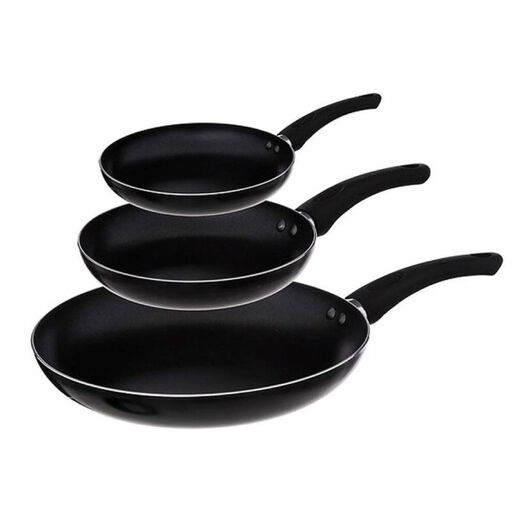
Why it suits this profile: The three sizes cover small portions, everyday frying and family meals. According to the product information, the pans are suitable for all heat sources, including induction.
You don’t need to use one large size for every dish. The set features two non-stick layers and is dishwasher-safe; hand-washing is recommended for a longer service life.
Three diameters of 20, 24 and 28 cm; suitable for gas and induction; aluminium construction and two non-stick layers.
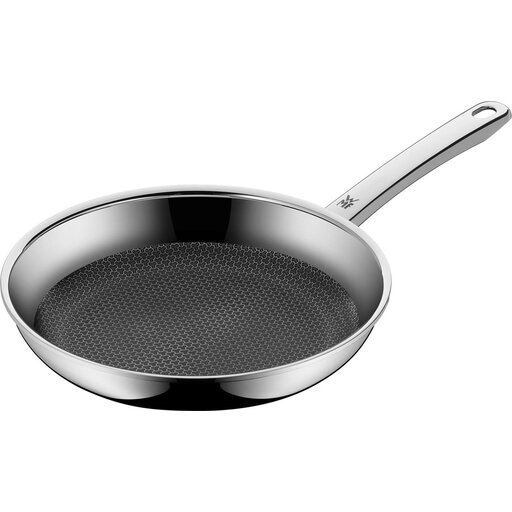
Why it suits this profile: According to the product description, this 24 cm pan combines stainless steel, an aluminium core and a honeycomb structure above the non-stick coating. That makes it suitable for those who cook regularly and value sturdy construction.
The information states that it is suitable for all heat sources, including induction, and has a maximum heat resistance of 260 °C. The pan is not dishwasher-safe, so hand-washing is part of its care routine.
24 cm diameter; TransTherm base for fast, even heat distribution according to the product information; five-year manufacturer’s warranty as stated.
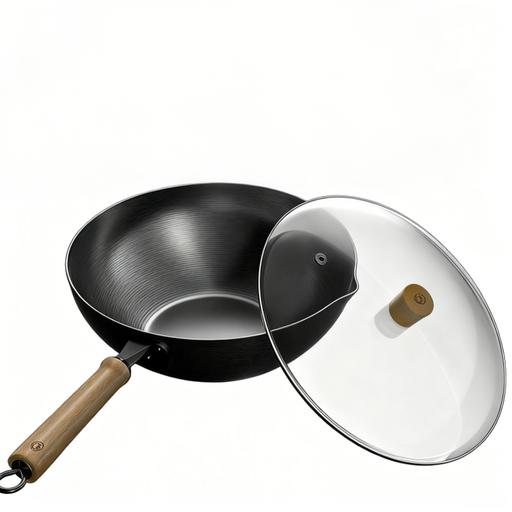
Why it suits this profile: The deep shape and lid are practical for stir-fried dishes, larger portions and recipes containing liquid. According to the product information, this wok is suitable for induction and gas.
The product information explicitly states that it is compatible with induction and gas and has a Teflon-free coating. However, check the exact care instructions before purchase and do not use metal utensils.
32 cm size; lid included; suitable for stir-frying and larger quantities; suitable for induction and gas according to the product listing.
We’ve put together a complete, up-to-date list of products that fully meet these strict selection criteria and the applicable European safety regulations.
Always follow the instructions on the product page and packaging. In practice, these habits can help:
The right size depends on your cooking zone and portions. A 20 cm pan is practical for one person, 24 cm is versatile for everyday use and 28 cm provides more room for families. Check that the base covers enough of the induction zone.
This varies according to the coating, frequency of use and care. Overheating, metal utensils and abrasive cleaning shorten its service life. A damaged coating, warped base or loose handle are signs that the pan should be replaced.
No. PFAS-free describes the coating, not the heat source. Always check separately whether the pan has an induction base. This also applies to a ceramic frying pan, aluminium frying pan or pan with a lid.
