
Vandaag of morgen in huis

Kwaliteit gegarandeerd

Welkomstaanbiedingen ontgrendelen: GRATIS bezorging | Tot 80% korting | Gratis 30 dagen JoyPlus-proefperiode
Download de app
A non-stick frying pan might seem simple to choose, but product pages often focus on terms like “titanium”, “granite” or “ceramic” without explaining what that actually means in your kitchen. For everyday cooking in a British household, what really matters is the heat source, size, coating and how you clean it.
You usually only notice a wrong choice after a few weeks: the pan doesn’t work on induction, the handle gets too hot, the base warps, or the coating wears out faster than expected. With these checkpoints, you can compare models more practically.
This description isn’t always complete or clear. Some pans work on gas, electric and ceramic hobs, but not on induction. The Tefal Easy Cook & Clean 32 cm is a clear example: according to the product specification, this pan is suitable for gas, electric, ceramic and glass-ceramic cooking, but not for induction.
If you have an induction hob, check specifically whether a magnetic stainless steel base or explicit induction compatibility is mentioned. An induction frying pan doesn’t just need a metal base; the base also needs to be flat enough for good heat transfer.
PFOA-free doesn’t automatically mean a pan is completely PFAS-free. PFOA is one specific substance within a larger group. So look at the manufacturer’s exact wording:
According to Brabantia’s own product information, the Dusk frying pan features a PFAS-free ceramic non-stick coating. For SENSARTE, several models are described as having coatings without intentionally added PFAS, PTFE, PFOA, PFOS, APEO, lead and cadmium. These are the brands’ product claims; use them as comparison information and always check the current specifications.
A dishwasher-safe frying pan can technically go in the dishwasher, but repeated use of dishwasher detergent and high temperatures can put extra strain on the coating and handle. Hand washing with a soft sponge is usually the more careful maintenance choice.
With an oven-safe frying pan, pay attention to the maximum temperature and the handle. A pan that can go in the oven at 200 °C isn’t automatically suitable for higher temperatures or for use under the grill. Also check whether the lid can withstand the same temperature.
Ceramic coatings are often chosen by shoppers looking for a PFAS-free frying pan. They’re suitable for cooking with little oil, but metal spatulas can cause scratches. Preferably use wood, silicone or plastic.
The same applies to a traditional non-stick coating: don’t heat the pan empty for long periods, and generally choose low to medium heat. A thicker aluminium pan can distribute heat more evenly, while a thin pan heats up faster but can be more sensitive to high temperatures.
A frying pan with lid retains moisture and reduces splashing. For larger portions, a sauté pan might be a better fit than a shallow frying pan. If you need multiple sizes, compare a frying pan set on base type, handles and included lids.
Let a hot pan cool down before washing it. Cold water on a hot base can cause thermal stress. Don’t use a scouring pad and don’t stack pans without protection between them. Stop using the pan when the coating is clearly peeling or the handle is no longer securely attached.
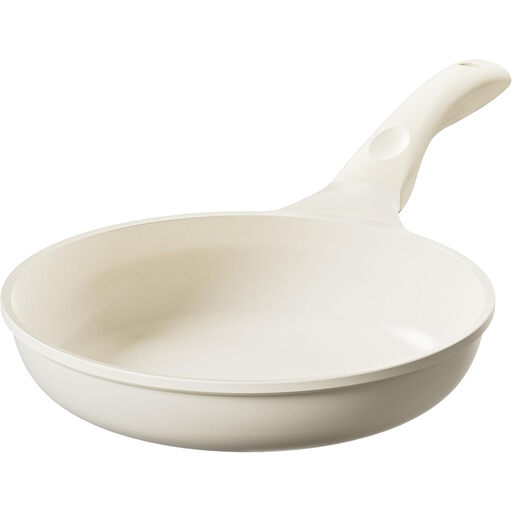
Why this profile fits: A compact pan for everyday portions, such as eggs, vegetables and noodles. According to the product specification, this pan is suitable for induction, gas and electric cooking.
The heat source compatibility and coating type are clearly stated. Avoid using metal utensils to protect the ceramic layer.
24 cm size, ceramic coating and dishwasher-safe according to the product information.
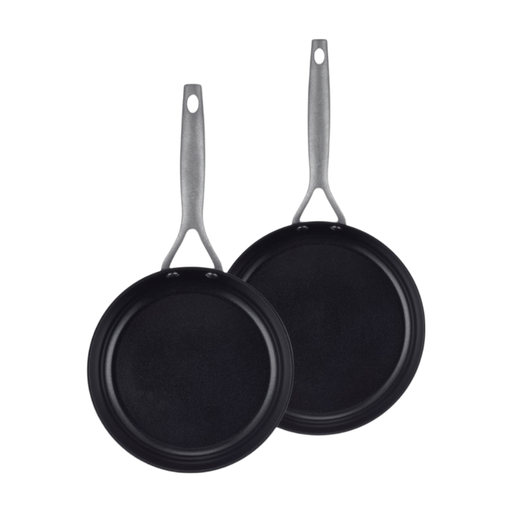
Why this profile fits: The set with 20 and 24 cm offers two sizes for small and normal portions. Both pans are suitable for induction, gas, electric, ceramic and halogen hobs according to the product description.
The product specification lists both the coating and the maximum oven temperature of 200 °C. Hand washing is recommended to keep the coating in good condition for longer.
PFAS-free ceramic coating according to Brabantia, oven use up to 200 °C and a construction of recycled forged aluminium according to the product information.
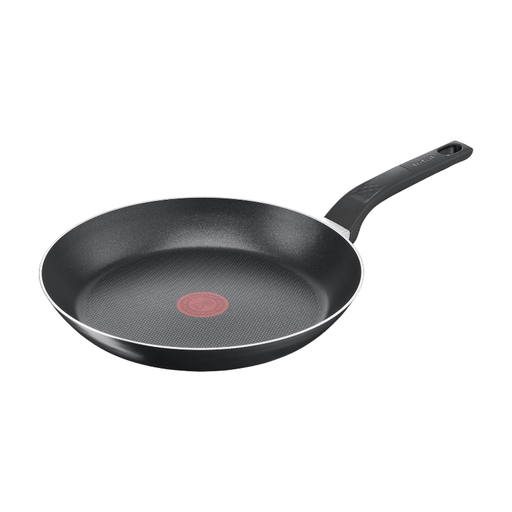
Why this profile fits: The deep shape and diameter are designed for larger quantities. This model works with gas, electric and ceramic hobs, but not with induction.
The limitation for induction is clearly stated in the specifications. That prevents a wrong purchase if you have an induction hob.
32 cm diameter, deep shape, dishwasher-safe and oven-safe up to 175 °C according to the product information.
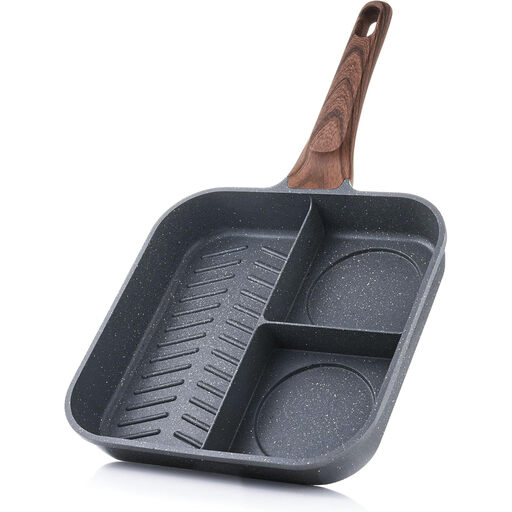
Why this profile fits: The three separate sections are designed for items such as bacon, eggs, burgers, sausages and pancakes without ingredients mixing directly.
The pan is suitable for induction, gas, electric, glass and ceramic hobs, but not for the oven or dishwasher. These limitations are clearly stated.
Die-cast aluminium, three cooking zones and a Swiss ILAG coating that, according to the product description, is made without intentionally added PFOA, PFOS, APEO, lead and cadmium.
Browse a current selection of pans that match these practical selection criteria for British hobs and everyday use.
That depends on the base. A ceramic coating doesn’t determine whether the pan works on induction. So check for the words “induction compatible” and look for a magnetic metal base.
The lifespan depends on temperature, utensils, cleaning and storage. Use low to medium heat, avoid metal spatulas and wash the pan gently. Replace the pan when the coating peels or the base becomes warped.
For simmering, sauces and one-pot dishes, a lid is practical. For crispy frying or grilling, an open pan can be more convenient. Choose a model where the lid and pan together fit within your cooking and storage space.
