
Vandaag of morgen in huis

Kwaliteit gegarandeerd

Welkomstaanbiedingen ontgrendelen: GRATIS bezorging | Tot 80% korting | Gratis 30 dagen JoyPlus-proefperiode
Download de app
A non-slip yoga mat needs to do more than just look good. During yoga, Pilates, stretching or core training, you don’t want to keep repositioning your hands and feet. Yet it’s tricky to judge marketing claims about “extra grip” or “professional quality”. The product description, dimensions and care instructions often give you more useful information.
In this 2026 buying guide, we compare materials, thicknesses and use cases. That way, you’ll find a non-slip yoga mat for home, the gym or a studio without paying for features you don’t need.
“Non-slip” on its own doesn’t tell you much. Grip also depends on the floor surface, perspiration, weight distribution and the mat’s texture. A smooth floor, dust or moisture underneath the mat can reduce stability. So check whether the mat has a textured surface or a special bottom layer.
A yoga mat with good grip won’t automatically stay completely still on every floor. Use the mat on a flat, clean surface and check before your session that it doesn’t slide.
A thicker mat generally offers more cushioning, but it can give you less direct contact with the floor. You’ll notice this most in balancing poses. A thin mat feels more stable, but offers less support for exercises on your knees, hips or back.
A 6 mm yoga mat can be suitable for Pilates, stretching and floor exercises. For dynamic yoga or balance-focused moves, 3 to 4 mm may feel more comfortable. So look at how you’ll use it, not just the biggest number on the packaging.
PVC is usually easy to wipe clean, while cork has a different surface and care routine. A moisture-absorbing yoga mat may, according to the product description, handle surface moisture better, but it still needs to be cleaned and fully dried after use.
Also pay attention to storage. A mat rolled up while damp can develop odours and material changes. Store it in a dry, well-ventilated place.
A cork yoga mat has a natural top layer. According to the product description, the Miss Lulu Good Nite mat consists of a compressed cork layer, a TPE underside with a wave pattern and a polyester interlayer. The description states that cork absorbs moisture quickly, which can support grip when you’re sweaty. This is information from the product description; results may vary per user and exercise.
A PVC yoga mat often has an even, padded surface. PVC can be practical for home use because, according to the product information, the material can be cleaned with a damp cloth or mild soap. Always check the instructions and don’t use harsh cleaning products if they’re not recommended.
TPE is commonly used as a bottom layer. Properties vary by product, so look at the full construction rather than just the abbreviation.
A standard length of around 180 cm suits most users. The Miss Lulu mat measures 183 × 61 cm and is 6 mm thick. The 6MM Print Yoga Mat is approximately 183 × 61 cm based on the stated dimensions of 72 × 24 inches. The Capelli Sport mat is roughly 173 × 61 cm, with a thickness of 3 mm.
Check the width as well as the length. A wider mat gives you more room during Pilates and ab exercises, while a compact size is easier to carry.
A textured or embossed surface can help you position your hands and feet better. The underside is just as important. A wave pattern or other structure can provide extra contact with the floor, but it doesn’t replace a flat, clean surface.
A non-slip yoga mat is suitable for multiple exercises, but no mat completely prevents the risk of sliding. Stop using it if you notice damage, layers coming apart or a worn underside, and replace the mat when stability clearly decreases.
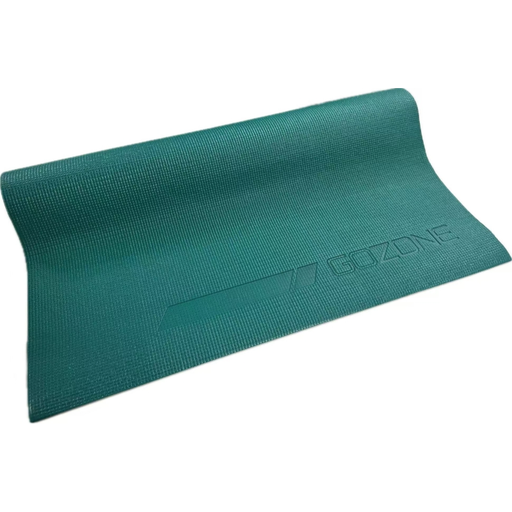
Why This Fits Their Persona: A practical choice for beginners who want to do yoga, Pilates or light fitness exercises at home without taking up much storage space.
The product description mentions a textured surface and a thickness of 3 mm, so you’re not relying solely on the general term “non-slip”.
PVC material, approximately 61 cm wide and, according to the product information, cleanable with mild soap and water or a damp cloth.

Why This Fits Their Persona: Suitable for users looking for a 6 mm yoga mat with a multi-layer construction for yoga, stretching and general training at home.
The construction is clearly described: cork on top, TPE with a wave pattern on the underside and polyester mesh in the middle.
183 × 61 cm, 6 mm thick and approximately 750 g. According to the product description, the cork surface is moisture-absorbing and the mat can be cleaned with a damp cloth.
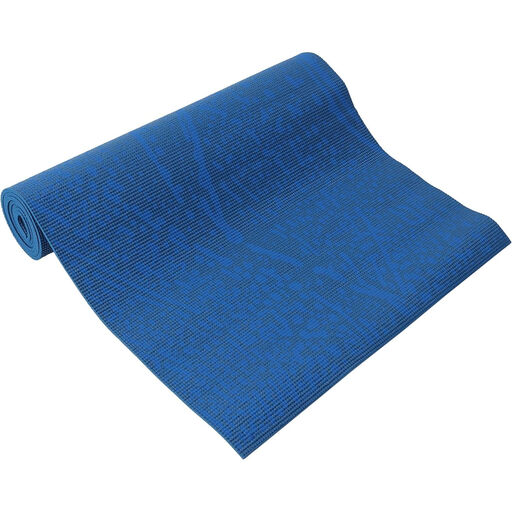
Why This Fits Their Persona: A spacious training mat for users who combine yoga with Pilates, stretching, ab exercises and other floor-based moves.
The stated size and thickness are concrete: 72 × 24 inches and 6 mm. According to the product description, the textured PVC surface is designed to support you during exercises.
6 mm PVC cushioning, suitable according to the product information for yoga, Pilates, stretching and fitness. The mat can be rolled up and taken to home, the gym or a studio.
Browse a current selection of non-slip floor mats and compare size, material and use for your situation.
A durable yoga mat isn’t just about the material. How long it lasts also depends on how often you train, how you clean the mat and where you store it. A simple fitness mat that’s consistently well cared for can be more practical than a heavier model that doesn’t suit your routine.
It can be. A 6 mm yoga mat offers more thickness than a 3 mm model according to the product specification, and can therefore be more comfortable for exercises on your back, knees or hips. For balancing and standing poses, a thinner mat may feel more direct. Choose based on your full training programme.
Usually, use a soft, damp cloth. For some PVC mats, mild soap and water is mentioned in the care instructions. Then let the mat dry completely before rolling it up. Always check the specific guidance for the product and avoid harsh cleaning agents when they’re not recommended.
There’s no fixed lifespan for every mat. Intensive use, direct sunlight, moisture and improper cleaning can speed up wear. Replace the mat when the surface becomes slippery, the underside shifts or the material shows tears. That way, the non-slip performance stays better suited to your daily practice.
