
Creator working with several performers
You want to record dialogue from each voice at the same time and edit it later. Zoom specifies that the H4essential has two XLR/TRS inputs; check how many microphones your scene needs at once.


Start with the distance between the microphone and the speaker: placing the microphone close to the voice matters more than relying on noise reduction. A compact handheld recorder can work well for solo recordings, separate sound effects or performers speaking one after another. If two performers need to speak at the same time and you want to edit their voices separately, a recorder with external microphone inputs offers more options, but takes more preparation.
You want to record dialogue from each voice at the same time and edit it later. Zoom specifies that the H4essential has two XLR/TRS inputs; check how many microphones your scene needs at once.
You record each role separately and want to position the microphone close to your voice. Shure emphasises the importance of microphone placement; a recorder won’t remove the room’s background noise by itself.
Alongside voices, you record separate ambience and sound effects, and want to choose when to include the sound of the room. Zoom specifies built-in X/Y microphones on the H1essential and H4essential.
Best for: solo recordings, roles recorded one after another, and separate ambience or sound effects.
Trade-off: microphones positioned further away also pick up sound from the room; check whether you can connect a suitable external microphone.
Best for: two performers speaking at the same time, when you want to record and edit their voices separately.
Trade-off: positioning and connecting microphones takes preparation; two inputs aren’t enough for an unlimited number of performers.
Best for: quickly recording, finding and transferring individual lines.
Trade-off: features designed for speech don’t necessarily mean you can record simultaneous dialogue through separate microphone inputs.
When recording in a noisy flat, the distance from the speaker and your preferred recording setup both matter. The percentages below show which primary need takes priority in this radio-play scenario.
| What to consider | What should you check? | Which consumers does this matter to? |
|---|---|---|
| Clear, intelligible voices | Check how to connect or position a microphone close to the speaker; listen to a test recording with the background noise you’d normally hear. | If I’m recording dialogue in a noisy flat, I want to be able to position the microphone close to the speaker. Around 36% of consumers give clear, intelligible voices in these conditions top priority. |
| Editing dialogue separately | Count the performers speaking at the same time and check the number of inputs and recording tracks on the exact model. | If you’re recording two performers at once, you may want to edit their voices separately later. Around 29% of consumers prioritise separate dialogue tracks. |
| Recording lines quickly | Check the controls, recording format, storage and how files are transferred to your computer. | If I’m recording roles one after another, I want to record and transfer files without a complicated setup; around 21% of consumers prioritise this simple workflow. |
| Recording effects separately | Check whether the recorder has built-in stereo microphones and whether you can save and listen to effects separately from the dialogue. | For anyone mainly recording separate ambience and sound effects, the freedom to record them separately matters more than the other needs listed. Around 14% of consumers prioritise sound effects and ambience. |
A noise-reduction feature won’t automatically stop echo or other room sounds from getting into a recording. A manufacturer’s claim also doesn’t prove that every dialogue setup will work well.
Consider the microphone’s distance and position, then listen back to a scene with the background noise you’d normally hear.
An unsuitable setup could mean recording a scene again or having to find a suitable microphone after all.
The Zoom H4essential combines built-in stereo microphones with two XLR/TRS inputs. The number of tracks isn’t the same as the number of separate microphone connections.
Count the performers speaking at the same time and check that there’s a suitable input for every external microphone you want to use.
You may need additional recording equipment to use more microphones at the same time.
A multitrack setup may need different components from a quick recording using a built-in microphone.
Make a list of the components you’ll need for the exact model and your way of working.
Depending on the setup, you may need a memory card, power supply, external microphones and cables.
The H1essential is a compact recorder with built-in X/Y microphones and a 3.5mm microphone input. The H4essential adds two XLR/TRS inputs and four tracks.
The DR-05XP is designed for compact stereo recording and has built-in microphones and a stereo mini-jack input.
The ICD-UX570 is an alternative for quickly recording, finding and transferring spoken content.
The Wireless GO (Gen 3) is a wireless microphone system that records on the transmitters. It may be useful when performers are moving and microphones need to be closer to them; it isn’t a conventional handheld recorder.
The Joybuy options below are compact voice recorders for recording spoken content separately. Check that the controls, storage and file transfer suit the way you record.
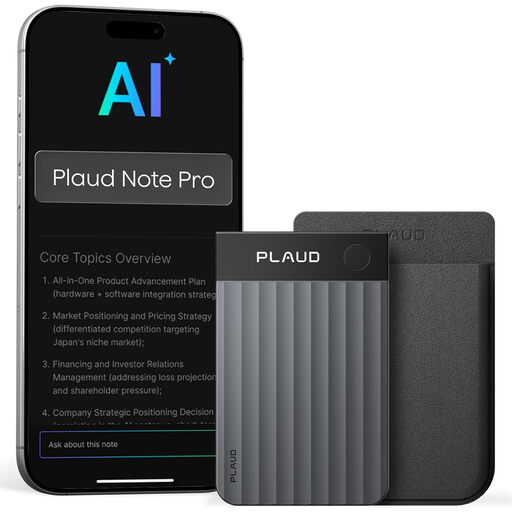 No image available
Could suit roles you record separately and want to find again later.
The product information mentions one-touch recording, transcription and summaries.
 No image available
Could suit separate recordings if you also want to convert them into text.
The product information mentions transcription and summaries in 118 languages.
 No image available
Could suit short dialogue or roles you record one after another.
The product information mentions MP3 and WAV recording, AVR and USB-C.
 No image available
Could suit roles you record one after another and want to listen back to or transfer later.
The product information mentions WAV recording, USB-C file transfer and included headphones.
 No image available
Could suit separate recordings if you want to work with text from your recordings.
The product information mentions transcription, translation into 58 languages, summaries and one-touch recording.
No, 32-bit float doesn’t replace good microphone placement. Manufacturers describe this recording feature as helping with changing recording levels; for clear speech, position the microphone close to the speaker and listen back to a test recording.
Record a short dialogue while the usual sounds in your flat are present. Move the microphone closer to the speaker and further from the source of unwanted noise, listen back to the recording and compare different positions; recording equipment can’t fix the room’s acoustics.
Check which memory card, power supply, microphones and cables your chosen setup needs; this varies by model. In the Netherlands, the retailer is responsible for resolving issues with a faulty consumer product, according to the Dutch government.
You need permission from the creator to use copyright-protected text and music, according to the Dutch government. A private copy for personal use must not be distributed or made public. Check your rights before publishing. If you make identifiable personal data public, such as someone’s voice, GDPR obligations may also apply; the exemption for purely personal or household use is subject to conditions, as explained by the Dutch Data Protection Authority.
Check the audio output on the playback source and whether the recorder has a suitable line input, rather than focusing mainly on comparing built-in microphones. Making a recording for personal use is legally different from distributing it or making it public; the Dutch government makes this distinction for private copies.