
Vandaag of morgen in huis

Kwaliteit gegarandeerd

Welkomstaanbiedingen ontgrendelen: GRATIS bezorging | Tot 80% korting | Gratis 30 dagen JoyPlus-proefperiode
Download de app
Wireless earbuds with noise cancelling often look very similar on paper. Yet differences in fit, battery life and water resistance can determine whether you enjoy using them every day or put them away again after a short time. True wireless earbuds, in particular, come with a few common pitfalls.
The first is a promising ANC percentage without a clear explanation of the testing method. A claim such as “98.5% noise reduction” does not automatically tell you how effectively voices, traffic noise or low-frequency hums are reduced. The second pitfall is a quoted battery life that only applies when active noise cancelling is switched off. The third is water resistance that applies to the earbuds but not to the charging case.
So don’t just look at the brand name or price. Check the technical specifications, battery life with ANC enabled and protection against moisture. That way, you can find Bluetooth earbuds that suit your everyday needs.
Earbuds with ANC use built-in microphones to detect ambient sound and create electronic noise cancellation. Performance varies by model and situation. Low, constant sounds such as train or aeroplane engines are generally a different challenge from people talking or sudden noises.
Pay attention to these points:
Brands sometimes describe their own performance in great detail. Don’t present such claims as a general guarantee: according to the brand’s own research, certain results may apply under specific test conditions. So also look at verifiable features, such as the number of microphones, available modes and app support.
A battery life of, for example, 30 or 40 hours often refers to the total usage time including the charging case. The earbuds themselves usually work for several hours per charge. ANC can reduce battery life further.
So check:
The Sony WF-C710N is listed in the product information as offering up to 30 hours with noise cancelling and up to 40 hours without ANC, including the case. The JBL Wave Buds 2 lists up to 40 hours in total without ANC, while the specifications for the earbuds themselves state up to 8 hours of playback. This difference shows why you need to read the small print.
A good fit is important for both wearing comfort and passive noise isolation. Check whether several sizes of silicone ear tips are included. For sports use, stabilising wings, a neckband or a secure in-ear shape may sometimes be more practical than an ultra-compact model.
The IP code indicates what level of protection a product has against dust or water. IPX4, for example, means protection against splashing water according to the stated classification; it does not mean you can swim with the earbuds. An IPX5 model can withstand water jets within the limits of the classification, but the case may offer less protection.
For connectivity, Bluetooth 5.3 earbuds and newer versions are interesting because of their modern compatibility, but the version number alone does not guarantee better sound quality. Also check support for multipoint, codecs and compatibility with iOS, Android, tablets and laptops. Most Bluetooth earbuds work with a range of devices, but some features remain tied to a specific ecosystem.
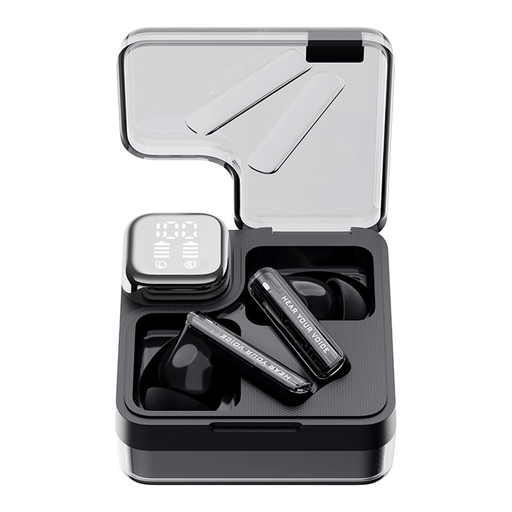
Why it suits this profile: These wireless earbuds combine ANC, a USB-C connection and an app with equaliser features. That makes them suitable for everyday listening without having to move straight to a more advanced model.
The stated usage time is listed separately for a single charge and for the case: approximately 6–7 hours per charge and around 28 hours in total. The IPX5 rating applies to the earbuds; keep the case dry.
Bluetooth 5.3, around 28 hours of total playback, a 0.06-second low-latency mode and support for the QCY app.
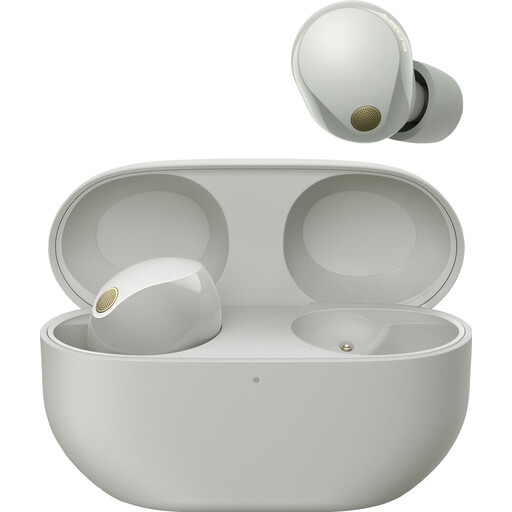
Why it suits this profile: This model is aimed at users who place a high value on active noise cancelling, extensive codec support and multipoint connectivity for two devices.
The product specifications list battery life separately with and without ANC. IPX4 is also clearly stated, so you won’t mistake this model for an earbud designed for submersion.
Bluetooth 5.3, support for AAC, LC3, LDAC and SBC, multipoint connectivity and a charging case with USB-C.
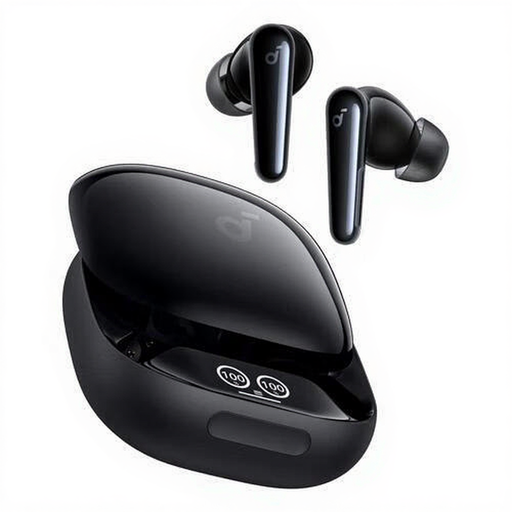
Why it suits this profile: The combination of six microphones, touch controls, dynamic drivers and IPX5 is well suited to calls, sport and everyday use.
The specifications state a separate playback time of up to 10 hours and explicitly note that the IPX5 rating applies to the product. The case is charged via USB-C.
Six built-in microphones, up to 10 hours of playback, additional ear tips and a USB-C charging case.
We’ve put together a complete, up-to-date list of products that fully meet these strict selection criteria and the applicable European safety regulations.
Most Bluetooth earbuds can be paired with both iPhone and Android through the Bluetooth settings. Extra features, such as an equaliser, firmware updates or finding a lost earbud, may depend on a brand app and operating system. Check this before buying if you need specific features.
Battery life per charge is often between approximately 5 and 10 hours, depending on volume, codec and ANC. The charging case extends total usage time. The built-in battery’s lifespan decreases over time. So store the earbuds in the case, avoid extreme heat and charge them with a suitable USB-C cable or charger.
That depends on the situation. IPX4, IPX5 or IP57 provides information about resistance to moisture and dust, but not about grip or road safety. When cycling or taking part in traffic, it’s important to be able to hear ambient sounds and warnings. Use transparency mode where necessary, follow local traffic rules and choose sports earbuds with a secure fit. Don’t listen at high volume for extended periods to protect your hearing.
