
Listeners studying dialogue
If you listen to scenes repeatedly, assess how natural and clear the voices sound, separately from the noise cancelling. The Consumers’ Association includes speech clips when assessing headphones.


Choose headphones that make recorded theatre dialogue sound natural and clear to you, then assess separately how well they reduce conversations around you. The Consumers’ Association treats speech reproduction and noise cancelling as separate test categories; Sony warns that voices may still be audible even with noise cancelling on. Also consider fit, comfort and whether you can let in ambient sound.
If you listen to scenes repeatedly, assess how natural and clear the voices sound, separately from the noise cancelling. The Consumers’ Association includes speech clips when assessing headphones.
If people around you are talking, noise cancelling can reduce distractions, but don’t expect voices to disappear completely. Sony says that voices may remain audible when noise cancelling is on.
If you listen for long periods, fit, controls and battery life are important things to consider. The Consumers’ Association highlights comfort and listening time when choosing headphones.
Start by checking how clear your theatre clip sounds, then compare how well the headphones reduce conversations. After that, check the fit, controls and connection to your playback device.
| What to consider | What to look for | Who will value this? |
|---|---|---|
| Dialogue clarity | Listen to a familiar theatre clip and assess the speech reproduction separately from the noise cancelling. | If I want to follow the words and tone of voice in a recording, I focus on how natural the dialogue sounds. Around 36% of consumers prioritise clarity. |
| Reducing conversations | Compare how well the headphones reduce voices when someone is talking, and check how the ear cushions or ear tips fit. | If people are talking in my study space, I want fewer distractions without expecting every voice to disappear. Around 29% of consumers prioritise reducing conversations around them. |
| Comfort during long sessions | Assess the fit over longer periods of wear, including with glasses if you wear them. | If I listen for long periods, I want a fit that stays comfortable and doesn’t cause unwanted pressure. Around 21% of consumers prioritise comfort during long study sessions. |
| Devices and controls | Check the connection, any cable or multipoint function, and the ambient sound mode controls on the exact model. | If I switch between playback devices or want to hear what’s going on around me, simple controls and suitable connections matter. Around 14% of consumers prioritise device compatibility and ease of use. |
Changing voices may still be audible, even if the headphones are good at reducing a steady hum.
Compare noise cancelling with speech in the background, and listen to your own theatre clip too.
A microphone for phone calls and the playback of a recorded theatre clip are two different things.
Assess speech reproduction using playback clips; check the microphone separately if you also want to make calls.
A separate bundle may include different accessories, and battery life is not necessarily measured using the same settings.
Compare the full model and bundle names, and check the settings used to determine the stated battery life.
The WH-1000XM6 is an over-ear model with ANC, ambient sound mode, multipoint and a detachable audio cable. This could be useful if you switch between playback devices.
According to JBL, the Tour One M3 combines adaptive ANC with listening via an included USB-C or 3.5mm cable. Check which connection your playback device requires.
The MOMENTUM 4 Wireless is an over-ear model with adaptive ANC, a transparency mode and adjustable sound via an app.
The AirPods Max 2 has ANC and a transparency mode. Check that the features you need work with your own playback device.
The Joybuy product picks below are relevant to this topic. Assess speech reproduction and how well each model reduces conversations in your listening environment.
 Image unavailable
An over-ear model to consider if you listen to recorded dialogue for long periods. Check for yourself whether the fit is comfortable and the voices sound natural.
The product title mentions noise cancelling and 60-hour battery life. Sennheiser states that the MOMENTUM 4 Wireless offers up to 60 hours of playback per charge.
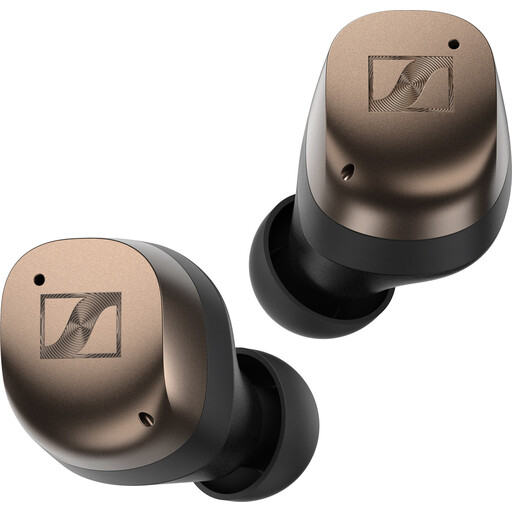 Image unavailable
This in-ear version could suit you if you’re looking for a compact design. Check that the earbuds feel comfortable and listen to your theatre clip separately from the ambient noise reduction.
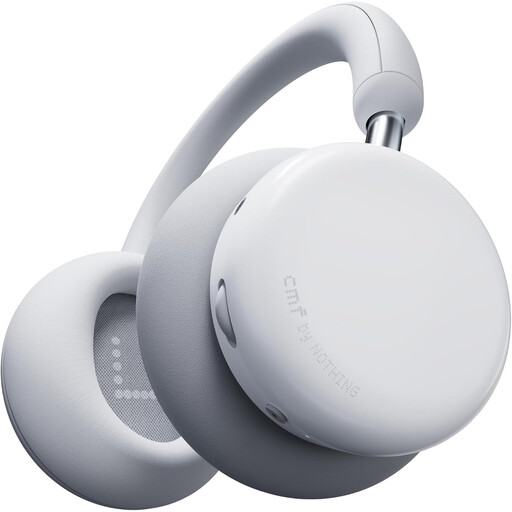 Image unavailable
If you’re considering this model to reduce ambient sound, check the ANC settings and compare how well it reduces conversations similar to those in your study environment.
The product name identifies this version as light grey.
 Image unavailable
These in-ear headphones with active noise cancelling could suit you if you’re looking for a compact design. Check the fit and assess how your dialogue sounds separately from the noise reduction.
The product title states up to 6 hours of playback with ANC and up to 26 hours with the charging case.
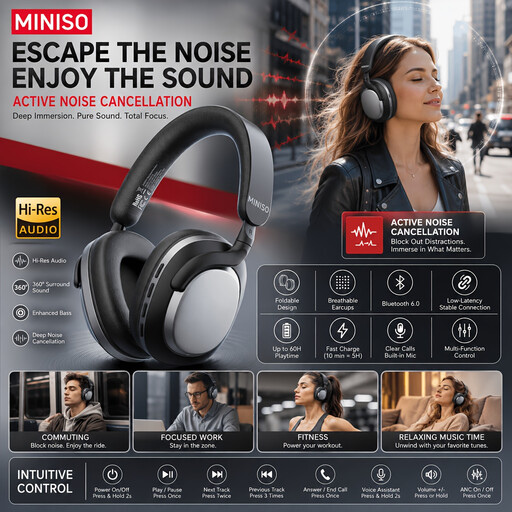 Image unavailable
An over-ear model to include in your comparison if you want to study dialogue with noise cancelling on. Check the fit and listen to see how clearly you can follow the voices in your clip.
The product title mentions noise cancelling and 24-hour battery life.
No, voices may still be audible when noise cancelling is on. Sony points out that speech is constantly changing, so it’s worth testing noise reduction with conversations rather than just a steady hum.
Listen to a familiar speech clip and assess how natural the voices sound separately from how well the headphones reduce the sounds around you. The Consumers’ Association treats speech reproduction and noise cancelling as separate test categories.
Start at a comfortable, low volume and keep track of how long you listen. The World Health Organization recommends well-fitting noise-cancelling headphones to help you avoid turning up the volume in noisy places; at an average of 80 dB, it recommends a maximum of 40 hours per week.
If you’re a consumer in the Netherlands, you can contact the seller about your statutory guarantee. According to the Dutch government, there is no fixed statutory guarantee period in the Netherlands; what you can expect from a product depends, among other things, on the product, its price and the information provided.
For online distance purchases from a business, you generally have a 14-day cooling-off period. The Dutch government sets out the conditions and exceptions; also check the information the seller provides with your order.