What should you look for when buying?
For an audio course on a long-haul flight, clarity, long-term comfort, battery life and connectivity are separate things to consider. The Dutch Consumers’ Association assesses speech clips, among other things; compare that result separately with its noise-cancellation test.
| What to consider |
What should you look for? |
Who should prioritise this? |
| Speech and cabin noise |
Compare the speech rating with the noise-cancellation rating; if possible, listen to a recording similar to your course material. |
If I want to follow the lesson over engine noise, clear voices come first. Around 36% of consumers give speech clarity and noise reduction top priority. |
| Comfort and fit |
If possible, try the headphones on with your usual glasses and check for pressure points and how well the ear cushions seal. |
If I want to listen for hours, I need the headphones to feel comfortable and fit well. Around 29% of consumers prioritise long-term comfort and a good seal. |
| Battery life |
Compare the stated battery life with ANC switched on if you plan to use it; treat manufacturers’ maximum figures as estimates, not guaranteed listening times. |
If I want to listen for a long time without recharging, I check the battery life with the settings I plan to use. Around 21% of consumers give battery life top priority. |
| Connectivity |
Check how your own device connects, which cable is included and what connection is available for any in-flight audio source. |
If I want to use a specific source, I first check that the connection is compatible. Around 14% of consumers prioritise connectivity with their chosen audio source. |
Joybuy products for listening on the go
This selection includes over-ear headphones and in-ear models with noise cancellation for listening during a long-haul flight. Check that each model’s fit, battery life and connectivity suit your course source.
 No image available
Sennheiser MOMENTUM 4 Wireless
Over-ear headphones with noise cancellation and the option to listen via a cable.
The description quotes up to 60 hours of playback and includes a 3.5mm audio cable; the quoted playback time isn’t specific to ANC use.
View at Joybuy
 No image available
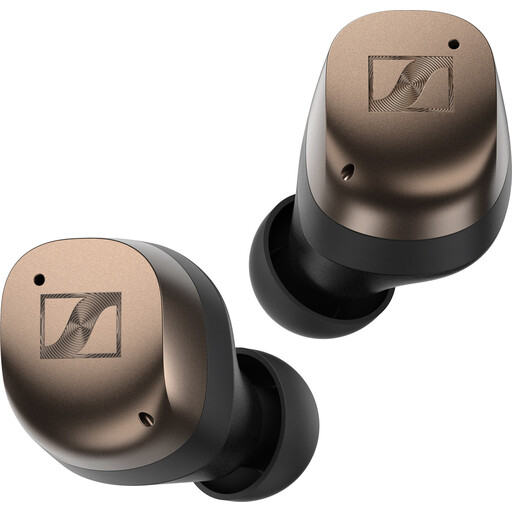
Sennheiser MOMENTUM True Wireless 4 Smart, Black Copper
In-ear earbuds with adaptive ANC and Bluetooth for listening from a compatible device.
Quoted playback time is up to 30 hours including the charging case.
View at Joybuy
 No image available
Samsung Galaxy Buds4 Pro, black
In-ear headphones with active noise cancellation and Bluetooth.
The description quotes up to 6 hours of playback with ANC per charge and up to 26 hours in total with the charging case.
View at Joybuy
 No image available
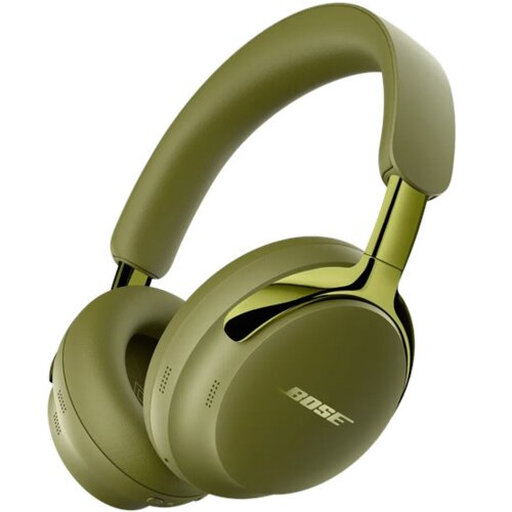
Bose QuietComfort Ultra Headphones (2nd Gen), Olive Green
Over-ear headphones with active noise cancellation, Bluetooth and a detachable cable.
Before buying, check that the connection on the version you’ve chosen is compatible with your audio source.
View at Joybuy
 No image available
Bose QuietComfort Ultra Bluetooth Headphones, black
Over-ear headphones with active noise cancellation, Bluetooth and an audio cable for wired listening.
The product description quotes up to 24 hours of battery life.
View at Joybuy
Frequently asked questions
For an audio course, should I focus mainly on ANC or sound quality?
Assess both, and pay particular attention to how voices sound. When testing headphones, the Dutch Consumers’ Association listens to speech clips and also assesses noise cancellation, including with aircraft engine noise. If possible, try a similar recording at a volume you find comfortable.
How should I prepare my headphones for a long-haul flight?
Charge your headphones in advance and check the pairing or cable connection with the device you’ll use to play your course. If you want to use an in-flight screen, check separately which connections are available; don’t assume Bluetooth or a particular screen connection will work.
What should I do if my headphones turn out to be faulty after purchase?
When you buy as a consumer in the Netherlands, you’re entitled to a product that works properly; the seller must offer an appropriate solution if the product is faulty. The Dutch government says there is no single fixed statutory guarantee period for all products. For a typical online purchase from a business, you’ll usually also have a 14-day cooling-off period, subject to legal exceptions.
Can I use my Bluetooth headphones during the flight?
That depends on the rules for your flight. EASA says an airline can impose further restrictions on the use of portable electronic devices, and you must follow the crew’s instructions. Check your airline’s policy, including its rules on Bluetooth; EASA recommends carrying devices with lithium batteries in your hand luggage where possible.


