
Vandaag of morgen in huis

Kwaliteit gegarandeerd

Welkomstaanbiedingen ontgrendelen: GRATIS bezorging | Tot 80% korting | Gratis 30 dagen JoyPlus-proefperiode
Download de app
Wireless headphones with noise cancelling can reduce train noise, office chatter and engine noise during a flight. However, a high price or a large number of decibels does not automatically mean that a model will suit the way you use it. The difference often comes down to fit, battery life, call quality and how specifications have been measured.
If you only look at “ANC” or “long playtime”, you could end up buying Bluetooth headphones that become uncomfortable after a few hours, perform poorly during phone calls or last less time as soon as noise cancelling is switched on.
Brands sometimes quote values such as 44, 49 or 50 dB noise cancelling. This is not a universal measure of quality. The result depends on the testing method, frequency and fit. Low, constant sounds such as train noise are generally easier to reduce than voices or sudden sounds.
Therefore, use the dB figure only as part of your comparison. Also check whether it refers to hybrid ANC, adaptive noise cancelling or a fixed mode.
A manufacturer often states battery life under specific conditions, such as at a particular volume and without active noise cancelling. ANC, phone calls and high volume levels use extra power. So look at:
In-ear headphones that do not seal properly let in ambient noise, which can make them seem less effective. With over-ear headphones, heat, pressure on your ears and the weight can become uncomfortable over longer periods.
Also pay attention to the IP rating. IPX4 means protection against splashing water, but not immersion. According to the stated classification, IP55 provides protection against dust and water jets under limited conditions. Neither rating means that your earbuds are suitable for swimming.
Active noise cancelling (ANC) uses microphones to detect ambient sound and create an opposing sound wave. A transparency mode, on the other hand, lets ambient sound through. This is useful at a station or when you want to have a brief conversation with someone.
For headphones for music and calls, microphones and wind-noise reduction are also relevant. A model with multiple microphones may, according to the product description, be designed to isolate speech more effectively. However, actual call quality also depends on wind, software, your phone and your surroundings.
Bluetooth 5.3, 5.4 or another version mainly indicates the connection technology used; it does not, by itself, guarantee a trouble-free connection with every device. Check that your smartphone, laptop and tablet are compatible.
Multipoint is useful when you want to connect to, for example, a laptop and phone at the same time. For sound quality, codecs such as AAC, SBC, LDAC or LHDC may be relevant. Both the source and the playback device must support the relevant codec before you can benefit from it.
The selection below is based on the stated product specifications. Claims about noise cancelling, sound enhancement and call quality come from the product information provided by the relevant brands or sellers and are not presented here as guaranteed results.
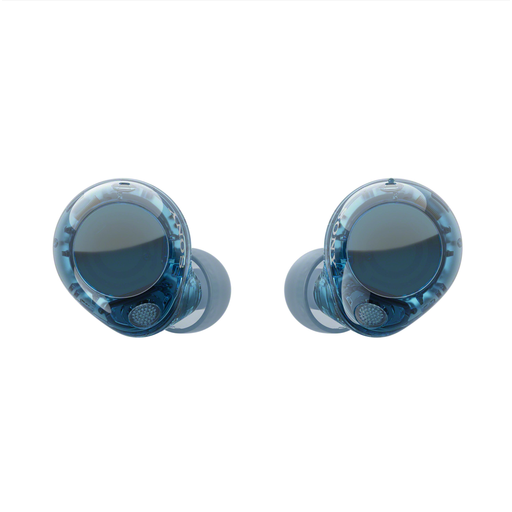
Why it suits this profile: These noise-cancelling earbuds combine an in-ear design with multipoint connectivity and a stated total battery life of up to 30 hours with ANC and 40 hours without ANC.
The product information states the battery life both with and without ANC. IPX4 makes the model suitable for splashes, but not immersion.
Bluetooth 5.3, multipoint, USB-C and a stated fast-charging function offering 1 hour of listening after 5 minutes of charging.

Why it suits this profile: The over-ear design is intended for long listening sessions, with adaptive ANC, a transparency mode and app control.
The stated battery life of up to 60 hours is clearly separate from the ANC mode; the model is also not water-resistant.
42mm transducers, four microphones, Bluetooth and an included 3.5mm cable for wired use.
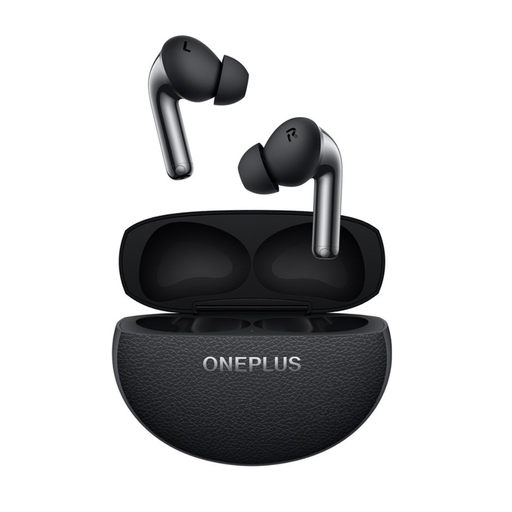
Why it suits this profile: These Bluetooth earbuds are compact for commuting and sport, with multipoint connectivity, two drivers per ear and IP55 according to the product information.
The stated playtime varies depending on how the earbuds are used: the listing mentions up to 12 hours per earbud and 44 hours with the case, while ANC use is specified separately.
Bluetooth 5.4, AAC/SBC/LHDC, 11mm + 6mm drivers and a stated IP55 rating.
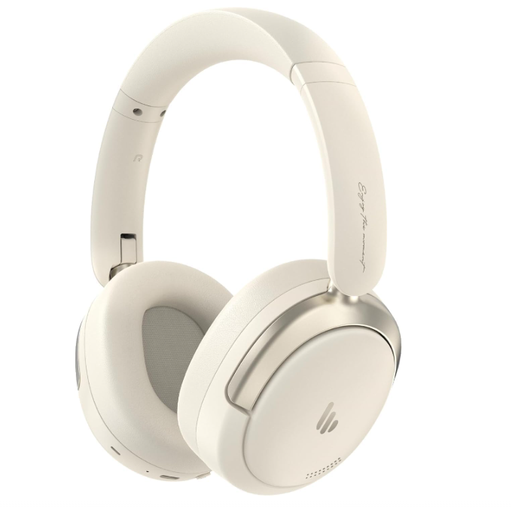
Why it suits this profile: The over-ear design, dual-device connection and long stated playtime are well suited to switching between a laptop and smartphone.
The stated ANC figure is listed as a product specification; do not compare it directly with other measurement methods. Also check the fit of the larger over-ear design.
40mm driver, Bluetooth 5.4, dual-device connectivity, foldable design and a stated playtime of up to 45 hours.
We have compiled a complete, up-to-date list of products that fully meet these strict selection criteria and the applicable European safety regulations.
ANC is primarily designed to reduce constant ambient sounds, such as engines and fans. Voices and sudden sounds may be reduced to some extent, but they are not always filtered out completely. A good fit and a closed earcup or well-sealing ear tip can help.
The usage time per charge varies depending on the model and settings. The lifespan of the built-in battery depends on charging cycles, temperature and use. Keep Bluetooth headphones dry, charge them with a suitable cable and do not use a damaged battery or casing. Also check the legal guarantee and service terms in the Netherlands.
That depends on the number of microphones, wind-noise reduction, Bluetooth profiles and your surroundings. For working from home, multipoint connectivity and a stable connection are practical. Ideally, check whether your laptop and phone can connect simultaneously before buying a model.
