
Vandaag of morgen in huis

Kwaliteit gegarandeerd

Welkomstaanbiedingen ontgrendelen: GRATIS bezorging | Tot 80% korting | Gratis 30 dagen JoyPlus-proefperiode
Download de app
Noise-cancelling headphones can make a real difference on the train, in the office or on a long flight. But the term alone doesn’t tell you how well they perform. Some models mainly reduce low-frequency hum, while others are also suited to calls, travel or intensive everyday use.
The choice can be harder still when you come across terms such as ANC, Hi-Res Audio, adaptive noise cancellation and battery life of dozens of hours. Read on to find out which features really matter and which pitfalls to avoid when buying wireless headphones or earbuds.
Active Noise Cancelling, usually shortened to ANC, uses microphones and electronic processing to reduce background noise. It works particularly well with constant sounds such as train engines, air conditioning and aircraft noise.
Voices, sudden sounds and traffic may still be audible. So don’t rely solely on a claim such as “up to -45 dB”. According to Baseus’s own information, for example, this figure refers to a particular ANC setting and usage scenario. It doesn’t guarantee that every background sound will be reduced by precisely that amount.
A manufacturer may measure battery life with ANC switched off, at an average volume and using specific settings. In practice, playback time may be shorter when ANC, multipoint, voice assistants or high volume levels are in use.
So check whether the stated battery life applies to:
The Soundcore Space One, for example, is listed as offering up to 55 hours of use. According to the product specifications, the Soundcore Space One Pro offers up to 60 hours with ANC off and 40 hours with ANC on. That difference shows why the testing conditions matter.
Over-ear headphones cover your ears completely, but they can get warm or put pressure on your head. In-ear models are small and light, but the fit varies from person to person. If you’ll be using them every day, consider their weight, the shape of the ear cushions, how adjustable they are and the range of ear tip sizes included.
Headphones with a microphone aren’t necessarily suitable for long meetings either. Check whether they have multiple microphones, a mute function, multipoint or a cable option.
For sport, water and sweat resistance are important. An IPX4 rating means protection against splashes, but not immersion. The Sony WF-C710N has an IPX4 rating, so the earbuds aren’t designed for swimming.
Bluetooth headphones are convenient for phones, tablets and laptops. Check the Bluetooth version and whether the model can connect to multiple devices at the same time. Multipoint is useful if you want to switch between a laptop and smartphone while working.
A cable can be a handy backup when the battery runs out. According to the product information, the Bose QuietComfort Ultra Headphones (2nd Gen) support Bluetooth 5.4 and come with a detachable cable with 3.5mm and 2.5mm connections. The Soundcore Space One in cream also offers both Bluetooth and a 3.5mm connection.
Also check the codec. AAC and SBC are common options. According to the product specifications, LDAC can transfer more audio data over Bluetooth, but your phone and music app must support it too.
For everyday use, the maximum number of hours isn’t the only thing that matters. Check the charging time, fast-charging feature, USB-C connection and playback time with ANC switched on.
With true wireless earbuds, consider both the battery life of the earbuds and the extra capacity of the charging case. The Samsung Galaxy Buds4 Pro, for example, are listed as offering 6 hours with ANC on and up to 30 hours in total with the case. According to the product description, the Apple AirPods 4 with ANC offer up to 5 hours per charge and more than 30 hours with the case.
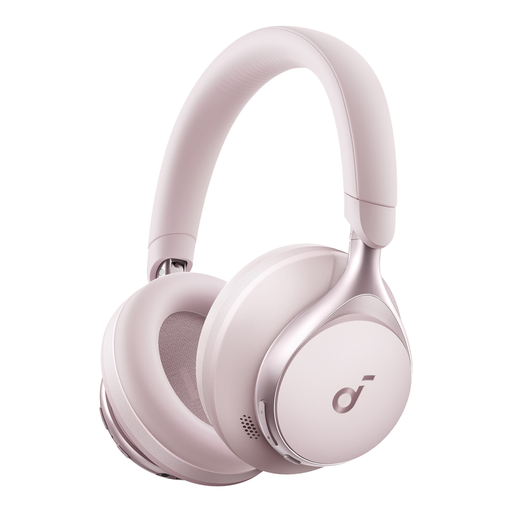
Why it suits this profile: This wireless over-ear model is designed for music, calls and everyday use. The headband and ear cushions are made for longer listening sessions.
The product specifications clearly state a maximum battery life of 55 hours and mention USB-C charging, making it easier to assess how long you can use them for.
Bluetooth, stereo sound, an over-ear design and a stated battery life of up to 55 hours.

Why it suits this profile: Over-ear ANC headphones for users who value features, comfort and a modern Bluetooth connection.
As well as Bluetooth 5.4, the product information lists a detachable cable. That means you’re not solely reliant on the battery.
Bluetooth 5.4, active noise cancellation, Cinema Mode and a detachable cable with a 3.5mm connection.

Why it suits this profile: These wireless earbuds are designed for users looking for a compact fit, ANC, call features and protection against dust and splashes.
The product specifications distinguish between 6 hours of playback with ANC and 7 hours without ANC. They also state the total playback time with the charging case.
IP57 rating, six microphones, Bluetooth 6.1, wireless charging and a 2-way speaker system.
We’ve put together a complete, up-to-date list of products that meet these strict selection criteria and current European safety regulations.
With most ANC models, you can switch on noise cancellation without playing music. The effect varies depending on your surroundings and the frequency of the sounds. Constant low tones are generally processed differently from voices or sudden noises. It’s best to avoid using them in traffic or while cycling if you need to hear what’s going on around you.
It depends on the model and settings. According to the product specifications, an over-ear model may offer around 20 to 80 hours, while wireless earbuds often last a few hours per charge and are then recharged using the case. ANC, volume, Bluetooth features and temperature all affect actual battery life.
They can be, but check whether the model has a built-in microphone and voice-enhancement features. The wired Jabra EVOLVE 30 II MS Stereo, for example, is a headset with a microphone and USB controller, but it isn’t wireless ANC headphones. If you want to switch easily between music and calls, Bluetooth, multipoint and physical controls are useful features.
