
Vandaag of morgen in huis

Kwaliteit gegarandeerd

Welkomstaanbiedingen ontgrendelen: GRATIS bezorging | Tot 80% korting | Gratis 30 dagen JoyPlus-proefperiode
Download de app
Choosing a new fridge-freezer can feel like navigating a maze of technical jargon and marketing promises. Before you know it, you're stuck with a model that constantly hums, uses more energy than advertised, or has you chipping away at ice after just six months. Let's uncover the most common pitfalls so you can make an informed decision.
Pitfall 1: The "Almost No-Frost" Deception. Many models are marketed with terms like "Low Frost" or "Smart Frost." This is not the same as a No-Frost fridge-freezer. It means less frequent defrosting, but not never. Ice build-up is reduced, but you will still need to manually defrost the freezer a few times a year.
Pitfall 2: Outdated Knowledge of Energy Labels. A refrigerator with energy class D might not sound impressive, but since the introduction of the new, stricter EU guidelines in 2021, this label actually indicates a reasonably efficient appliance. Many appliances that previously had an A+++ rating now fall into class C, D, or E. So, don't get fixated on the letter; look at the annual consumption in kWh instead.
To avoid a bad buy, it's helpful to focus on a few objective specifications. These determine the ease of use, durability, and long-term costs.
The choice between these two technologies directly impacts maintenance.
The compressor is the heart of the refrigerator. A traditional compressor kicks in at full power when the temperature rises and shuts off once the desired temperature is reached. This causes temperature fluctuations and a higher noise level.
A refrigerator with an inverter compressor works differently. It continuously adjusts its speed based on the cooling demand. The result:
The capacity you need depends on your household. A couple will find around 200-250 litres sufficient, while a family of four is better off with a 322-litre refrigerator or more. Don't just look at the total volume, but also at the layout. Are the shelves adjustable? Is there a bottle rack? Another practical feature is a reversible door. This allows you to decide whether the door opens to the left or right, which is convenient when placing the freestanding fridge-freezer in your kitchen.
Based on these objective criteria, we have selected a few models that suit different needs and households.
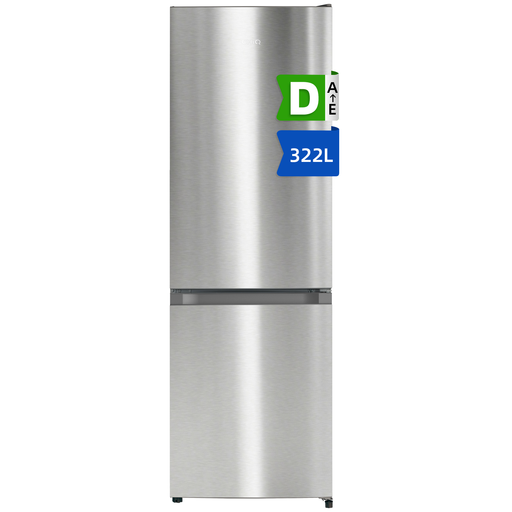
Why This Fits Their Persona: Perfect for families seeking space, convenience, and efficiency. The spacious 322-litre capacity is ideal for weekly groceries, and its quiet operation (37dB) won't be disruptive in an open-plan kitchen.
This model features Total No Frost, making manual defrosting a thing of the past. The inverter compressor and energy class D ensure an efficient and quiet appliance, exactly what modern labels promise.
The combination of a large capacity (322L), a very quiet noise level (37dB), and a sleek stainless steel finish. The reversible door offers extra flexibility for placement.
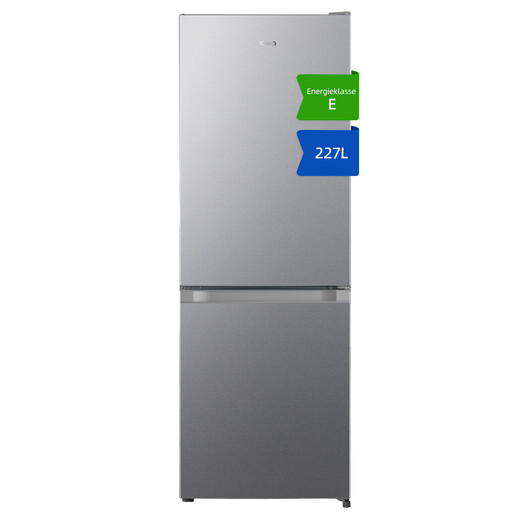
Why This Fits Their Persona: Ideal for smaller households or kitchens. This model offers sufficient space (227L) without taking up too much room and focuses on the essential features that truly matter.
This model is transparent about its specifications: it features Low Frost. This means you're choosing an affordable alternative that still requires far less maintenance than a standard freezer, without the premium price of Total No Frost.
Its compact 54 cm width makes it suitable for almost any kitchen. The combination of a practical layout and Low Frost technology offers excellent value for its price.
We have compiled a complete, up-to-date list of products that fully meet these strict selection criteria and local regulations.
No Frost completely prevents ice build-up through active air circulation, so you never have to defrost the freezer. Low Frost significantly reduces ice formation but still requires you to manually defrost the freezer 1 to 2 times a year. No Frost offers more convenience, while Low Frost is often a more budget-friendly option.
A quiet fridge-freezer typically produces less than 40 decibels (dB). Models with an inverter compressor often operate at around 35-37 dB. For comparison, 30 dB is similar to a whisper, and 40 dB is like the noise level in a library. A 37 dB model is therefore barely audible in a normal home environment.
Yes, absolutely. Since the introduction of the new, stricter energy labels in 2021, the A to G scale has become much more demanding. A refrigerator with energy class D is an efficient appliance by current standards. It is comparable to what would have previously been an A++ or even an A+++ rating. It is always wise to check the estimated annual energy consumption (in kWh) on the label for a direct comparison.
