
Vandaag of morgen in huis

Kwaliteit gegarandeerd

Welkomstaanbiedingen ontgrendelen: GRATIS bezorging | Tot 80% korting | Gratis 30 dagen JoyPlus-proefperiode
Download de app
Choosing a pot of NIVEA cream may seem straightforward, but the range varies considerably depending on skin type, when you use it and what you want it to do. A lightweight NIVEA day cream for normal skin is not automatically suitable for dry skin. Likewise, a NIVEA body lotion should not be assessed in the same way as a face cream.
Pay particular attention to three common pitfalls:
First, check whether the cream is intended for the face, body or both. Creams for dry skin often contain richer emollient ingredients, while a formula for normal skin may feel lighter.
For the face, there are several options:
For the body, a NIVEA body lotion and an intensive body cream are not the same. Lotion is often lighter and absorbs more quickly; a body cream may be more suitable for rough or very dry skin.
Check the ingredients on the product page and packaging. Commonly used substances in this selection include:
Fragrance, alcohol denat. and certain preservatives may be points to consider for some users. If you have sensitive skin, test a small amount on a limited area of skin first and stop using it if irritation occurs.
A 50 ml pack is common for face cream. Body products are often larger, for example 200 ml or 400 ml. This difference affects the price per use and practical suitability.
Also look out for:
The following product choices are matched to different usage profiles. The stated effects are based on the product description; brand-specific results will not necessarily be the same for every user.
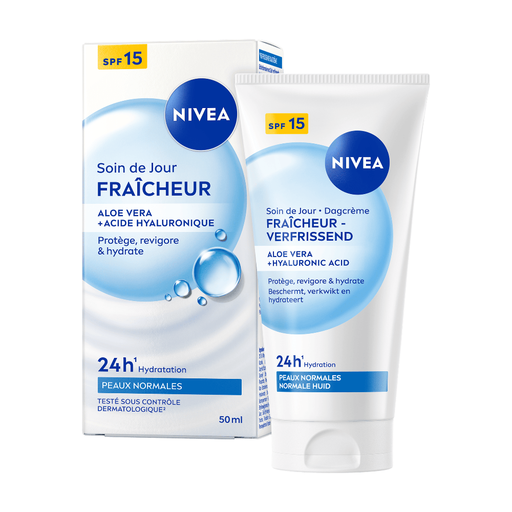
Why it suits this profile: A straightforward choice for normal skin and everyday use, with a lightweight texture and SPF 15.
The product information clearly states that it is intended for normal skin, as well as listing the 50 ml size and SPF 15. Do not expect intensive body care from this face cream.
Aloe vera, sodium hyaluronate, glycerine and SPF 15 in an everyday face moisturiser.
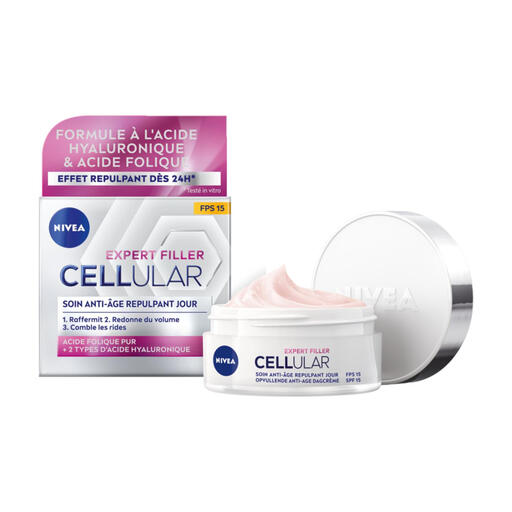
Why it suits this profile: For anyone looking for a caring day cream with hyaluronic acid, folic acid and limited SPF for everyday use.
The SPF factor is clearly stated. According to the product description, claims about a filler effect are based on information provided by the brand; they are not a guaranteed result.
50 ml, hyaluronic acid, folic acid and SPF 15; suitable as a daily moisturiser for all skin types according to the product information.
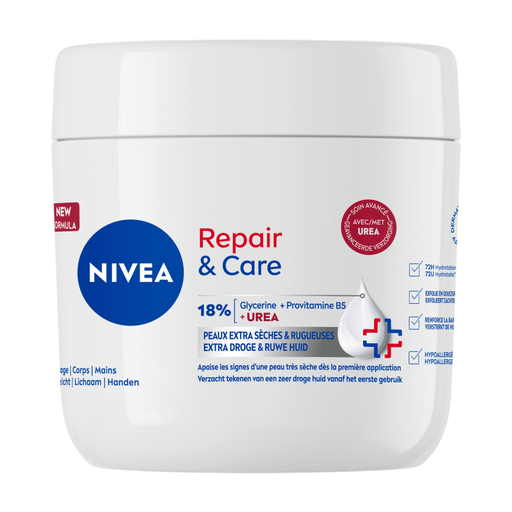
Why it suits this profile: For very dry and rough skin on the body, hands or other dry areas where a richer cream is preferred.
It is clearly labelled as a body cream and contains urea and glycerine. This makes it a more targeted choice than a general lotion for normal skin.
400 ml, 18% glycerine according to the product description, urea and provitamin B5; dermatologically tested according to the stated product specifications.
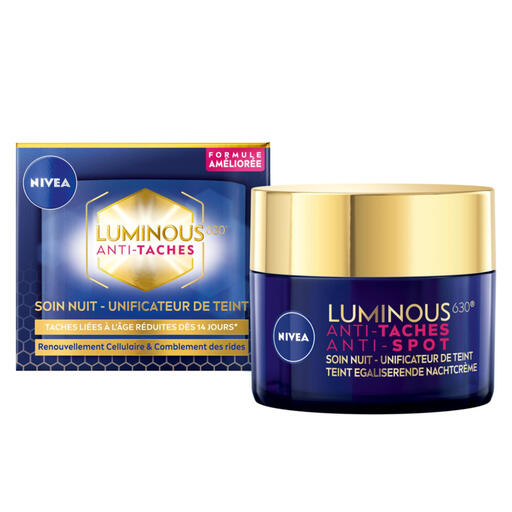
Why it suits this profile: For users specifically looking for a night cream for pigmentation marks, while also wanting hydration with hyaluronic acid.
The formula is intended for night-time use and explicitly mentions LUMINOUS630 and hyaluronic acid. According to NIVEA’s own research, results were measured after several weeks; individual results may vary.
50 ml, night-time application, LUMINOUS630, sodium hyaluronate and panthenol.
We have put together a complete, up-to-date list of products that fully meet these strict selection criteria and the applicable European safety regulations.
That depends on the exact formula. Check the fragrance, alcohol and other ingredients on the packaging. A product that has been dermatologically tested provides information about skin tolerance, but does not rule out an individual reaction. If you have sensitive skin, it is advisable to test a small amount on a limited area of skin first.
NIVEA day cream is generally designed for daytime use and may contain SPF, such as SPF 15 or SPF 30. A night cream does not usually contain SPF and often has a richer texture. Use a separate sun cream if you will be exposed to sunlight for a prolonged period.
Check the expiry date or the period after opening on the packaging. Store the cream as instructed, away from direct sunlight and with the packaging properly closed. A change in smell, colour or texture may be a reason to stop using the product.
