
Vandaag of morgen in huis

Kwaliteit gegarandeerd

Welkomstaanbiedingen ontgrendelen: GRATIS bezorging | Tot 80% korting | Gratis 30 dagen JoyPlus-proefperiode
Download de app
A night light for the nursery may seem like a simple purchase, but small differences can affect how practical it is day to day. A light that’s too bright can disturb sleep, while awkward controls can be a nuisance during night feeds or nappy changes. Claims about materials, battery life or “baby safety” can also sound more impressive than the verifiable specifications justify.
So, pay particular attention to these three common pitfalls:
For night feeds, nappy changes and bedtime, a warm white night light is generally more practical than cool white light. Check the colour temperature. According to the product specifications, lights around 2600–3200 K give off a warmer light.
A dimmable night light gives you more control. A low setting may be suitable beside the bed, while a brighter setting can be useful for changing your baby. If the light has RGB settings, check whether you can select warm white separately. An RGB night light is particularly appealing if you’d also like coloured settings for ambience or bedroom décor.
A touch night light is easy to operate when your hands are full. Check how the controls work, though: some models respond to a single tap, while others require you to touch and hold to dim the light.
A night light with a timer stops the light from staying on all night. Check the timer settings. Options include 30 minutes and 1 hour.
A light sensor responds to darkness, while a motion sensor switches on only when it detects movement. In a nursery, a steady, dim setting is often more soothing. In a hallway, on the stairs or in a bathroom, a sensor night light may be more convenient.
A rechargeable night light means you don’t need loose batteries, and it’s easy to move around. Check the battery capacity, stated battery life and USB connector type. A light that lasts a long time only at its lowest brightness will have a shorter battery life at maximum brightness.
Think about where you’ll position it, too. A mains-powered light is always ready to use, but take extra care if its cable is within a child’s reach. Product descriptions for soft silicone models sometimes mention features such as BPA-free materials, water resistance or suitability for children. According to the brand’s product information, you should still keep these lights away from heat and fire, and avoid prolonged contact with water. Always supervise babies and place the light out of their reach.
Also check whether the seller provides information about the manufacturer, the EU responsible person and any applicable conformity documents. Details of an EU responsible person are useful product information, but don’t replace your own checks of the product specifications and safety instructions.
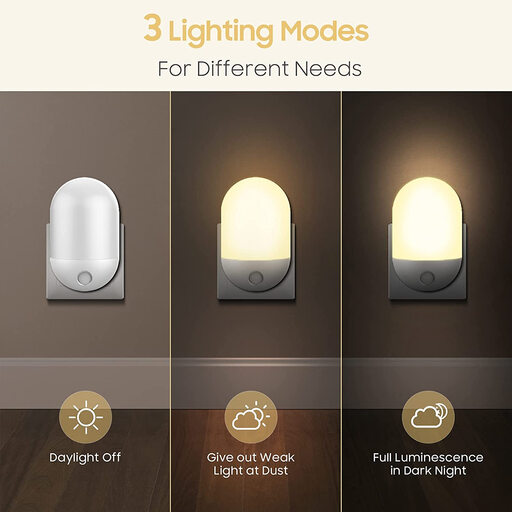
Why it suits this profile: This compact model is designed for anyone looking for a simple warm white LED night light for a bedroom, nursery or hallway. The light sensor switches it on and off automatically.
The product information lists 20 lm, warm white light at 2800–3200 K and an automatic light sensor. Check beforehand that its fixed brightness is right for your room.
0.5 W SMD LED, automatic activation in low light and a compact design for a plug socket or bedroom.
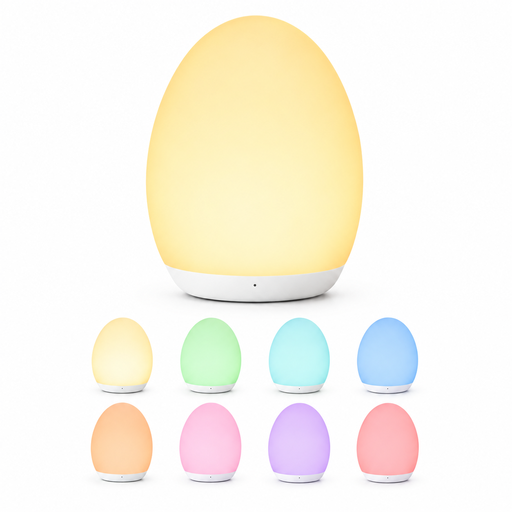
Why it suits this profile: This model is aimed at parents who value easy controls, adjustable settings and portability for night feeds, nappy changes and travel.
The product specifications distinguish between around 7 hours at maximum brightness and up to 100 hours on the lowest setting, making the battery claim easier to assess.
Dimmable warm white light, 8 colour settings, touch controls, memory function, 1-hour timer and a built-in 2000 mAh battery.
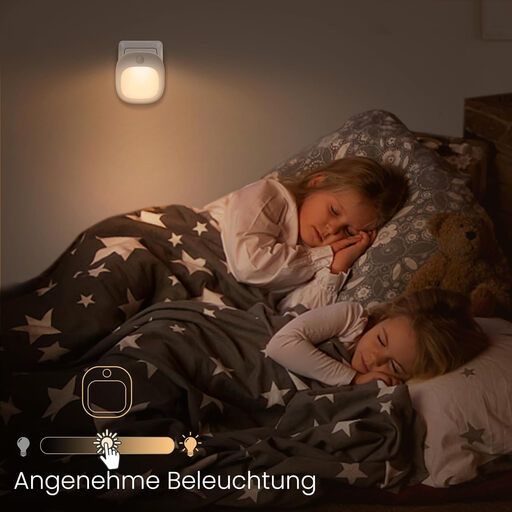
Why it suits this profile: This pair is ideal for families who need lighting in several places, such as the nursery, landing, bathroom or hallway.
According to the description, the motion sensor works only in low ambient light and within a range of around 3–5 metres. This helps prevent it switching on unnecessarily during the day.
Rechargeable 500 mAh battery, 3 colour temperatures, 5 brightness levels and a stated battery life of up to 10 hours in sensor mode.

Why it suits this profile: Its soft shape and easy controls will appeal to children who want a familiar-looking night light beside their bed.
According to the product description, this model has 3 brightness levels and a 30-minute timer. Its stated battery life of 8–10 hours depends on how it’s used.
Touch controls, rechargeable 1200 mAh battery, 30-minute timer and a soft silicone casing, according to the product information.
We’ve put together a complete, up-to-date list of products that meet these strict selection criteria and the applicable European safety requirements.
Warm white light around 2600–3200 K is a popular choice because it looks less cool than white light with a higher colour temperature. Choose a low brightness setting, too, and don’t point the light directly at your baby’s face. The best setting depends on the layout and size of the room.
It depends on the battery, brightness setting and mode of use. According to the product specifications, a light with a stated battery life of 100 hours may achieve this only on its lowest setting. Battery life is usually shorter at maximum brightness. Always compare the battery capacity, charging time and battery life in each mode.
Place the light on a stable surface beside the bed or changing table, out of your child’s reach. For breastfeeding, a dimmable night light with warm white light is practical, as you won’t need to light up the whole room. Keep USB cables out of reach and follow the safety instructions provided.
