
Vandaag of morgen in huis

Kwaliteit gegarandeerd

Welkomstaanbiedingen ontgrendelen: GRATIS bezorging | Tot 80% korting | Gratis 30 dagen JoyPlus-proefperiode
Download de app
A night light can make a dark nursery, children’s bedroom, hallway or wardrobe feel more comfortable and welcoming. However, it is easy to buy a model that disappoints in everyday use. A lamp may be too bright for the bedroom, run out of power quickly or only work properly when you move in exactly the right place.
So don’t just focus on colour and design. Pay particular attention to the controls, power supply, brightness, installation and safety information. Below, you’ll find out which features matter and which models suit different situations.
An RGB night light with multiple colours may look appealing, but the choice of colours alone says little about everyday use. For a nursery or bedroom, a soft, warm setting is often more practical than bright white light or rapidly changing colours. Check whether the dimmable night light has several brightness levels and whether the controls are easy to use.
A night light with a motion sensor is useful in a hallway, under a bed or near a cupboard. However, a sensor may switch on unnecessarily when someone walks past, while a light sensor only responds when the surroundings become dark. So check which type of sensor is used:
A sensor night light for a cupboard also serves a different purpose from a baby night light. Choose the controls based on where you intend to use the lamp.
A rechargeable night light is flexible, but it needs to be connected to a USB charger regularly. With a model featuring a built-in battery, capacity and the stated operating time are important considerations. A lamp that does not stand securely or is mounted with weak tape may also fall.
For sensor cupboard lighting, a slim model with clear installation instructions is often more practical than a large table lamp. Also check whether the product is intended for indoor use only, and keep a battery-powered lamp away from heat, moisture and naked flames.
Lumens indicate the amount of light produced. A small night light for a nursery or bedroom generally does not need to produce as much light as a lamp for a kitchen cupboard. A model with, for example, 20 lm is intended as orientation lighting, while multiple LEDs with a higher light output are better suited to a drawer or dark cupboard.
Colour temperature is expressed in kelvin:
An LED night light with an adjustable colour temperature can therefore be used in different rooms. For bedroom mood lighting or night-time care, warm light can be a practical choice; for a larder, neutral or cooler light may make it easier to see the contents clearly.
A plug-in night light works directly from a mains socket and does not need charging. You can move a USB night light or battery-powered model around, but pay attention to:
The stated operating time is a product specification and may depend on the selected brightness. So do not treat a brand’s claim as a guaranteed result in every situation. According to VIVREAL’s product information, the unicorn model provides approximately 8 to 10 hours of use with a 1200 mAh battery after 2 to 3 hours of charging.
Check whether information is provided about the material, heat generation, stability and intended environment. According to VIVREAL’s product information, the panda and unicorn lamps are made partly from food-grade silicone, ABS and PP; the brand also states that the silicone is BPA-free and recommends adult supervision when used around babies. This is information from the manufacturer and is not a general guarantee for every situation.
Place a lamp out of the reach of young children if cables, small parts or a charging port could pose a risk. A wall or cupboard lamp must be securely attached. With USB models, use only a suitable charger and follow the warnings on the product page.
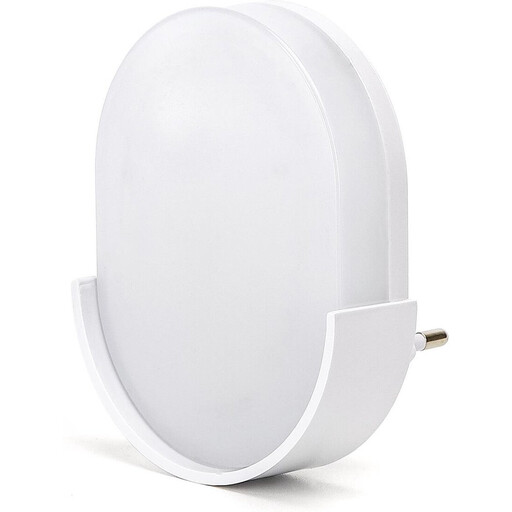
Why it suits this profile: This plug-in model is designed for direct use in a mains socket and, according to the product information, has a light sensor, a 40 lm light output and a power rating of 1 W. This means there is no need for a separate battery or rechargeable battery.
The light sensor means you do not have to switch the lamp on manually every time. The product specifications also state that it is for indoor use and has a fixed 230V connection, making the power supply clear from the outset.
Plug-and-play, 40 lm, 1 W and a stated lifespan of 25,000 hours according to the product information.
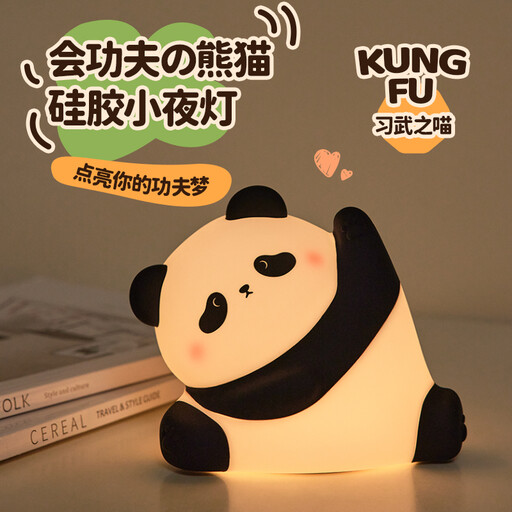
Why it suits this profile: The combination of a soft silicone casing, touch controls, three brightness levels and a rechargeable battery is ideal for parents looking for a portable bedside lamp for children.
The brightness is adjustable, so you are not limited to a single fixed light setting that may be too bright. USB charging eliminates the need for disposable batteries, but you do need to recharge the battery in good time.
1200mAh battery, three dimming levels and touch controls; according to VIVREAL, designed for nurseries, toddlers’ bedtime routines and bedroom decoration.

Why it suits this profile: This set is designed for cupboards, kitchens, wardrobes or shelves. The lamps are 40 cm long, have 61 LEDs and a PIR motion sensor with a stated range of 3 to 5 metres.
The three colour temperatures make the lamps suitable for both task lighting and a warmer atmosphere. The supplied mounting tape is intended for installation without drilling; check beforehand that the surface is clean, dry and suitable.
2-pack, 1100mAh battery, USB charging, PIR detection and a choice of 2800–3200 K, 4500–5000 K and 6500–7000 K.
We’ve put together a complete, up-to-date list of products that fully meet these strict selection criteria and the applicable European safety regulations.
That depends on its purpose. For orientation in a bedroom or hallway, a low light output may be sufficient. For cupboard lighting or a work surface, more LEDs and a higher light output are more practical. As well as lumens, consider the beam of light and whether the lamp can be dimmed.
A sensor can reduce unnecessary use by switching the lamp off automatically or activating it only when it is dark. Actual energy consumption depends on the power rating, how long the lamp is switched on and the type of connection. A plug-in LED model does not use a battery, while a rechargeable model needs energy periodically to recharge.
The lifespan varies from product to product and depends on the conditions of use. Manufacturers sometimes state an estimated lifespan in operating hours, such as 25,000 hours for the Aigostar model. This is a product specification, not a promise that every individual item will last exactly that long. Keep the lamp clean, avoid moisture and use the battery according to the instructions.
