
Vandaag of morgen in huis

Kwaliteit gegarandeerd

Welkomstaanbiedingen ontgrendelen: GRATIS bezorging | Tot 80% korting | Gratis 30 dagen JoyPlus-proefperiode
Download de app
A night light with motion sensor can be really handy when you’re walking to the nursery, the toilet or the kitchen during the night. The light comes on automatically as soon as movement is detected, without you having to fumble for a switch. However, not all models are suitable for the same room or use case.
Many buyers focus mainly on the number of lumens or the appearance. As a result, important features are sometimes overlooked – things like a sensor that also reacts during the day, a light colour that’s too bright for the bedroom, or a battery that needs frequent recharging. With the points below, you can compare an LED night light based on verifiable product specifications.
A motion sensor can switch the light on when someone walks past. If the model doesn’t also check whether it’s dark, it could burn unnecessarily during the day. So look for a combination of motion sensor and light sensor. Products with a lux threshold – for example ≤20 LUX – are easier to assess: according to the product specification, the automatic function is intended for dark conditions.
A high light output isn’t automatically practical next to a bed or in a nursery. For a night light for nursery or bedroom, a low setting and a warm white night light are often more pleasant than cool white light. A model with multiple colour temperatures or dimming levels gives you more control. For a hallway or toilet, a slightly brighter light can be more useful.
A rechargeable night light is flexible to place, but do check the battery capacity, the stated usage time and the type of connection. A built-in battery of 500 mAh is not the same as a model with 1,200 mAh. What’s more, the usage time depends on the brightness and mode you choose. A plug-in night light avoids the need for charging, but does require a suitable socket in the right place.
Check:
For a night light in the hallway and toilet, an automatic model is usually the most practical. In a cupboard, near stairs or next to a bed, a magnetic mount can be handy. Just make sure the sensor isn’t covered and that the light is securely attached.
Lumens indicate how much light a lamp emits according to the product specification. A model of 20 to 40 lumens is mainly intended as orientation lighting. A version with 400 lumens is noticeably more powerful and can also light up a larger room or cupboard.
Colour temperature is expressed in Kelvin:
A dimmable night light means you don’t need a different light for every situation. Also check whether dimming is stepless or in fixed steps. With RGB models, “seven colours” doesn’t automatically mean that all colours can be dimmed individually; so look at the operating description.
A plug-in model is simple to use, while a battery or USB model gives you more freedom of placement. A magnetic back or hanging hook can make installation possible without drilling. Caution is still needed in damp rooms: the products mentioned are intended for indoor use and should, according to the product information, be kept away from water and excessive moisture.
Also check:
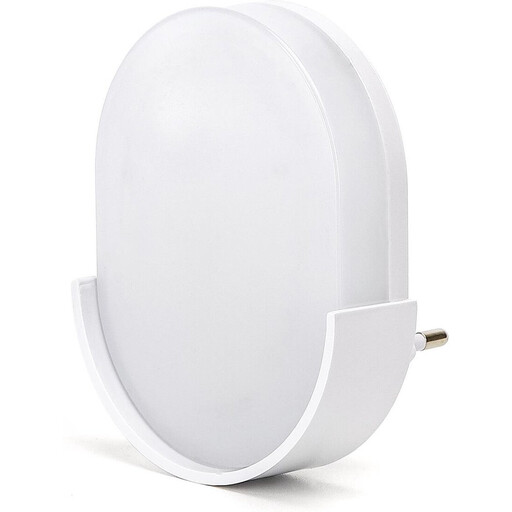
Why this fits the profile: This plug-in night light works without a battery or charging cable and, according to the product data, has a day/night sensor. That makes it suitable for a socket in the hallway, bedroom or nursery.
The light sensor is designed to automatically distinguish between day and night, so manual switching on and off is less necessary.
Plug-and-play, 40 lumens, 1 W power and a stated colour temperature of 6500 K.
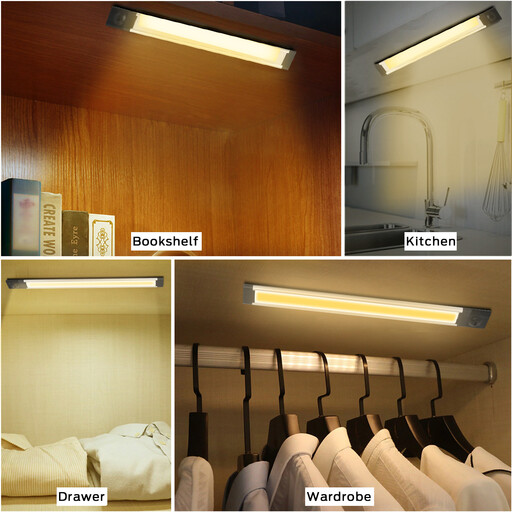
Why this fits the profile: The combination of 36 SMD LEDs, a stated luminous flux of 400 lumens, magnetic mounting and a colour temperature of 2800 to 6500 K offers plenty of adjustment options for the bedroom, cupboard, stairs or garage.
The dimming function and adjustable colour temperature help prevent one fixed, overly bright light setting being used everywhere.
Dimensions of 26 x 4 x 1 cm, magnetic attachment and operation with dimming function.
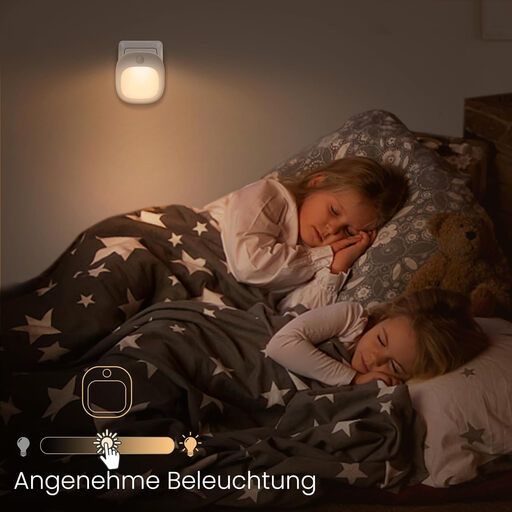
Why this fits the profile: This duo is designed for places without a suitable socket, such as a landing, wardrobe or bedside table. The product information mentions USB charging, three colour temperatures and five dimming levels.
The stated sensor mode activates on movement within 3 to 5 metres and at a maximum of 20 LUX. The usage time is given as up to 10 hours in sensor mode.
500 mAh battery, 5V-1A USB charging, 30 lumens and five brightness levels.
We’ve put together a full, up-to-date list of products that fully meet these strict selection criteria and comply with current European safety regulations.
Place the light in a spot where the sensor can directly detect the walking route – for example next to a bed, at the start of a hallway or near the toilet entrance. Avoid obstacles such as cupboard doors or thick decorations. Test the sensor in the dark and check that the light doesn’t shine directly into your eyes.
That depends on the battery, brightness level and usage mode. Check the stated capacity and usage time. A product with 500 mAh may, according to the product information, work for up to 10 hours in sensor mode, while another model may state a shorter usage time. Treat these figures as product specifications, not as a guarantee for every situation.
An LED night light with a low wattage typically uses very little electricity while it’s on. What’s more, a model with a light sensor switches off in daylight according to the product specification. With a rechargeable night light, the energy use shifts to charging the battery. Pay particular attention to the stated power, the burn time and the light setting you choose.
