
Vandaag of morgen in huis

Kwaliteit gegarandeerd

Welkomstaanbiedingen ontgrendelen: GRATIS bezorging | Tot 80% korting | Gratis 30 dagen JoyPlus-proefperiode
Download de app
A night light with a motion sensor can be useful in the bedroom, nursery, hallway, bathroom, by the stairs or inside a wardrobe. The light switches on automatically when you get up or walk past, so you do not have to search for a switch. However, not every model is equally suitable for every room.
Pay particular attention to these common pitfalls:
Check the detection range and how the automatic night lighting works. Some models switch on as soon as movement is detected. Others combine a PIR sensor with a light sensor and only switch on when it is dark enough.
A stated threshold of, for example, 20 lux means that, according to the product information, the light only activates automatically when the ambient light level is low. A range of 3 to 5 metres is generally suitable for a short hallway, bedroom or staircase. Do not place the sensor light behind a cupboard door or curtain, as this can affect detection.
Lumens (lm) indicate how much light a lamp produces. For a night light in a bedroom or nursery, a lower light output is often more practical than a powerful lamp intended for a garage.
Also consider the colour temperature:
A dimmable night light offers greater flexibility. Five brightness levels are easy to select, while stepless dimming gives you even more control. Also check whether the light remembers its previous setting.
A rechargeable night light with a USB connection is useful when there is no socket in the right place. Check the battery capacity, stated operating time and charging time. A built-in 500 mAh battery is compact, but the actual operating time depends on brightness, sensor activity and charge level.
A plug-in model is ready to use straight away and does not need to be recharged. On the other hand, you cannot choose its position freely. For a mains-powered light, check that the specifications are suitable for the Dutch electricity supply, such as 220–240 V or 100–240 V.

Why it suits this profile: A set of two lights is a practical starting point for, for example, the bedroom and hallway. The built-in battery and USB charging make placement less dependent on nearby sockets.
The product information states a sensor range of 3–5 metres and automatic activation at a maximum of 20 lux. This makes it clearer when the sensor is intended to operate.
500 mAh USB-rechargeable battery, three colour temperatures and five brightness levels. According to the product information, the operating time in sensor mode is up to 10 hours.
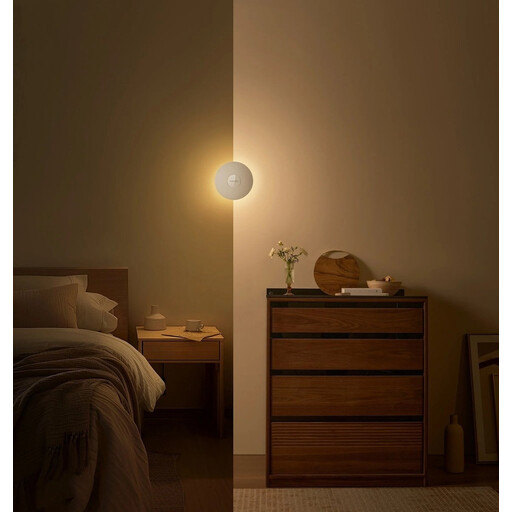
Why it suits this profile: This wireless night light is ideal for households that value a compact design, simple installation and a low light setting for moving around at night.
The light has two brightness levels and an automatic setting for dark conditions. This means you do not necessarily need to use a bright setting beside the bed.
600 mAh battery, 120° sensor with a range of 5 metres, warm white light of 2700 K and installation with a magnet or the supplied 3M adhesive strip.
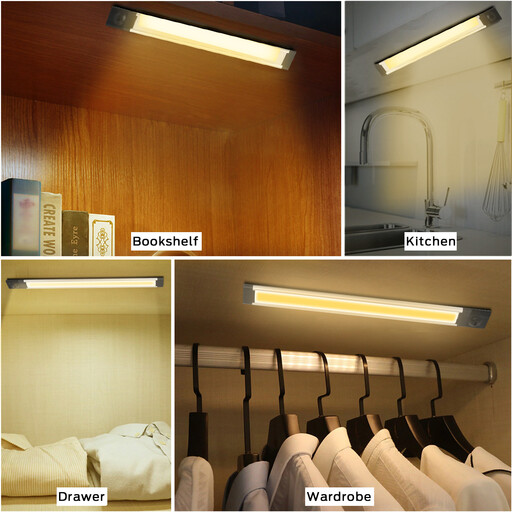
Why it suits this profile: The higher light output is particularly useful in a wardrobe, on the stairs, in a storage room or garage, where you need more visibility than a bedside light provides.
It can be installed with a magnet or hook, without drilling or screws. This makes it easier to move or remove when the optimal sensor position changes.
36 SMD LEDs, a stated light output of 400 lumens, USB charging and a colour temperature range of 2800 to 6500 K. The product information also mentions gesture control with a dimming function.
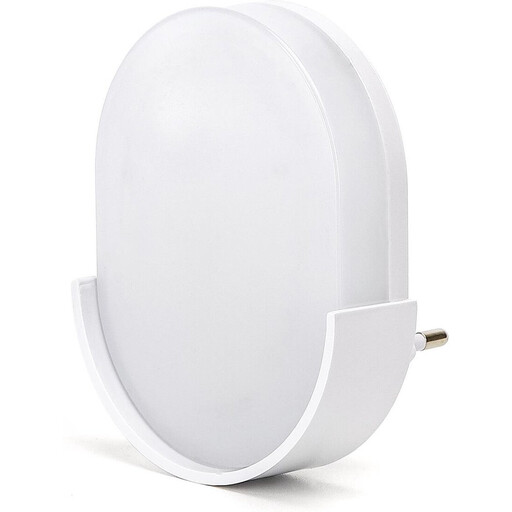
Why it suits this profile: This plug-in LED night light is suitable for a permanent position by an entrance, in a hallway or beside a socket near a child’s bedroom. You do not need to recharge a battery or replace batteries.
According to the product information, the light sensor distinguishes between day and night. The fixed plug also prevents the light from unexpectedly switching off because of a flat battery.
1 W power, 40 lumens, a wide 120° beam and stated consumption of 0.5 kWh per 1,000 hours. The model is intended for indoor use.
Place a night light for a hallway or stairs where the sensor has a clear view of the direction of movement. Do not point the light directly at a mirror or strong light source. In a nursery, warm white light at a low brightness is usually a practical choice. For a bathroom or toilet, a neutral colour temperature is often clearer, but always check that the product is suitable for use in a damp environment. According to their product information, the models mentioned are not intended for direct contact with water.
For a rechargeable night light:
An LED light generally uses very little energy. With a plug-in model, you can compare consumption using the stated wattage and number of hours of use. With a battery-powered model, charging frequency is the main consideration. A light with a high lumen output or a long operating time per activation may need charging more often.
We have put together a complete, up-to-date list of products that fully meet these strict selection criteria and the applicable European safety regulations.
Follow the manufacturer’s installation instructions. Many wireless models use a magnet, adhesive strip or hook. Position the light at a height where the PIR sensor can detect movement in the direction of travel. Test the position in the dark before completing the installation.
This varies by model and usage. The stated operating time is usually based on a particular brightness level and sensor setting. The product information for the 2-pack states up to 10 hours in sensor mode; the Aigostar light with PIR and light sensors states 6 hours. Check the charge level when the light becomes less bright.
The cost depends on the wattage, operating time and your electricity tariff. A 0.5 or 1 W light uses very little electricity when used for limited periods at night. A rechargeable model uses electricity while charging, whereas a plug-in model can remain connected continuously. So do not compare only the purchase price; also consider the power supply and expected usage.
