
Vandaag of morgen in huis

Kwaliteit gegarandeerd

Welkomstaanbiedingen ontgrendelen: GRATIS bezorging | Tot 80% korting | Gratis 30 dagen JoyPlus-proefperiode
Download de app
A night light might seem like a simple purchase, but the differences between models are significant. Whether you want a soft glow beside the bed, automatic lighting in the hallway, or a lamp for the nursery, you need to look beyond colour and shape.
Three common pitfalls to avoid:
A night light with a sensor can work in two ways:
With an LED night light, also check whether the sensor switches off automatically. Some models only describe when the light turns on, but the switch-off time may be missing.
For cupboard lighting with a sensor, dimensions are also important. A slim model fits more easily under a shelf or inside a cupboard. The Ultra-thin Cabinet Light, for example, measures 300 × 38 × 10 mm and, according to the product description, comes as a set of two. The built-in 1100mAh battery is charged via USB.
A night light for the bedroom or nursery doesn’t need to be as bright as a task or reading lamp. A warm white colour around 2800–3200K is often chosen for a calming atmosphere. For a cupboard or kitchen, a more neutral or cooler light may be more practical.
Pay attention to how you control the brightness:
The product specifications for the 2-pack energy-saving light sensor lamp, for example, state 10–100% continuous dimming, warm white light at 2800–3000K and a power consumption of 0.3W. These are verifiable details; suitability depends on where and how you intend to use it.
A plug-in model is ready to use as soon as it’s near a socket and doesn’t need charging. A rechargeable night light is more flexible to move around, but does require a charging session.
Before you buy, check:
For a baby night light or children’s night light, stable placement is essential. A soft casing can be nice to hold, but keep the lamp out of a baby’s reach unless the product information and usage conditions allow otherwise. According to the description of the VIVREAL models, adult supervision is recommended for babies.
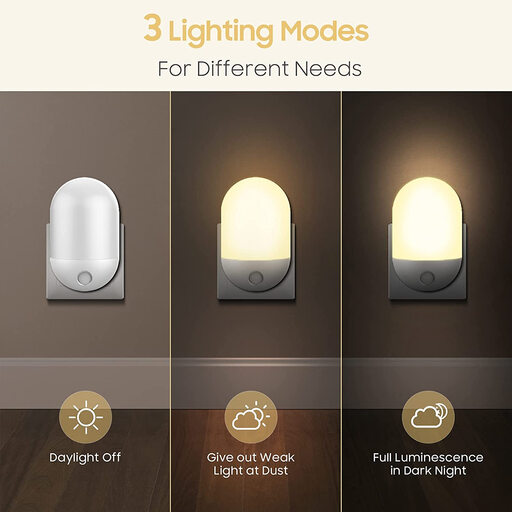
Why this fits the profile: This plug-in night light is designed for a bedroom, nursery or hallway where automatic warm white light is wanted without any manual operation.
The product title clearly states a light sensor and warm white light, making its operation clearer than models that don’t specify the sensor type.
SMD LED, 0.5W, 20 lumens and a stated colour temperature of 2800–3200K.
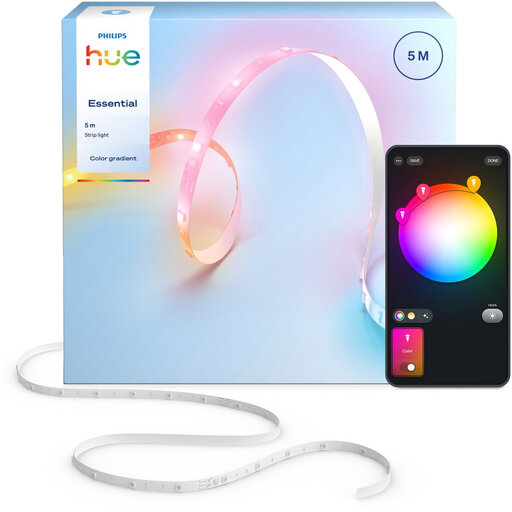
Why this fits the profile: Ideal for anyone who wants to combine ambient lighting behind furniture, under shelves or around a TV with app and voice control.
The description explicitly mentions dimming, cutting to length and control via the Philips Hue app. Do check which features require a Hue Bridge.
5 metres in length, colour changing, dimming function, Matter support and a stated CE marking.

Why this fits the profile: A practical choice for kitchen cupboards, wardrobes, shelves and dark passageways where automatic lighting is needed.
The PIR motion sensor and its 3–5 metre range are clearly stated. This means you can plan the placement in your cupboard or walkway more accurately beforehand.
41 LEDs, three colour temperatures, USB charging, 1100mAh battery and drill-free installation according to the product description.
We’ve put together a full, up-to-date list of products that fully meet these strict selection criteria and comply with current European safety regulations.
That depends on the wattage and the number of hours it’s on. A model rated at 0.3W or 0.5W has a low stated power consumption according to the product specification. To work out the actual cost, multiply the wattage by the number of hours it’s on and your electricity rate. A sensor or timer can help prevent unnecessary use.
It can be, depending on the type of light, where it’s placed and the product instructions. Choose a soft brightness level and position the lamp out of the child’s reach. Check any warnings about heat, moisture, cables and supervision. An automatic light sensor model is especially handy when you don’t want to use any controls.
The run time varies depending on the brightness setting, battery and type of operation. The VIVREAL Unicorn Night Light states a 1200mAh battery, a charging time of 2–3 hours and a stated run time of 8–10 hours according to the product description. Treat these figures as product specifications; the actual duration may vary depending on the settings you use.
