
Vandaag of morgen in huis

Kwaliteit gegarandeerd

Welkomstaanbiedingen ontgrendelen: GRATIS bezorging | Tot 80% korting | Gratis 30 dagen JoyPlus-proefperiode
Download de app
A night light might seem like a simple purchase, but the wrong model can quickly disappoint. The light might be too bright for the nursery, the sensor could react to the slightest movement, or the battery might need constant recharging. Attractive features like RGB colours, a timer or a remote control aren't always useful for your particular situation.
For parents of babies and toddlers, the choice usually comes down to soft light, simple operation and safe use. In a hallway, wardrobe or bathroom, what matters most is a sensor, low energy consumption and good placement. Below, you'll find out which features to check before buying an LED night light, rechargeable night light or night light for the bedroom.
A high lumen count isn't always practical. For a night feed or nappy change, you want enough visibility, but not a broad, bright light that illuminates the whole room. So pay attention to brightness, colour temperature and dimmability. Warm white light around 2700 to 3200 K is often perceived as softer than cool daylight.
A night light with a sensor can be handy in the hallway or on the way to the bathroom. In a nursery, however, a motion sensor might switch on unnecessarily when someone turns over in bed. So check whether it's a light sensor, a night light with a motion sensor or a combination of the two.
A light sensor reacts to darkness and daylight. A motion sensor reacts to movement within a certain range. The placement, direction and sensitivity all help determine how often the light comes on.
A stated usage time usually applies at a specific brightness. According to the product information for the VAVA VA-CL009, for example, the usage time is up to 100 hours at the lowest brightness; at maximum brightness, it's around 7 hours. So don't just compare the highest figure; also look at the charging time, battery capacity and the light setting you choose.
For a child's room, dimmability is practical. A dimmable night light can be set softer for sleeping and temporarily a little brighter for changing nappies. Pay attention to the difference between fixed settings and stepless dimming:
A lamp with 20 to 40 lumens is often suitable as orientation lighting. For a wardrobe or larger hallway, more light may be needed. The right choice depends on the room and the distance to the surface you want to illuminate.
A plug-in model is ready to use straight away and doesn't need charging. That's handy for a fixed spot in the hallway or nursery. A rechargeable night light is more flexible: you can take it to the changing table, the bed or on holiday.
With USB models, check the charging voltage. According to the product information, the VAVA VA-CL009 uses a compatible DC 5 V / 1 A power supply. Don't use just any adapter if the specifications don't match. Keep charging cables out of reach of young children and don't place a lamp near heat, moisture or bedding while charging.
A soft silicone design can be nice to hold, but that doesn't automatically make a lamp suitable as a toy. Check the age recommendation, warnings and battery compartment. The Little Dutch Forest Friends night light, for example, states an age of 3 years and over and warns about small parts and batteries.
For every night light, remember:
A brand's statement about safety or performance should be read as that brand's product information. According to the VIVREAL product description, the panda lamp is made from food-grade silicone; always check the age warnings and usage instructions as well.
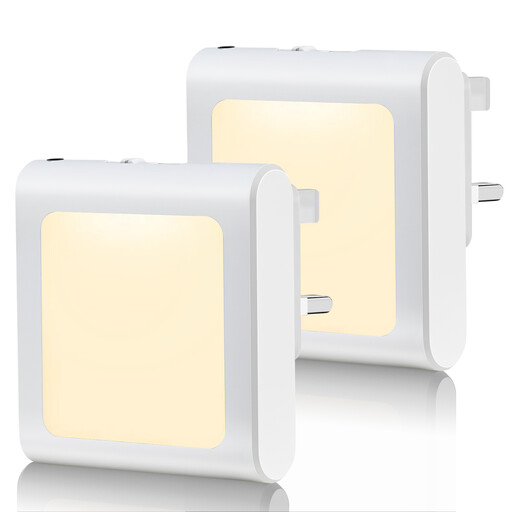
Why it fits the profile: The set includes two compact lights, ideal for, say, the bedroom and hallway. The product description mentions soft, warm light, low energy consumption and direct plug-in connection.
There's no battery to unexpectedly run out, and the set is designed for multiple rooms. Do check beforehand whether the fixed brightness suits your room.
Two units, ABS+PC housing, compact design and direct mains power.
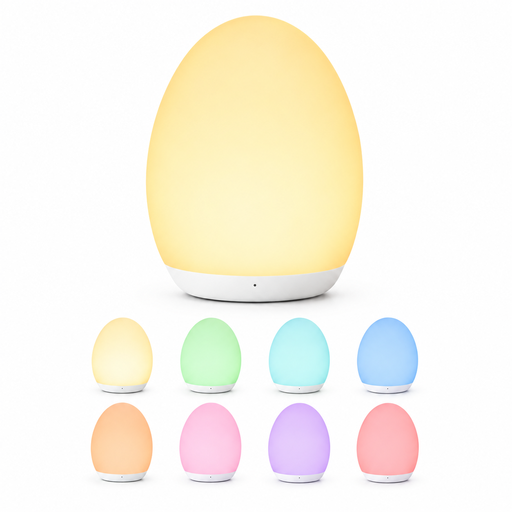
Why it fits the profile: This model is designed for night feeds, nappy changes, bedtime and travel. It's operated by touch and offers warm white light, eight colour settings, a memory function and a one-hour timer.
The brightness is adjustable and the timer prevents the light from staying on unnecessarily. You'll need to assess the stated battery life at your preferred light setting.
2000mAh battery, dimmable warm light, eight colours, touch control and one-hour timer.
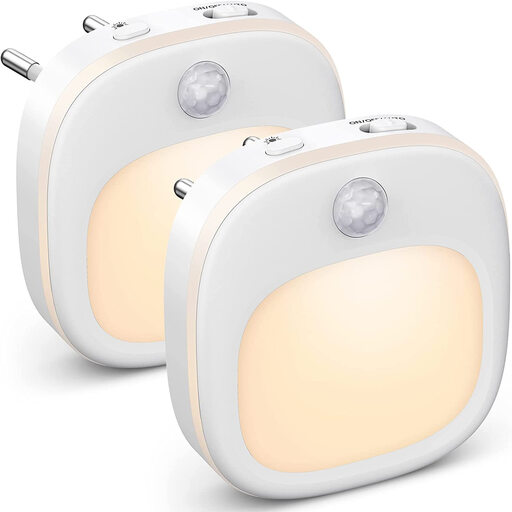
Why it fits the profile: The two lights are intended for rooms such as the bedroom, nursery and hallway. According to the product description, they feature motion detection, three colour temperatures and five dimming levels.
The sensor limits unnecessary lighting when no one is present. Check the placement so that movements outside the desired area don't cause it to switch on needlessly.
Two lights, motion detection, three colour temperatures and five brightness levels.
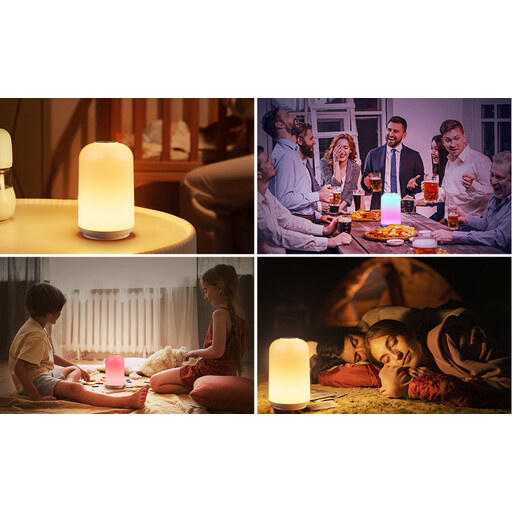
Why it fits the profile: This model combines warm white with RGB lighting. It's suitable for a bedside table, shelf or child's room when you want both practical illumination and colour settings.
The warm white setting is available separately, so RGB isn't the only option. According to the product information, the light sensor activates at a maximum of 40 lux.
12 SMD LEDs, 40 lumens, USB charging, built-in battery, warm white and seven RGB colours.
We've put together a full, up-to-date list of products that fully meet these strict selection criteria and comply with current European safety regulations.
That depends on the wattage and the number of hours it's on. A lamp of 0.3 W uses less energy over long periods than a 1 W model. A sensor or timer can further reduce consumption because the light isn't on continuously. For plug-in models, look at the stated wattage; for rechargeable models, look at the battery capacity.
Warm white light is usually the practical choice for night-time care, because you can adjust the brightness to suit the room. RGB lighting can be suitable for ambience or a child's room, as long as the model also offers a fixed, soft light setting. Also check that the colour doesn't keep changing automatically when you don't want it to.
Position a light or motion sensor so that it detects the desired walking area, but isn't pointed directly at a bed or cot. Keep it away from water and textiles, and make sure the light is stable or properly fixed. Test the sensor after installation at different times during the night before using it daily.
