
Vandaag of morgen in huis

Kwaliteit gegarandeerd

Welkomstaanbiedingen ontgrendelen: GRATIS bezorging | Tot 80% korting | Gratis 30 dagen JoyPlus-proefperiode
Download de app
A night light might seem like a simple purchase, but the differences between models are significant. One lamp can be too bright for a nursery, a motion sensor might activate unnecessarily often, or a rechargeable model may not last as long as expected. An attractive design also doesn’t guarantee ease of use, convenient controls or suitable placement.
So pay particular attention to these common pitfalls:
Brightness is often expressed in lumens (lm). A low number of lumens is usually sufficient for orientation in a bedroom or hallway. For a cupboard, staircase or workspace, more light may be needed. A model with 20 to 30 lumens, for example, is designed for soft orientation light, whereas a lamp with 400 lumens is noticeably more powerful.
Also look at the colour temperature in kelvin (K):
A dimmable night light offers more control. Stepless dimming is handy when you want to adjust the brightness precisely. For children, simple touch operation or a remote control can be practical, but keep accessories out of reach.
A night light with a motion sensor usually switches on automatically when movement and low ambient light are detected. Always check the range and light threshold. On some models, the range is around 3 to 5 metres and the sensor activates at approximately 20 lux. In a small bedroom that may be sufficient; in a long hallway, placement is more important.
A light sensor reacts to darkness, while a motion sensor reacts to activity. These functions are therefore not the same. A sensor night light is especially practical for a nighttime route to the bathroom, cupboard or kitchen.
A night light with a timer switches off after a set period. This can prevent the lamp from staying on all night. Check whether the timer is fixed, for example at 30 minutes, or adjustable.
A rechargeable night light with a USB connection can be moved around without needing a socket nearby. Pay attention to:
The stated usage time is a product specification under certain conditions. The actual duration can change depending on brightness, sensor use and battery condition.
For the housing, materials such as ABS, PC, metal, PP and silicone are used. A soft silicone model may feel nice for children, but that doesn’t mean it’s unlimitedly resistant to water, heat or drops. Check the manufacturer’s warnings. Many models are only intended for indoor use and must be kept dry.
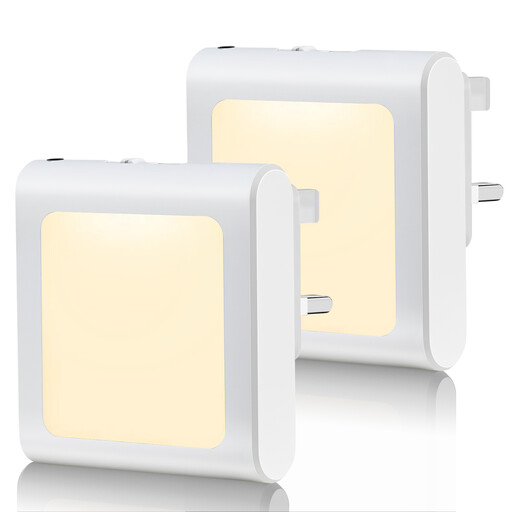
Why this fits the profile: This two-pack offers a simple solution for, say, the bedroom and hallway. The lamps plug directly into a socket and require no installation or battery management.
The product information states a compact size, warm light and low energy consumption, without vague sensor or battery claims.
Two-pack; ABS+PC housing; suitable for bedroom, hall and nursery according to the product description.
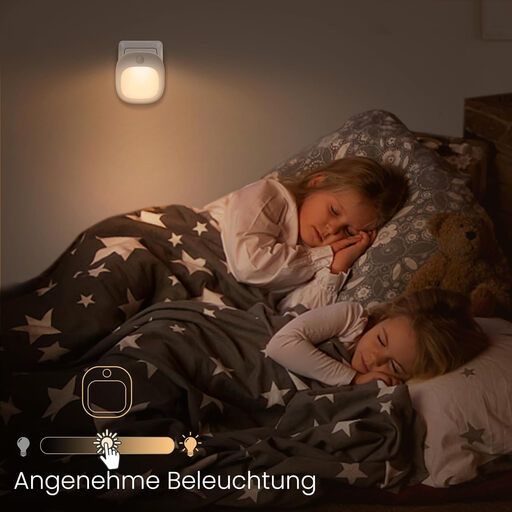
Why this fits the profile: For those who want to use different settings in a nursery, bedroom, bathroom or hallway. The lamp runs on a built-in battery and has multiple light modes.
The specifications mention the battery capacity, sensor range, five dimming levels and three colour temperatures. This makes it clear in advance which features you’re buying.
500mAh rechargeable battery; up to 10 hours in sensor mode according to the product information; 30 lumens; five brightness levels.
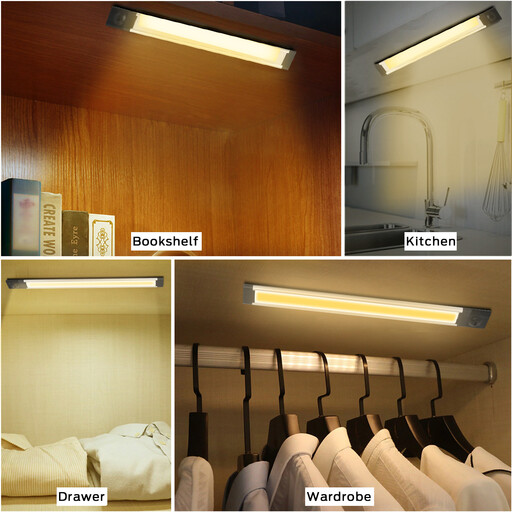
Why this fits the profile: This model is aimed at larger or darker areas such as a long hallway, wardrobe, staircase, garage or storeroom where more light is needed.
The stated light output of 400 lumens makes it clear that this is not a subtle lamp for right next to a bed. The mounting options help with targeted placement.
36 SMD LEDs; 400 lumens; colour temperature of 2800–6500 K; magnetic attachment and hanging hooks.

Why this fits the profile: The soft unicorn shape and touch operation suit a child’s room or toddler’s room. The lamp is portable and requires no fixed installation.
The three brightness levels and the 30-minute timer make the operation clear. The manufacturer recommends adult supervision for babies.
1200mAh rechargeable battery; three dimming levels; 30-minute timer; touch control and silicone housing according to the product description.
We’ve put together a full, up-to-date list of products that fully meet these strict selection criteria and comply with current European safety regulations.
Do not place a night light for babies inside the cot and keep cables out of reach. Check whether the model is suitable for indoor use according to the product information, and keep it away from water, heat sources and flammable materials. A lamp for the bathroom should only be used when the specifications are suitable; the models described here generally warn against moisture.
With a plug-in model, pay attention to the position of the socket. A lamp that protrudes can be awkward in a narrow hallway. With a rechargeable model, a stable surface or correct mounting is important, especially in a place where children can reach it.
Warm white light of around 2800–3200 K is often chosen for bedrooms and nurseries because it appears less bright than cool white light. Also choose a low brightness level or a dimmable setting. The right choice depends on the room and the child’s preference.
This varies depending on the battery, brightness level and usage mode. The product specifications may state, for example, a usage time of up to 10 hours in sensor mode. Treat this as a stated value under specific conditions, and charge the lamp before using it for an extended period.
A lamp that only switches on in darkness and when there’s movement generally stays on for less time than a lamp that is continuously on. The actual consumption depends on the wattage, the number of activations and the set brightness. So check both the power rating and the operating mode before making a purchase.
