
Vandaag of morgen in huis

Kwaliteit gegarandeerd

Welkomstaanbiedingen ontgrendelen: GRATIS bezorging | Tot 80% korting | Gratis 30 dagen JoyPlus-proefperiode
Download de app
A night light might seem like a simple product, but the difference between a smart buy and a disappointing purchase often comes down to the details. A lamp can be too bright for the bedroom, run out of battery after a short time, or simply look good in the product photo.
For parents, safety, ease of use and cleaning also matter. In the hallway, cupboard or bedroom, adults often want lighting that comes on automatically. This guide will help you compare the key features of a night light and see which models suit different situations.
A panda night light, unicorn night light or other children’s lamp for the bedroom might look appealing, but you should also check how it operates and how it’s powered. A decorative model with a button on the back is less practical when you need light quickly in the middle of the night.
For a children’s night light, also pay attention to the recommended age, small parts and any battery compartments. A lamp for children isn’t automatically a toy.
The term “soft light” doesn’t tell you how much light the lamp actually gives off. For a nursery, a low setting can be pleasant, whereas for a cupboard or hallway you’ll need more brightness. So look at the available dimming levels, lumens and colour temperature when this information is provided.
Warm white light around 2800 to 3200 K generally gives a warmer appearance than cool white light. For reading the contents of a cupboard, a higher colour temperature can be more practical.
A night light with a motion sensor needs a clear view of the walkway. Behind a door, curtain or tall cupboard, detection may be less effective. Also check whether the model runs on mains power or uses a rechargeable battery.
A cupboard light with a sensor is especially handy when you don’t want to fumble for a switch. For a bed or cot, an automatic sensor isn’t always desirable if the lamp comes on with every movement.
An LED night light uses an integrated or replaceable LED light source. Check:
A dimmable night light with multiple settings gives you more control than a model with a single fixed brightness. For a kids’ room, a low setting can work well as mood lighting for the bedroom, while a higher setting is handy for changing nappies or tidying up.
A rechargeable night light saves you from having to replace disposable batteries regularly. Look at the battery capacity, the stated run time and the charging time. The run time can vary depending on the light setting, so a manufacturer’s figure isn’t a guarantee for every situation.
Also pay attention to the connection. A supplied USB cable is practical, but check whether an adapter is included. With a plug-in night light, there’s no need to charge it, but you are tied to the location of the socket.
A night light with a light sensor can switch on automatically when it gets dark. A model with a motion sensor reacts to movement within its specified range. Check whether there’s information about the detection distance and how the lamp switches off again.
A night light with a timer is handy for a fixed switch-off time. The VIVREAL unicorn model, for example, has a 30-minute timer mentioned. Use a timer as a practical feature, not as a promise that a child will fall asleep faster or better.
Look at the material, stability and any warnings in the product information. For a lamp in a nursery, rounded shapes and a sturdy design are practical, but always keep the product out of reach of babies when the manufacturer recommends supervision.
Many models are only intended for indoor use. Clean a lamp according to the instructions, usually with a soft, slightly damp cloth. Do not submerge an electrical product in water unless the product information explicitly allows it.
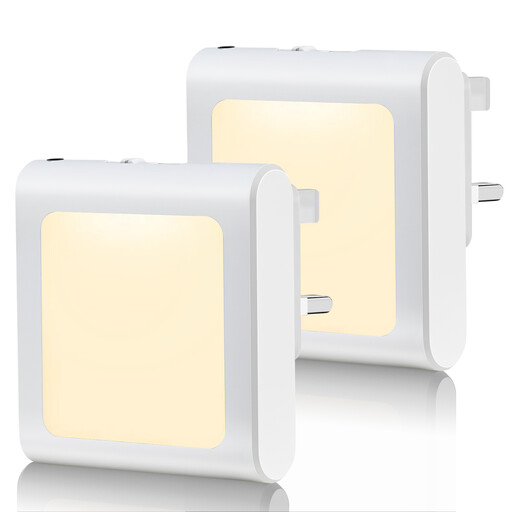
Why it fits this profile: The set includes two compact night lights, ideal for the bedroom, hallway or nursery. The simple plug-in solution requires no installation or charging.
The product description mentions warm light, low energy consumption and a compact ABS+PC housing. Do check the exact brightness before buying and place the model out of reach of young children.
Two lights per pack; plugs directly into a socket; suitable for multiple rooms.

Why it fits this profile: This model combines a decorative design with adjustable lighting and portability. It suits parents who value both ease of use and aesthetics.
According to the product description, the model has three brightness levels, touch control and a 30-minute timer. The manufacturer mentions food-grade, BPA-free silicone; always check the age and safety warnings.
1200mAh rechargeable battery; three light settings; stated run time of 8–10 hours per charge.
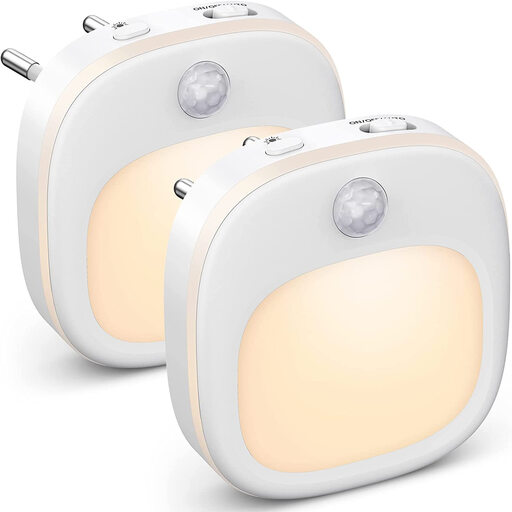
Why it fits this profile: A set with motion detection is ideal for a hallway, corridor or bedroom where you don’t want to press a button every time.
The listed specifications mention three colour temperatures and five dimming levels. This lets you tailor the lighting to a walkway, but check the detection angle and mounting location beforehand.
Two lights; motion detection; three colour temperatures; five dimming levels.
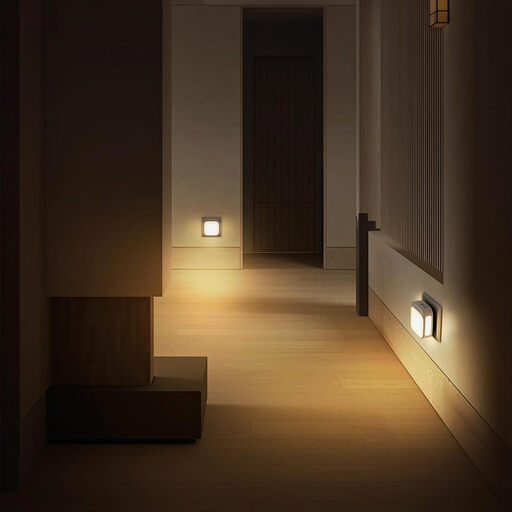
Why it fits this profile: These plug-in lights are designed for anyone who wants automatic lighting in a nursery, hallway or bedroom without having to recharge batteries.
According to the product information, the light sensor switches on at a maximum of 20 LUX and off in daylight. The brightness is steplessly adjustable from 10% to 100%, so a single fixed brightness is less likely to be an issue.
0.3 W power consumption; warm white light of 2800–3000 K; stepless dimming; set of two.
We’ve put together a full, up-to-date list of products that fully meet these strict selection criteria and comply with current European safety regulations.
That depends on the design, placement and safety information. Keep the lamp out of reach of the baby and check warnings about small parts, heat, water and supervision. A night light for a nursery should above all be practical to operate and not shine unnecessarily brightly.
An LED night light generally has a low power consumption, but the actual usage depends on the wattage and how long it’s on. A product with, for example, 0.3 W uses less energy than a lamp with a higher wattage over the same period. A light sensor or timer can prevent the lamp from staying on unnecessarily.
The battery life per charge varies by model and light setting. Check the stated capacity, run time and charging time. With heavy daily use, the battery may eventually deliver less capacity. A plug-in night light avoids that maintenance, but offers less flexibility in where you can place it.
