
Vandaag of morgen in huis

Kwaliteit gegarandeerd

Welkomstaanbiedingen ontgrendelen: GRATIS bezorging | Tot 80% korting | Gratis 30 dagen JoyPlus-proefperiode
Download de app
A night light might seem like a simple purchase, but the differences between models are significant. Some lights only work from the mains, while others have a rechargeable battery. A model with a motion sensor can be handy in the hallway, whereas a soft baby night light is better suited to a bedside table in the nursery.
Pay particular attention to three common pitfalls:
Brightness is often expressed in lumens (lm). For orientation next to a bed, a low setting is usually more pleasant than a powerful light source. In a hallway, staircase or wardrobe, more light can actually be useful.
Colour temperature is measured in kelvin (K):
A dimmable night light offers more flexibility. Do check whether the dimming is stepped or stepless. A night light with a touchscreen can be convenient when you don’t want to fumble for a switch.
A rechargeable night light is easy to move around and suitable for use next to the bed, during feeding or when travelling. Check the battery capacity, the type of connection and the stated runtime.
Bear in mind the conditions under which the manufacturer states the battery life. For the VAVA VA-CL009, for example, a runtime of up to 100 hours is quoted at the lowest brightness; at maximum brightness, that’s around 7 hours. The actual duration therefore depends on the setting you choose.
A battery-operated light can be handy for a cupboard or toilet, but remember you’ll need to replace the batteries. A mains-powered model is suitable if it will stay in the same place permanently.
A night light with a motion sensor can switch on automatically when you walk past in the dark. Check the detection range and whether the sensor only activates in low ambient light. This prevents it from switching on unnecessarily during the day.
For mounting, magnets and hanging hooks are practical because you often don’t need to drill. Do check that the surface is suitable and that the light stays securely in place.
Also consider the material. ABS and metal are common materials for compact LED lights. Softer silicone models feel different and are mainly intended as decorative or children’s night lights. Even with a light for children, adult supervision is still required. Do not place a light under blankets, near heat sources or in a spot where a child could pull on the charging cable.
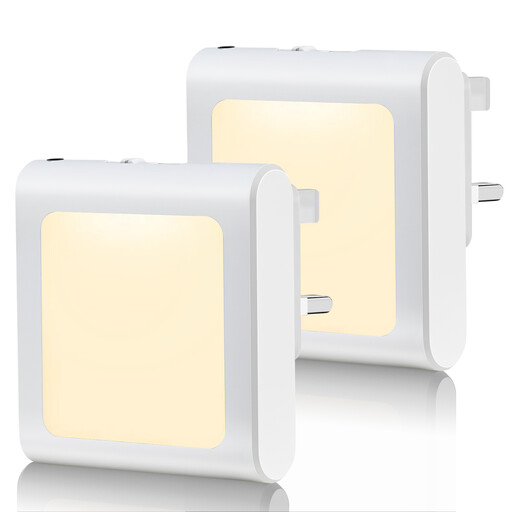
Why this fits the profile: A simple duo for anyone looking for basic lighting in, for example, the bedroom, hallway, kitchen or nursery without extra settings.
The product description mentions a compact design and warm light, without promising features that aren’t in the specifications. Do check the available information on connection and brightness before purchasing.
Two lights in one pack; ABS+PC housing; suitable for multiple indoor spaces.
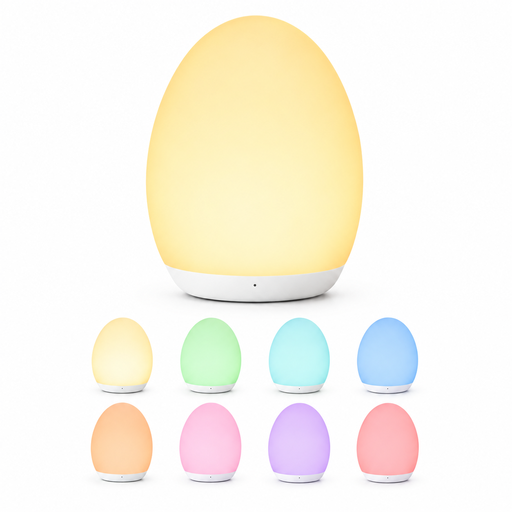
Why this fits the profile: Aimed at parents who want a portable light for night feeds, nappy changes, bedtime and travel.
The stated battery life is linked to the brightness: up to 100 hours applies, according to the product information, at the lowest setting, not at maximum light.
2000mAh battery; dimmable warm white; 8 colour modes; touchscreen control; 1-hour timer.
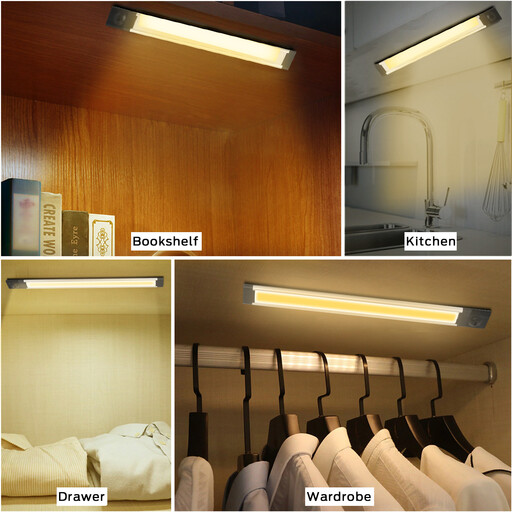
Why this fits the profile: Handy for anyone wanting lighting in a wardrobe, staircase, garage, hallway or nursery without having to operate a switch each time.
The features are clearly described: a range of 2800K–6500K, gesture dimming and mounting with a magnet or hooks. The light must be kept dry and securely fixed.
400 lumens; 36 SMD LEDs; dimensions 26 × 4 × 1 cm; magnetic mounting and hanging hooks.
We’ve put together a full, up-to-date list of products that fully meet these strict selection criteria and comply with current European safety regulations.
Warm white light of around 2600–3200 K is often chosen for a gentle atmosphere during night-time care. Also check whether the light is dimmable and do not place it directly in the baby’s line of sight. Suitability depends on the room, the brightness and the positioning.
That varies depending on the battery, light setting and usage mode. A light with a larger battery can run for longer, but high brightness consumes more energy. Always check the stated runtime at the setting you intend to use. Charge the light using the specified USB or power supply specification.
An LED light typically uses very little power, but consumption depends on the wattage and the number of hours it’s on. A motion sensor or timer can prevent the light from staying on unnecessarily. With a battery-powered model, you don’t pay for electricity at the light’s location during use, but you do need to recharge the battery regularly.
