
Vandaag of morgen in huis

Kwaliteit gegarandeerd

Welkomstaanbiedingen ontgrendelen: GRATIS bezorging | Tot 80% korting | Gratis 30 dagen JoyPlus-proefperiode
Download de app
A night light for children can help with a night-time feed, a trip to the loo or finding a cuddly toy in the dark. However, not every model is suitable for a nursery or child’s bedroom. A light may be too bright, awkward to charge or designed to look attractive without being practical.
So don’t focus on design alone. The key differences lie in the light settings, power supply, controls, positioning and safety information. Read on to find out what to look for and which models suit different needs.
A light shaped like an animal or cartoon character can look cosy, but that doesn’t automatically mean its light is suitable for the evening. Check whether the model is dimmable and which light colours it offers. A fixed, bright or blue light may be less practical for night-time care.
A soft night light for children with a warm light setting is usually more useful beside a cot. A brighter setting may be preferable for playing or reading.
With a rechargeable night light, look beyond the word “rechargeable”. Check the stated run time, charging time and connector type. A light that needs recharging after a few hours is less convenient if you use it every night.
It’s also important to remember that a built-in battery doesn’t mean you should put the light under a blanket or somewhere warm while your child is sleeping. Always follow the safety warnings and use a suitable charger.
A night light with a timer can stop the light from staying on all night. A motion sensor is useful in a hallway, on the stairs or in a child’s bedroom when you only need light briefly. In a room where there’s a lot of movement, though, the sensor may switch on more often than you’d like.
When choosing a night light with a motion sensor, check the stated detection range and the light conditions in which the sensor works. Position the light so it doesn’t shine directly into anyone’s eyes.
A dimmable night light gives you more control than one with a single fixed brightness. Three brightness levels work well in many situations: low for night-time, medium for changing a nappy and higher for brief practical use.
Some LED models offer several colour temperatures. According to the product information for certain models, warm white at around 2800–3200K is designed to create a cosy atmosphere. Cooler white may be more practical for a hallway or bathroom. RGB colours are best if you’re looking for a decorative effect, rather than a single, calming light setting.
Touch controls are easy for older children to use, while a remote control can be handy if you don’t want to walk over to the bed. For toddlers and young children, a sturdy, stable base is important. A portable model can also come along on visits to grandparents or on holiday.
For soft silicone models, check whether the manufacturer provides age guidance and warnings. For example, the product description may recommend adult supervision when the light is used around babies.
An LED night light generally uses little power and, in many designs, produces less heat than traditional light sources. Even so, check whether the model is intended for indoor use, whether it can withstand moisture and whether it contains small parts or batteries.
Keep the light out of a baby’s reach and make sure any cables can’t reach the cot. A decorative light isn’t automatically a toy. Use the product according to its instructions and the safety information on the product page.
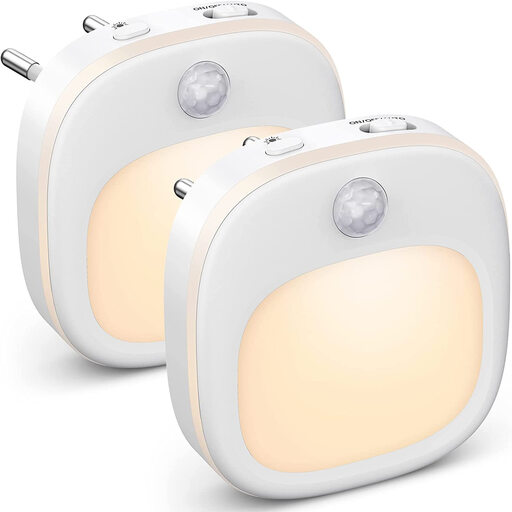
Why it suits this profile: A set of two lights is practical for areas such as the nursery and hallway. The combination of sensor controls and several light settings keeps things simple.
The product information lists three colour temperatures, five dimming levels and motion detection. That means you’re not limited to a single brightness.
Two lights, five brightness levels and a stated sensor range of 3–5 metres.
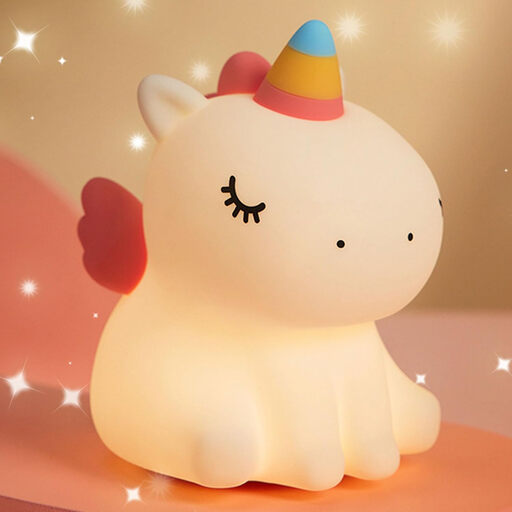
Why it suits this profile: This soft unicorn design is a good match for parents and gift buyers looking for a portable light with touch controls and a decorative look.
The product details list three brightness levels, a 30-minute timer and a rechargeable battery. This lets you tailor the light to your bedtime routine.
1200mAh battery, stated run time of 8–10 hours and touch controls.
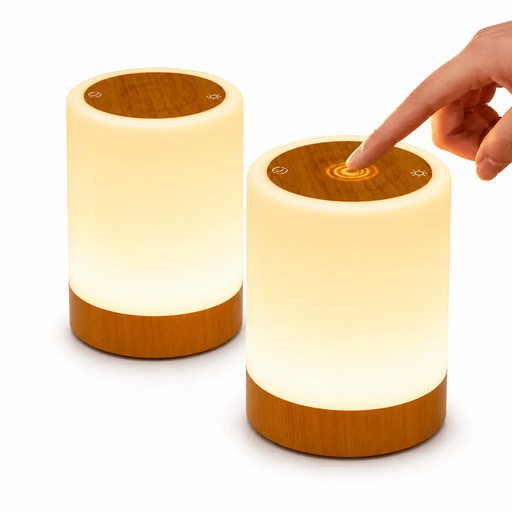
Why it suits this profile: A good choice if you want two portable lights for a child’s bedroom, bedroom, sleepovers or holidays.
The product description lists several timer settings, dimming options and a memory function. Before buying, check that the stated run time suits the light setting you plan to use.
Set of two, USB rechargeable, five lighting effects and 1-, 2- or 3-hour timers according to the product information.
We’ve put together a complete, up-to-date list of products that meet these strict selection criteria and current European safety regulations.
That depends on the model’s positioning, controls and safety information. Keep the light out of your baby’s reach, keep cables away from the cot and use a soft, low light setting. Also check the age warnings and care instructions on the product page.
Run time varies by model and light setting. The product information provided lists a run time of 8–10 hours for some models, while others specify a longer duration. Treat these times as product specifications under certain conditions; bright light or frequent colour changes may use more power.
Power consumption depends on the wattage and how many hours the light is on. A 0.5- or 1-watt model uses relatively little electricity if it’s only on for a short time at night. A timer or motion sensor can help prevent the light from staying on unnecessarily. When buying, consider how often it needs charging and its power supply, not just the purchase price.
