
Vandaag of morgen in huis

Kwaliteit gegarandeerd

Welkomstaanbiedingen ontgrendelen: GRATIS bezorging | Tot 80% korting | Gratis 30 dagen JoyPlus-proefperiode
Download de app
A night light for children can be a real help for those late-night trips to the loo, a feed, or for a little one who doesn’t like sleeping in total darkness. However, not every model is right for every situation. A bright lamp next to the bed, an awkward plug, or a battery that runs out too quickly can soon become a source of frustration.
So don’t just focus on a cute design. Pay close attention to brightness, controls, power source, and safety information. Below, you’ll discover the pitfalls that are often overlooked and which models suit different needs.
A night light is meant to provide gentle orientation lighting, not to illuminate the whole room. A high light output can be impractical when the lamp is left on next to the bed all night. So check whether the model is dimmable and whether the colour temperature is stated.
A warm white LED night light around 2800–3200 K generally gives a softer glow than cool white light. That doesn’t automatically mean every child will sleep better because of it; it’s still a matter of personal preference and where you place it.
A rechargeable night light is handy if you move it around regularly or don’t have a free socket next to the bed. Check the stated usage time and charging time. A model that claims 8–10 hours of use might be fine for one night, but the actual duration depends on the brightness level you choose.
Also pay attention to the charging connector, for example USB or USB-C, and keep the cable out of reach of young children. With a plug-in night light, battery life isn’t an issue, but placement still matters: make sure the socket and the lamp are out of reach for pulling or playing.
A sweet night light shaped like an animal can be an appealing gift, for instance as a night light for girls. However, the finish, stability, and controls are more important than just the looks. A lamp with a touch sensor can be simpler to use than a tiny button. A timer also prevents the light from staying on unnecessarily all night.
With soft models, always check the age recommendation and safety warnings. “Soft” doesn’t mean the lamp is intended as a toy or for chewing on.
For a nursery or children’s room, a dimmable night light is practical. Three brightness levels already offer more flexibility than a simple on/off function. For a hallway, a sensor lamp with limited brightness may be enough; for changing nappies or feeding, a bit more light might be needed temporarily.
A stated value in lumens helps with comparison. A model with 20 lumens is quite different from a lamp with 400 lumens. More light isn’t automatically more useful: consider the space and the purpose.
A night light with a light sensor can turn on automatically when the surroundings get dark. A night light with a motion sensor reacts to movement instead. These two functions are not the same:
For the hallway or the route to the bathroom, a sensor lamp often makes sense. Next to the bed, a timer or touch control may be more pleasant.
Check whether the manufacturer provides material details and usage warnings. For various models in this range, materials such as ABS, PC, aluminium, polypropylene, or silicone are mentioned. The manufacturer’s product information for some silicone models also states BPA-free materials and a design without sharp edges. Always check the current product page and age information before ordering.
Also look out for:
A manufacturer’s claim about safety or materials should be read as information from the brand, not as an independent guarantee. If in doubt, the manual, warnings, and the responsible person in the EU are important points to check.
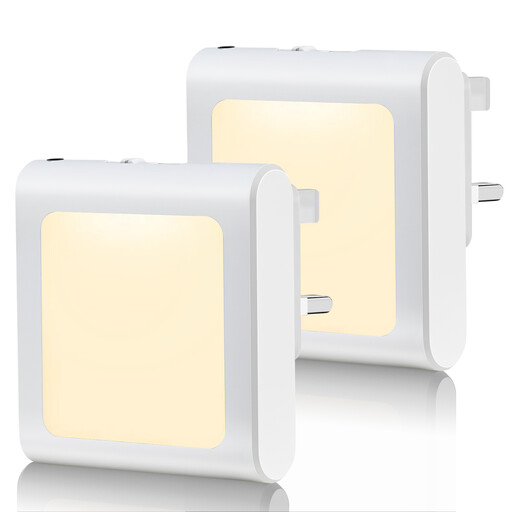
Why this fits the profile: The set includes two compact lamps, ideal for the children’s room and the hallway. The product information states warm light, low energy consumption, and direct plug-in connection.
You don’t need to worry about battery life, and you get two light points in one package. Just check beforehand that the socket is free and safely positioned.
Two pieces, ABS+PC housing, compact design, and direct plug-in connection.
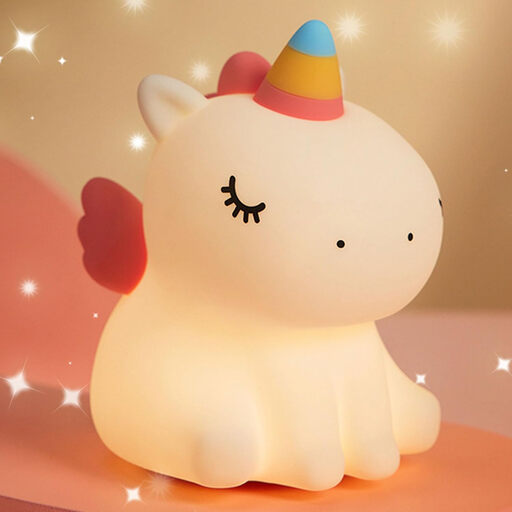
Why this fits the profile: This model combines a decorative design with practical controls. It’s a fitting choice for anyone looking for a night light for girls or a gift with adjustable brightness.
The three brightness levels mean you’re not stuck with just off or bright light. The 30-minute timer limits unnecessary running time.
Touch control, three light levels, 30-minute timer, and a rechargeable battery of 1200 mAh according to the product information.
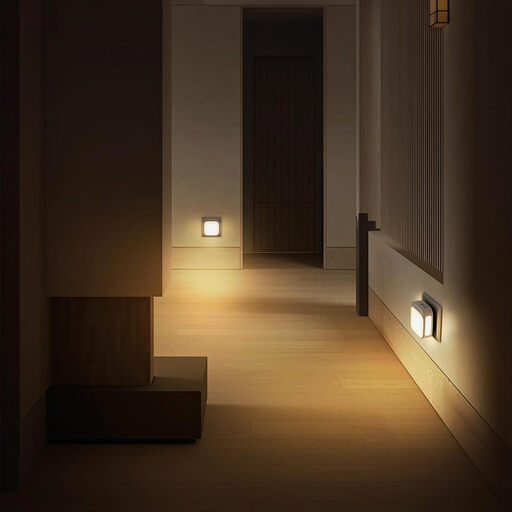
Why this fits the profile: This model is designed for fixed spots such as the hallway, nursery, or route to the bathroom. The automatic light sensor takes care of manual operation.
According to the product specifications, the sensor switches on in low ambient light and off in daylight. This means the lamp doesn’t stay on unnecessarily all the time.
Set of two, 0.3 W power, warm white light, and stepless dimming from 10% to 100%, according to the product description.
We’ve put together a full, up-to-date list of products that fully meet these strict selection criteria and comply with current European safety regulations.
It can be practical for the door, hallway, or changing table, but don’t place the sensor lamp too close to a baby’s face. Set the brightness as low as possible for orientation and check that the model doesn’t turn on unexpectedly due to movement in the cot.
That depends on the model, battery capacity, and brightness level. A lamp with a stated battery of 1200 mAh can work for around 8–10 hours according to the product information for some models. See this as a product specification, not a guaranteed usage time in every situation.
A low-power LED night light generally uses very little electricity. A model of 0.3 W consumes less over long-term use than a lamp with a higher wattage. A timer, light sensor, or motion sensor can further reduce consumption. Always check the stated power and current product information for plug-in models.
