
Vandaag of morgen in huis

Kwaliteit gegarandeerd

Welkomstaanbiedingen ontgrendelen: GRATIS bezorging | Tot 80% korting | Gratis 30 dagen JoyPlus-proefperiode
Download de app
A night light might seem like a simple purchase, but the differences between models are significant. A light that works well on a bedside table isn’t automatically suitable for a nursery, hallway or bathroom. So don’t just focus on the shape or colour. Sensors, controls, brightness, power supply and safety information are what really determine whether you’ll enjoy using the light every day.
As Joybuy Product Recommendation Officer, I filter the most important product information based on practical points. This helps you see more quickly which features are relevant and which marketing claims you’d be wise to double-check.
A high lumen count isn’t always practical next to a bed. For a bedroom or a nursery night light, a soft, warm light is often more practical than a harsh daylight colour. So always check the brightness in lumens and the colour temperature in kelvin.
A light with 400 lumens might be suitable for a cupboard, staircase or workspace, but could be unnecessarily bright for a children’s night light. For gentle orientation light, models with a lower brightness or a dimming function make more sense.
A night light with a motion sensor can be handy in the hallway, but less suitable when it’s placed next to a bed and constantly detects movement. Check the detection range, the light threshold and whether the sensor can be switched off.
A light sensor works differently: it switches on or off based on ambient light. That’s practical for a hallway or a socket near the bathroom, because you don’t have to press a button every time.
With a rechargeable night light, the run time depends on the brightness level you choose. The maximum figure stated often applies to the lowest light setting. So also check the charging time, the type of connection and whether the light can be used while it’s charging.
With a mains-powered light, battery life isn’t an issue, but you do need to consider the location of the socket and the safety of the cables.
For a night light for the bedroom or nursery, these details are important:
A colour-changing function can be appealing for a child’s room, while a simple warm white setting is often more practical during night-time care.
A night light with a sensor is especially suitable for rooms where you don’t want to fumble for a switch. Look out for:
A light for the bathroom shouldn’t be confused with a product for dry rooms. In the product information provided for several models, it states that they should be kept away from water and moisture.
Check the material and usage instructions, especially for a baby night light. Soft silicone feels nice to hold, but a light with small parts or batteries isn’t automatically a toy. Always follow the age rating and warnings from the manufacturer.
For LED models, the following are relevant:
For precise safety and suitability, always refer to the manual, age rating and product specifications.
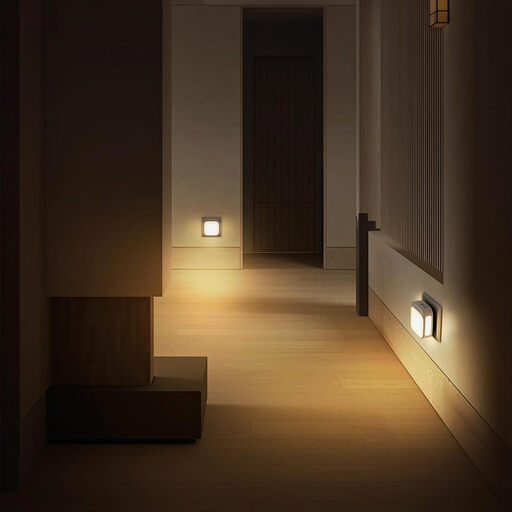
Why this fits the profile: This pack contains two lights, ideal for the hallway and bedroom. The automatic light sensor reduces the need for manual operation.
The specifications state low power consumption of 0.3 W, warm white light at 2800-3000 K and dimming from 10% to 100%.
Two units, automatic light sensor, 20 lm and compatibility with 110-240 V.
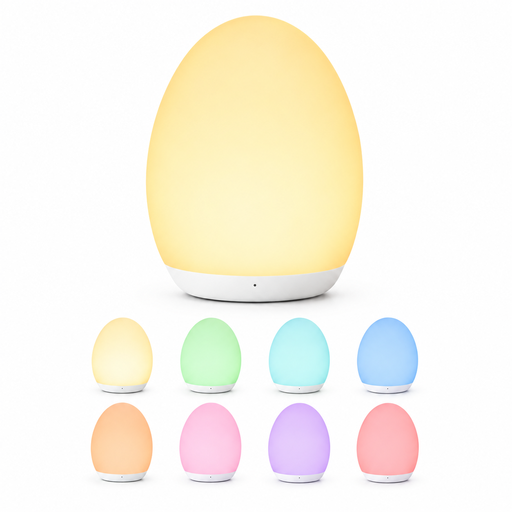
Why this fits the profile: This light is designed for use in the nursery, next to the bed or while travelling. It operates without an app or Wi-Fi.
The stated run time is broken down: approximately 7 hours at maximum brightness and up to 100 hours on the lowest setting.
2000 mAh battery, dimmable warm light, 8 colour modes, memory function and a 1-hour timer.
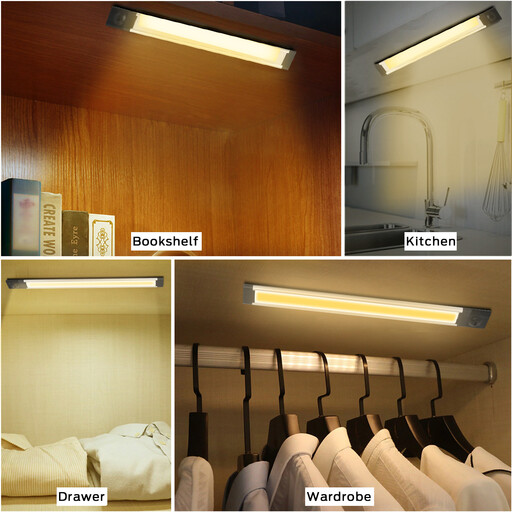
Why this fits the profile: This long, compact light is designed for use in wardrobes, hallways, staircases, garages and bedrooms, among other places.
The product specification states 400 lm, a colour temperature of 2800-6500 K and dimming via gesture control.
Magnetic mounting, hanging hooks, dimensions 26 x 4 x 1 cm and adjustable from warm to cool white.

Why this fits the profile: This decorative children’s night light suits children who enjoy a recognisable character and simple touch control.
The product specification mentions three brightness levels, a 30-minute timer and a 1200 mAh battery.
Rechargeable via USB, stated run time of 8-10 hours and a soft silicone casing according to the product description.
We’ve put together a full, up-to-date list of products that fully meet these strict selection criteria and comply with current European safety regulations.
It can be, but placement is key. A sensor may be triggered when someone moves in or past the room. For night-time care, a dimmable night light with touch control can be more predictable. Choose a motion sensor mainly for the hallway, staircase or route to the bathroom, and check the detection range.
That depends on the power and how long it’s used. A 0.3 W model uses less energy over long periods than a 1 W light, but the actual cost also depends on how long the light is on. With a rechargeable night light, you mainly pay for charging; with a mains-powered model, the power is stated in the product specification.
An RGB night light can work well as decorative lighting, but check whether it also has a warm white setting and a dimming function. For a calm bedroom or nursery, that setting is often more practical than constantly changing colours. A timer also prevents the light from staying on unnecessarily.
