
Vandaag of morgen in huis

Kwaliteit gegarandeerd

Welkomstaanbiedingen ontgrendelen: GRATIS bezorging | Tot 80% korting | Gratis 30 dagen JoyPlus-proefperiode
Download de app
A night light may seem like a simple purchase, but the differences between models can be significant. A lamp may be too bright for a baby's room, a sensor may react in the wrong place and a built-in battery may run out sooner than expected. If you only consider colour or design, you may not discover these drawbacks until after you have used it.
So pay particular attention to the practical features. Below, you can find out which pitfalls are common, which specifications matter and what type of night light suits your situation.
A night light with a sensor can switch on automatically when it gets dark or when movement is detected. These are two different functions:
A sensor night light can be useful in a hallway, but in a baby's room you may want to avoid the light coming on with every small movement. Check whether the product description specifies a light level, detection range and automatic switch-off.
The term dimmable does not always indicate how precisely you can adjust the brightness. A model with three fixed settings offers less control than a continuously dimmable night light. The light colour is also important in a bedroom. Warm white at around 2600–3200K generally creates a softer feel than cool white at around 5000–6500K.
Also check the light output in lumens (lm). A low lumen output is usually suitable for orientation lighting. A cupboard, staircase or larger hallway may require more light. Consider the combination of lumens, light colour and positioning rather than simply looking at the number of LEDs.
A rechargeable night light is flexible because you do not need to leave it permanently plugged into a socket. However, you do need to recharge the battery in good time. Check:
A plug-in model does not require charging, while a portable lamp is easier to use next to a bed, on a shelf or temporarily in the hallway.
For a night light for a baby's room or bedroom, a warm light colour is often practical. A lamp with warm white light of 2800–3200K can provide soft orientation lighting. For a bathroom or hallway, neutral or cooler light may be more pleasant when you want to see more clearly where you are walking.
An LED night light uses little power and usually has a compact housing. In addition to the wattage, check the light output. A 0.3W model with 20 lumens is intended for subtle lighting; a 400-lumen lamp is more suitable for a cupboard, staircase, garage or larger passageway.
A night light with touch control is easy to operate next to the bed. For children's lamps, a soft silicone housing without sharp edges can be practical, but always take the safety instructions into account. The product description for the VIVREAL Panda model specifies food-grade silicone, ABS and PP, a 1200mAh battery and three dimming levels. The manufacturer also states that young children should use it under adult supervision.
A remote control is useful when you do not want to get up, while a timer prevents the lamp from staying on all night. Always check which functions are actually specified.
For a night light in the bedroom, baby's room or hallway, a stable base and suitable positioning are important. Do not place a lamp under bedding, blankets or other materials that could retain heat. Models containing electronics and a battery should be kept away from water, high temperatures and naked flames.
For a wall light, also check whether the magnets, hooks or adhesive strips are suitable for the surface. A sensor will only work properly when it is not covered. If you intend to use a lamp in a bathroom, check whether the product information states that it is suitable for use in damp areas. A general warning to avoid water and moisture means that you should not simply place the model there.
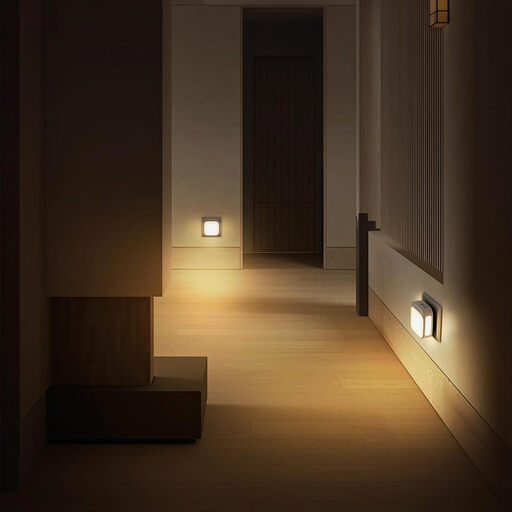
Why it suits this profile: Two lamps provide a simple solution for, for example, the bedroom and hallway. According to the product information, the light sensor switches on when ambient light levels are low.
The specifications state 0.3W power consumption, warm white light of 2800–3000K and continuously adjustable dimming from 10% to 100%.
Set of two, automatic light sensor, 20 lumens and compatibility with 110–240V according to the product details.
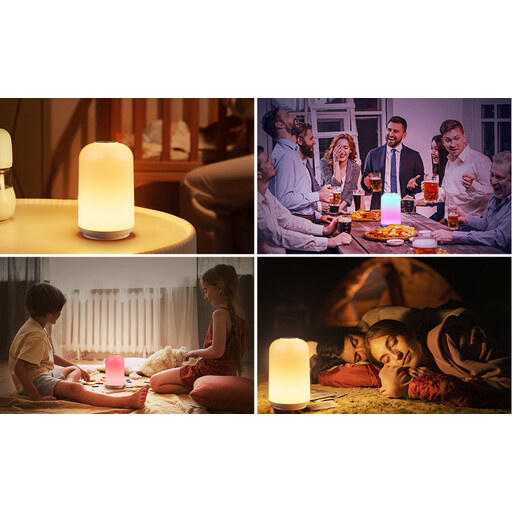
Why it suits this profile: This model is suitable for anyone wanting to combine mood lighting with practical controls in a bedroom or children's room.
The product details specify a built-in battery, USB charging, an ambient light sensor and continuously adjustable dimming in the warm white setting.
Warm white at 2600–2800K, seven RGB colours, 40 lumens, 1W power consumption and dimensions of 13 × 8 × 8 cm.
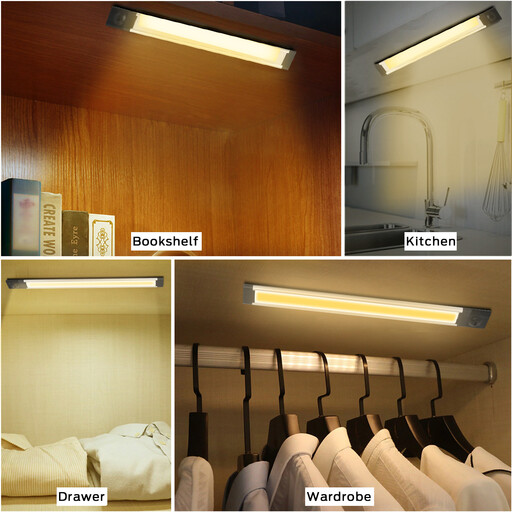
Why it suits this profile: This type is suitable for a long hallway, cupboard, staircase or storage room where more light and flexible mounting are required.
The lamp does not depend on a fixed wall installation: the product details mention magnetic mounting and hanging hooks that require no drilling.
36 SMD LEDs, 400 lumens, adjustable colour temperature from 2800–6500K and USB recharging according to the product description.
We have put together a complete, up-to-date list of products that fully meet these strict selection criteria and the applicable European safety regulations.
That depends on your preferred controls. A motion sensor can be useful when you need a little light during the night, but unexpected activation is not ideal for every baby's room. A lamp with a fixed warm white setting, timer or manual touch control gives you more control. Keep the lamp out of a child's reach and follow the manufacturer's safety instructions.
Consumption depends on the wattage and how long the lamp is used. A 0.3W model uses less energy during extended use than a 1W lamp, although brightness and operating time also play a part. A lamp with a light sensor can prevent it from being switched on unnecessarily during the day. With a rechargeable night light, you also need to allow for recharging the battery.
Operating time varies depending on the model, brightness level and selected mode. The product details for some models, for example, state up to 10 hours in sensor mode or 8–10 hours per charge. Treat these times as product specifications measured under certain conditions. Also check the charging time, charging connector and warnings before placing your order.
