
Vandaag of morgen in huis

Kwaliteit gegarandeerd

Welkomstaanbiedingen ontgrendelen: GRATIS bezorging | Tot 80% korting | Gratis 30 dagen JoyPlus-proefperiode
Download de app
A night light may seem like a straightforward purchase—until you discover a flat battery, overly bright light or awkward controls in the middle of the night. Especially when choosing a night light for a nursery or children’s bedroom, the details matter: how gentle is the light, how long does it work without a cable, and does it switch on automatically when someone gets up?
When comparing models, look beyond colour and design. Below, you’ll find the most important pitfalls, technical specifications and popular choices for different use cases.
A rechargeable night light may advertise a long runtime, but that figure often applies only to the lowest brightness setting. For example, the VAVA VA-CL009 is listed as offering around 7 hours at maximum brightness and up to 100 hours on the lowest setting. The product information also states that the maximum runtime does not apply to every night-light mode.
Therefore, check:
The descriptions “soft” and “eye-friendly” do not tell you much on their own. Where possible, look at luminous flux in lumens, colour temperature and dimming options. A 400-lumen lamp can illuminate a larger wardrobe, hallway or corner of a room, but may be too bright for a nursery. A compact model offering 30 to 40 lumens is more suitable beside a bed or changing table.
Colour temperature also influences the atmosphere:
A night light with a motion sensor is useful in a hallway, toilet or children’s bedroom, but its performance depends on placement. Check the detection range, light threshold and whether the sensor activates only in darkness. Some models specify a range of 3 to 5 metres and activation at a maximum of 20 lux.
A sensor light may switch on unintentionally because of pets, curtains or people passing by. For a bedside light, touch control can sometimes be more practical. For a wardrobe or staircase, automatic activation is often the more appealing option.
A dimmable night light offers more control than a lamp with just one brightness setting. Stepless dimming is convenient when you want both a gentle glow and brighter illumination. A model with three or five settings is often simpler to operate.
With a touch-control night light, it is important that the controls are neither overly sensitive nor difficult to reach. A timer can prevent the lamp from staying on all night. Also look for a memory function: some lamps retain the last selected brightness or colour, while others always start on the same setting.
A cordless night light with a built-in rechargeable battery is easy to move from the bed to the changing table, or from the bedroom into your travel bag. A mains-powered model is suitable if you prefer not to recharge a battery—for example, in a hallway or kitchen.
When considering battery capacity, keep the following in mind:
Capacity does not determine runtime on its own. Brightness, colour mode, sensor function and battery age also have an impact.
Silicone feels soft and is well suited to a portable children’s night light. ABS, metal and aluminium are practical materials for flat wall or cabinet lights. Always check whether a product is designed to be handled by children and follow the manufacturer’s safety instructions.
A larger model may spread more light, but it also takes up more space on a bedside table. A flat lamp measuring, for example, 26 × 4 × 1 cm can fit between a cabinet and the wall. Magnetic mounting or hooks can be useful if you do not want to drill.
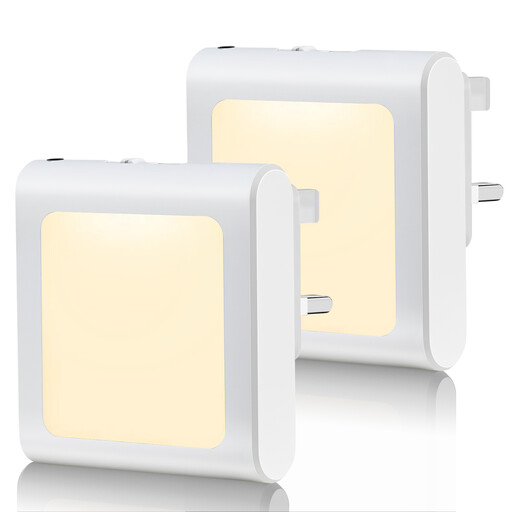
Why it’s a good fit: Two compact lights are practical for locations such as a bedroom and hallway, without requiring a complex setup.
The product listing describes a consistent, energy-efficient lighting solution that does not depend on a short battery runtime.
ABS+PC housing, compact dimensions and two lights in one set.
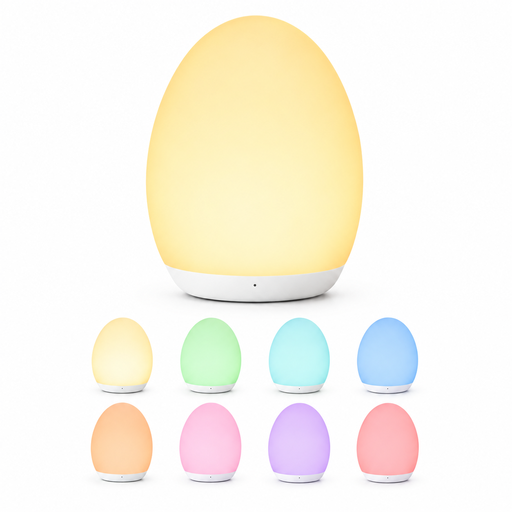
Why it’s a good fit: A rechargeable nursery night light with touch control, warm white light, eight colour modes and a timer.
The listing states the conditions behind the battery-runtime claims, making them easier to assess.
2000 mAh battery, 1-hour timer, dimmable warm white light and a portable design.
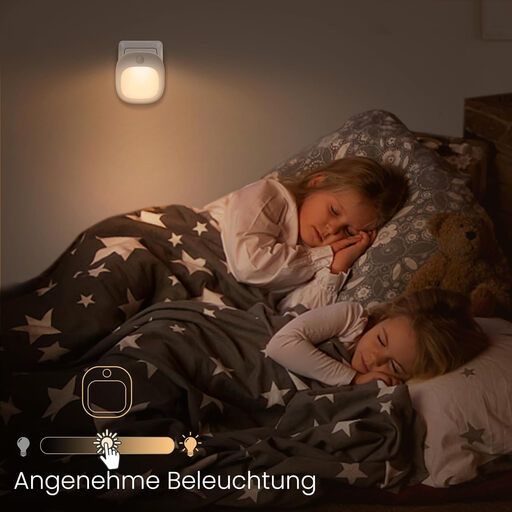
Why it’s a good fit: For anyone who wants automatic lighting in a dark hallway, on stairs, in a toilet or in a nursery.
The specifications state a sensor range of 3–5 metres, a light threshold of up to 20 lux and two operating modes.
Two colour temperatures plus a mixed setting, five brightness levels and USB charging.
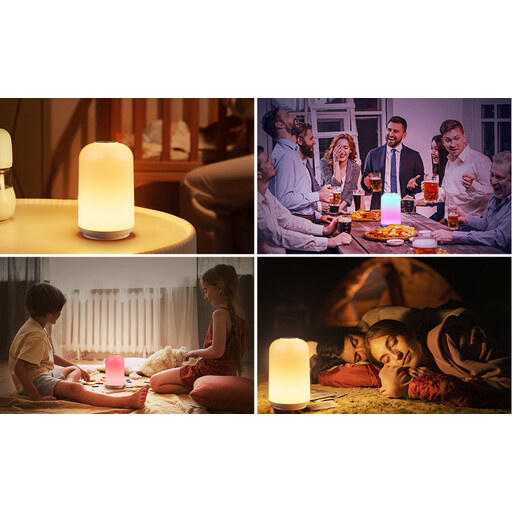
Why it’s a good fit: For bedrooms and children’s rooms where you want to switch between warm white light and seven RGB colours.
The listing distinguishes between steplessly dimmable warm white light and RGB modes, which do not dim in the same way.
40 lumens, 1 W power consumption, built-in battery and an ambient light sensor up to 40 lux.
Browse a current selection of portable night lights and compare features such as dimming, battery capacity, colour modes and controls.
An LED night light generally uses very little power. The available specifications include models rated at just 0.9 to 1 watt, for example. Actual consumption depends on brightness, runtime and whether sensor mode is enabled. A lamp with a timer or motion sensor can prevent it from staying on unnecessarily.
Choose a model with dimmable warm white light, simple controls and stable placement. A soft silicone lamp can be moved easily, while a flat sensor light may be suitable for the route to the changing table. Use the lamp in accordance with the manufacturer’s safety instructions, keep cables out of reach and do not place the product near heat, water or loose blankets.
That depends on how you intend to use it. Automatic activation is practical near a bedroom door, landing or staircase. Beside the bed, however, a sensor may react too often. In that location, a touch-control night light, timer or fixed low-light setting is often more convenient. Always check the sensor range and light threshold before buying.
