
Vandaag of morgen in huis

Kwaliteit gegarandeerd

Welkomstaanbiedingen ontgrendelen: GRATIS bezorging | Tot 80% korting | Gratis 30 dagen JoyPlus-proefperiode
Download de app
A night light may seem like a simple purchase, but how you use it can make a big difference. A light for a nursery should be soft and easy to operate. In a hallway or wardrobe, a night light with a motion sensor can be more useful. And for a child, the design may matter more than a high light output.
When comparing options, don’t look only at the colour or price. Marketing copy often mentions features without explaining how they work in practice. Use the checks below to help avoid a disappointing purchase.
A warm colour temperature of around 2700 to 3200 kelvin usually looks less bright than cool white light. It can work well as ambient lighting in a bedroom. For a cupboard or kitchen worktop, you may need a brighter light.
So check whether the light has an on/off switch, touch control, remote control or motion detection. A touch-controlled children’s night light is easy to use, while a sensor light for a cupboard can switch on automatically when you open the door or walk past.
When choosing a rechargeable night light, check the battery capacity, charging time and connection type. A USB night light is handy if you already use a USB charger, laptop or power bank. Check whether a cable is included and whether the required adapter comes in the box.
The stated run time depends on the brightness setting and how the light is used. Treat any figure as a guide from the product information, rather than a guarantee for every situation.
A motion sensor is useful in a dark hallway, but it may switch on unnecessarily if the light faces a busy walkway. Check the detection range and where you plan to install it. For example, the 40 cm cabinet light in the range has a stated PIR range of 3 to 5 metres.
A sensor isn’t always necessary in a nursery. A dimmable light with a timer may be more suitable, as you stay in control of when it operates.
A night light for a nursery or bedroom doesn’t need the same brightness as a task light. Check the following:
The warm white model in the range is listed as 2800–3200 K, 0,5 W and 20 lumens. These are measurable specifications for anyone looking for a gentle night light for a hallway or bedroom.
A plug-in light is ready to use straight away, but you’ll need a socket. A cordless model gives you more flexibility beside the bed or on a shelf. If you’re considering a battery-powered model, check:
A rechargeable model isn’t automatically maintenance-free. Charge the battery in good time and use only a suitable charger, as instructed in the product manual.
For a children’s bedside light, practical points to consider include rounded edges, a stable base and easy controls. Keep the light out of reach of cords and sockets, and away from hot surfaces when young children are around.
The product information for the VIVREAL Panda Night Light lists ABS, PP and food-grade silicone, a 1200mAh battery and three dimming settings. According to the product description, the light is designed for use beside the bed, in a nursery or in a child’s bedroom. The manufacturer also advises adult supervision for babies and indoor use. Always check the latest warnings on the product page yourself.
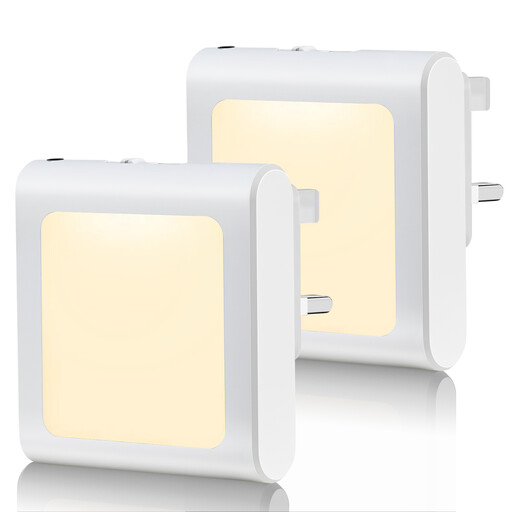
Why it suits this profile: A straightforward option if you’re looking for two compact lights for a bedroom, hallway, nursery or kitchen.
The product description mentions a plug-in design, compact shape and warm light. There are no loose batteries to replace, and the controls are simple.
ABS+PC material; according to the product information, the pack contains two night lights.
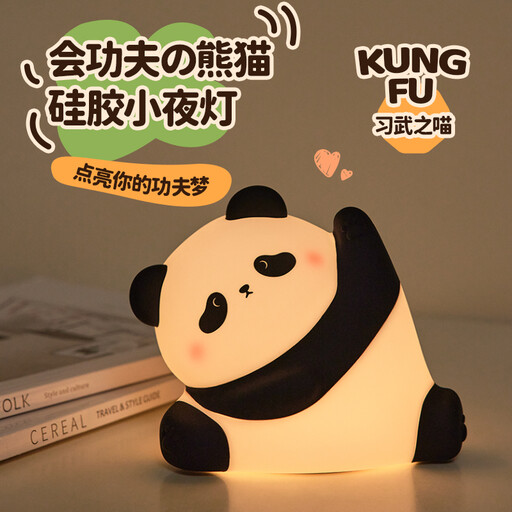
Why it suits this profile: A good fit for parents looking for a portable, dimmable night light with a child-friendly design and touch controls.
Three brightness settings mean you aren’t limited to one light level. The rechargeable battery also means you don’t have to keep it near a socket.
1200mAh rechargeable battery; three dimming settings and touch controls, according to the product description.

Why it suits this profile: Designed for cupboards, shelves, kitchens and dark walkways where automatic lighting matters more than decorative design.
According to the product information, the PIR sensor switches on automatically within 3–5 metres. Three colour temperatures let you choose between task lighting and a warmer ambience.
61 LEDs; 1100mAh USB-rechargeable battery; 40 × 3,8 × 1 cm and adhesive-strip mounting, according to the product specifications.
We’ve put together a complete, up-to-date list of products that meet these strict selection criteria and the applicable European safety regulations.
A decorative design, such as a unicorn lamp or Minecraft Logo LED Light, can be appealing in a child’s bedroom. With these models, pay extra attention to the recommended age, power supply and any small parts. For example, the Minecraft model has a recommended age of 6 years and over, two lighting modes and runs on USB or three AAA batteries.
An LED night light usually has a low stated wattage. Its exact energy use depends on how many hours it’s on, the brightness setting and whether it runs on mains power or a battery. A model with a sensor or timer can help reduce unnecessary use.
A warm colour temperature, for example around 2800–3200 K, is often chosen for gentle ambient lighting. Also check whether the light is dimmable. Your personal preference and where you place the light matter more than the figure on the packaging alone.
The run time on each charge varies depending on the battery, brightness setting and controls. Check the stated battery capacity and run time, but bear in mind that using the brightest setting usually requires more power. A USB connection makes it easier to recharge using a suitable charger or power bank.
