
Vandaag of morgen in huis

Kwaliteit gegarandeerd

Welkomstaanbiedingen ontgrendelen: GRATIS bezorging | Tot 80% korting | Gratis 30 dagen JoyPlus-proefperiode
Download de app
A night light may seem like a simple purchase, but the differences between models can be considerable. A lamp may offer plenty of features on paper, while its brightness, battery life or controls may not suit your bedroom in practice. This is particularly important for babies, toddlers and late-night trips to the bathroom, where three common pitfalls are worth avoiding.
1. Looking only at the number of features
An LED night light with RGB lighting, dimming and a sensor sounds versatile. However, more is not always more convenient. In a baby's room, a soft, fixed warm-white setting is often more practical than bright colour changes. So check whether you can use the feature you want independently.
2. Confusing battery capacity with operating time
With a rechargeable night light, operating time depends on the brightness, control mode and sensor activity. A stated battery capacity, such as 500 mAh or 1200 mAh, does not tell you exactly how long the lamp will stay lit. Check whether the seller states a specific operating time and confirm which type of USB charger is suitable.
3. Positioning a motion sensor incorrectly
A night light with a motion sensor only works properly when the sensor can detect the path you use. If you position the lamp behind a door, too high up or directly opposite a heat source, detection may become less predictable. For sensor-operated cupboard lighting, the distance between the door and the sensor is also crucial.
Colour temperature is measured in kelvin (K):
A dimmable night light gives you more control than a lamp with just one brightness setting. Also check the light output in lumens. A 30 to 40-lumen lamp is designed for a different purpose than a 400-lumen model. A low setting is often enough for finding your way around a dark room, while a pantry or staircase may benefit from more light.
A PIR sensor detects movement within a defined range. Product information for various models typically gives a range of around 3 to 5 metres. Some lamps will also only switch on when the ambient light falls below a certain lux level. This prevents the lamp from switching on unnecessarily during the day, but it also means the sensor may not respond in a well-lit room.
Also check:
A wireless night light can be positioned flexibly, but it must be recharged or have its batteries replaced periodically.
Pay attention to the finish and where you intend to use the lamp. ABS plastic and metal are commonly used for LED lighting in bedrooms, hallways and cupboards. A lamp for a child's room should stand securely or be firmly attached. Do not place lighting within a baby's reach if small parts, cables or batteries could be accessible.
For USB-rechargeable models, 5 V is a common input. Only use a compatible charger and charge the lamp in accordance with the product instructions. The products mentioned are intended for indoor use and must not be immersed in water. Statutory conformity information and product warnings can be found on the product page.
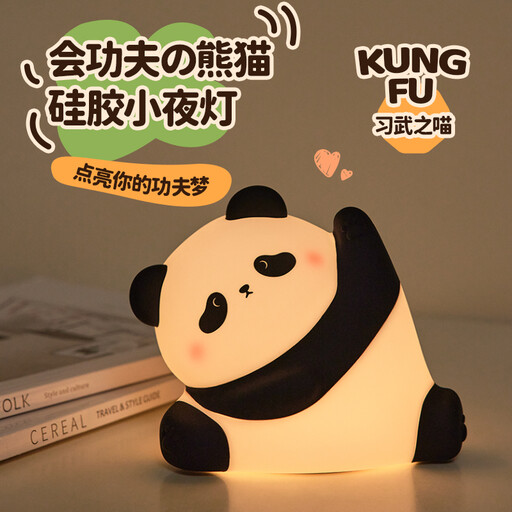
Why it suits this profile: This compact children's night light has simple touch controls and three brightness settings. It is therefore suitable for a bedside table in a nursery or toddler's room, without complicated installation.
The product information specifies three dimming levels and a rechargeable battery. You therefore do not have to rely solely on a decorative design or loose disposable batteries.
1200mAh rechargeable battery; silicone exterior; touch controls with three brightness settings.
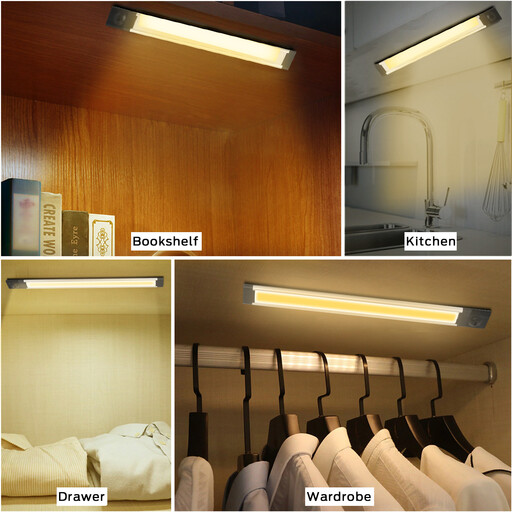
Why it suits this profile: This model is designed for anyone looking for a stronger, evenly distributed light source for a bedroom, nursery, hallway or wardrobe.
The specifications state 400 lumens and a colour temperature of 2800-6500 K. This allows you to adjust the light for ambience or practical lighting, rather than having to accept one fixed brightness level.
36 SMD LEDs; magnetic mounting and hooks; gesture-operated dimming.

Why it suits this profile: The long, slim design fits beneath kitchen cupboards, inside wardrobes and on shelves. According to the product description, the set includes two lamps for use in multiple locations.
The 400 mm length and 3-5 metre PIR range are clearly specified. However, check beforehand that the dimensions suit your cupboard or worktop.
61 LEDs; three colour temperatures; built-in 1100mAh battery and USB charging.
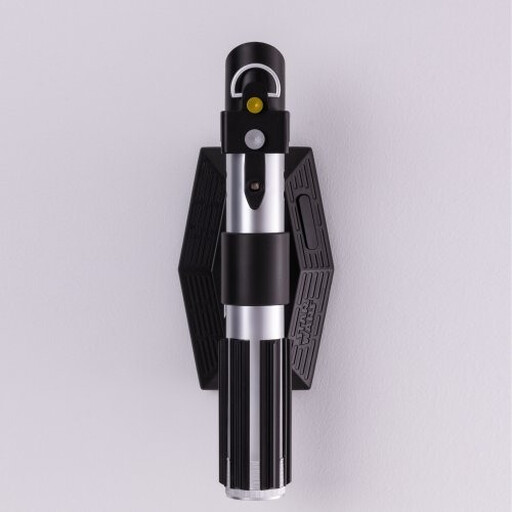
Why it suits this profile: This Star Wars wall lamp is primarily decorative mood lighting for a bedroom, playroom or themed space. The lamp runs on batteries, so it does not need to be installed near a socket.
Its function and dimensions are clearly described: an LED wall lamp measuring 28 x 9,1 cm, with mounting materials included. Battery life is not specified, so allow for replacement batteries.
Battery-powered; wall-mounted; recognisable Darth Vader lightsaber design.
We have put together a complete, up-to-date list of products that fully meet these strict selection criteria and the applicable European safety regulations.
Place the light where your body or the route you take falls within the stated sensor range. Do not point the sensor directly at a radiator or another heat source. Test the lamp in the dark and check that doors, furniture or curtains are not blocking its view.
This varies by model and brightness setting. A lamp with a higher battery capacity may run for longer, but the power consumption of the LEDs and sensor also plays a part. For the 2-pack model with motion detection, the product information states up to 10 hours of use in sensor mode. Treat this as a product specification under the stated conditions, rather than a fixed operating time for every situation.
LED lighting generally uses very little power. A rechargeable model draws power via USB while charging; a battery-powered model does not need a socket, but will eventually require new batteries. So do not look only at the wattage. Also consider how often the lamp switches on and whether it has an automatic sensor.
