
Vandaag of morgen in huis

Kwaliteit gegarandeerd

Welkomstaanbiedingen ontgrendelen: GRATIS bezorging | Tot 80% korting | Gratis 30 dagen JoyPlus-proefperiode
Download de app
A night light might seem like a simple purchase, but there are big differences between models. A lamp might be too bright for a nursery, run out of battery after a few weeks or prove awkward to use because its sensor is in the wrong place. Terms such as ‘baby-safe’, ‘energy-saving’ and ‘long battery life’ are also of little use without specific details to back them up.
So, look out for these three common pitfalls:
For a baby night light or bedroom night light, soft lighting is usually more practical than a bright lamp. Check whether the model has several settings. A dimmable night light with three or five levels gives you more flexibility: use a low setting at night and a brighter one for changing a nappy, reading or finding a dropped cuddly toy.
Also check the colour temperature. According to the product specifications, warm white at around 2800 to 3200 K gives a warmer light than cool white at approximately 6500 K. Warm white may be more comfortable for a nursery, bedroom or hallway night light, while bright white can be more useful by a wardrobe or kitchen worktop.
A rechargeable night light means you won’t have to replace batteries regularly. Check:
The stated run time depends on the brightness setting you choose. A manufacturer might quote 8 to 10 hours, for example, but that doesn’t automatically mean the light will last just as long at its brightest setting.
A night light with a timer switches off automatically after a set period. Thirty minutes may be suitable if a child falls asleep with the light on. Touch controls are simple to use, but may be less convenient than a remote if the bed is next to a wall.
A motion-sensor night light is often a practical choice for hallways, landings and toilets. Check the detection range and where the light can be placed. A light sensor usually responds to the surrounding light levels; a motion sensor responds to movement. They don’t do the same thing.
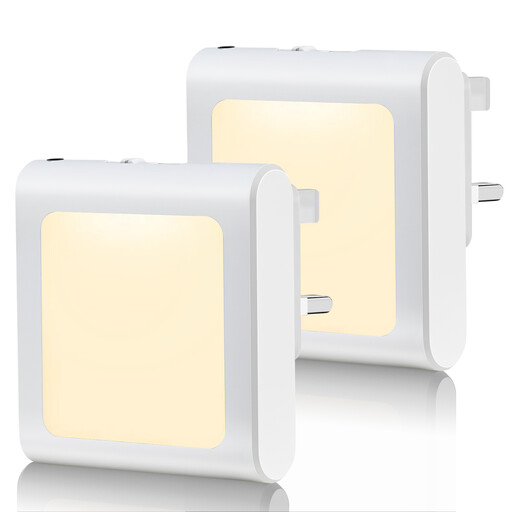
Why it suits this profile: A set of two compact lights is handy if you want to add soft lighting to more than one space, such as a bedroom and hallway.
The product description specifies the material, quantity and indoor use. Before buying, check the current product information for the exact brightness and controls.
Two lights per pack, a compact ABS+PC design and suitable for bedrooms, hallways, kitchens and nurseries.
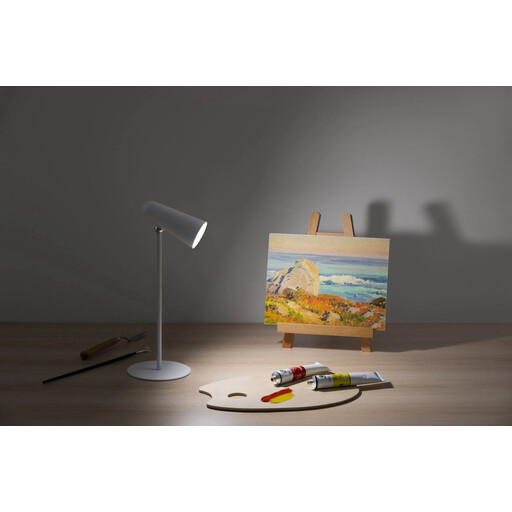
Why it suits this profile: A good fit if you’re looking for a flexible, rechargeable model that isn’t restricted to one permanent spot.
The product specifications list a 2000 mAh battery, a maximum charging voltage of 5 V and a power rating of 3.5 W. This means you can check the key power details.
Rechargeable design, flexible use and at least two years’ statutory warranty, according to the EU consumer information provided.
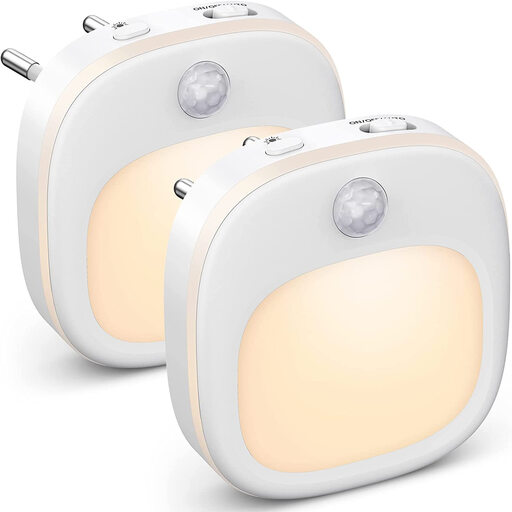
Why it suits this profile: A sensible choice for a hallway, landing, nursery or bedroom where you only need the light to come on when someone walks past.
The product specifications list motion detection, three colour temperatures and five dimming levels. Before fitting it, check that the detection range is right for your space.
Two lights, five dimming levels and three colour temperatures; suitable for a 100–240 V supply according to the product details.
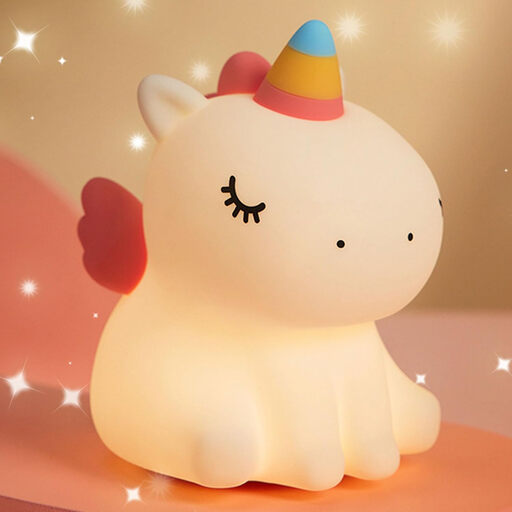
Why it suits this profile: This playful unicorn night light is a good choice for children who’d like a decorative lamp beside their bed.
The description lists touch controls, three brightness levels and a 30-minute timer. Adult supervision is still recommended for babies.
Food-grade silicone according to the product description, a 1200 mAh rechargeable battery and a stated run time of 8–10 hours.
Place your night light on a stable surface and keep it away from loose cords. Use only the specified charging voltage, and don’t charge a rechargeable model under blankets or pillows. A soft silicone panda or unicorn night light may feel gentle to the touch, but it doesn’t replace adult supervision around babies.
A plug-in model needs enough space for ventilation. If you have a sensor night light, test its angle and range first. In a nursery, an overly sensitive sensor may keep switching the light on; in a hallway, a range that’s too short can be inconvenient.
We’ve put together a complete, up-to-date list of products that meet these strict selection criteria and the applicable European safety regulations.
It depends on the design and where it’s placed. Choose a model with soft or adjustable lighting, a stable base and clear safety information. Always follow the manufacturer’s warnings and keep the light and its cable out of your child’s reach.
Run time varies depending on the battery, brightness setting and controls. A 1200 mAh model may, for example, run for 8–10 hours according to the product description. Check the charging time too, and bear in mind that the run time may be shorter at maximum brightness.
An LED night light typically uses very little power. Actual energy use depends on the wattage and how many hours the light is on. A timer, light sensor or motion sensor can help prevent the light from staying on unnecessarily.
