
Vandaag of morgen in huis

Kwaliteit gegarandeerd

Welkomstaanbiedingen ontgrendelen: GRATIS bezorging | Tot 80% korting | Gratis 30 dagen JoyPlus-proefperiode
Download de app
A night light can help you find your way quickly at night without switching on a bright ceiling light. However, models vary considerably in terms of controls, brightness, power supply and positioning. A light that works well in a baby’s room is not automatically suitable for a wardrobe or hallway.
Most disappointing purchases usually result from three common pitfalls:
So first consider where the light will be used, what you want it to do and how it should be operated. You can then compare a LED night light, a sensor night light, a dimmable model or a decorative option.
The colour temperature largely determines the overall look and feel:
A low lumen output is usually sufficient for finding your bearings. A brighter light is more practical for a cupboard or kitchen. A dimmable night light offers greater flexibility, but check that it genuinely has multiple brightness settings rather than just an on/off function.
A sensor night light can switch on automatically when it detects movement or when it gets dark. Pay attention to the type of sensor:
Also check the detection range. The 30- and 40-cm cupboard lights in this selection specify a PIR range of 3 to 5 metres. That is suitable for a cupboard, shelf or kitchen, but may be too sensitive for a small bedroom. A timer is particularly useful if you want to prevent the light from staying on unnecessarily.
A plug-in model is ready to use straight away and does not need charging. A rechargeable night light, on the other hand, is easier to move around and useful when there is no power socket beside the bed. Check the following:
A stable base is important for a night light intended for children. Also check the recommended age and keep an electrical product out of the reach of young children when instructed by the manufacturer. A product description is not a substitute for supervision or the instructions for use.
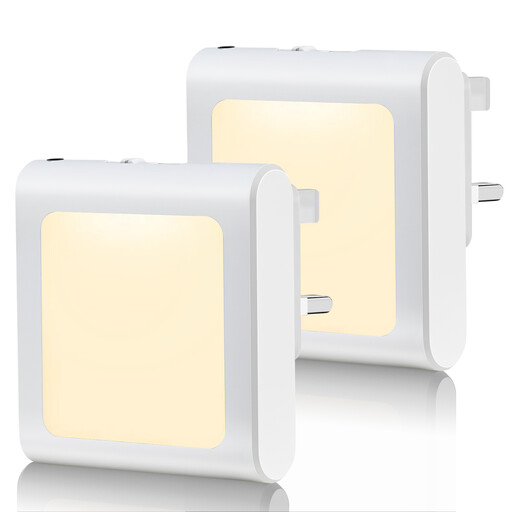
Why it suits this profile: A simple set for anyone who wants soft lighting in several places, such as the bedroom and hallway.
The two separate lights make it easier to use lighting in multiple locations without having to buy an extensive system straight away.
ABS+PC housing, two lights per pack and direct connection to a power socket according to the product information.
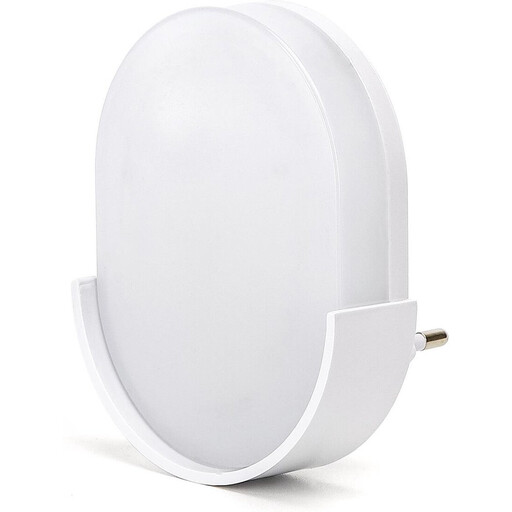
Why it suits this profile: Suitable for anyone looking for a compact night light for a bedroom, baby’s room or hallway that responds automatically to day and night.
The stated light sensor means you do not have to switch it on and off manually. The light output is clearly specified as 40 lm.
1 W power, 230 V connection, 120° beam angle and a stated lifespan of 25,000 hours in the product specifications.

Why it suits this profile: A practical choice for kitchen cupboards, wardrobes, shelves or dark passageways where automatic lighting is needed.
The dimensions, sensor range and mounting method are specified, allowing you to check in advance whether the light will fit the available space.
61 LEDs, three colour temperatures, PIR detection from 3–5 m and a rechargeable 1100 mAh battery.
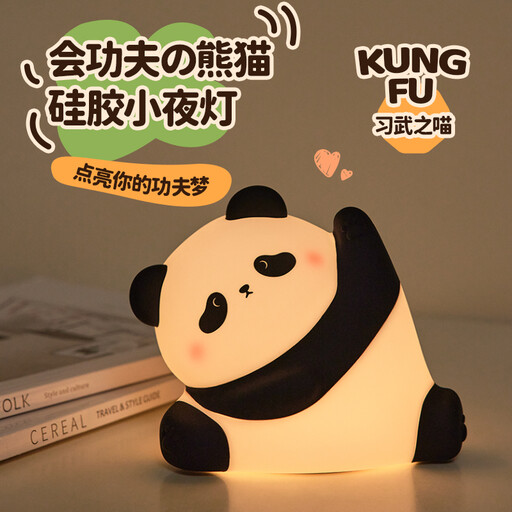
Why it suits this profile: The soft panda design and touch controls are well suited to a child’s room, bedside table or as a gift for a toddler.
The three brightness settings allow you to adjust the light level. The product information also states that supervision is required when used by babies.
Touch controls, three dimming settings, food-grade silicone according to the product description and a rechargeable 1200 mAh battery.
We have compiled a complete, up-to-date list of products that fully meet these strict selection criteria and the applicable European safety regulations.
That depends on its positioning and sensitivity. A light sensor that only switches on in darkness may be suitable for gentle orientation lighting. A motion sensor, however, may switch on more frequently when someone walks past the bed. So check the detection range and do not point the sensor directly at the sleeping area.
Lifespan varies depending on the model and how it is used. Some manufacturers specify an expected lifespan, such as 25,000 hours for the Aigostar. This is a product specification, not a guarantee for every real-life situation. With rechargeable models, the battery capacity and number of charging cycles also play a part.
A low-power LED night light generally uses little energy. The actual cost depends on the wattage, number of hours it is switched on and the electricity price. A light with a sensor or timer can limit unnecessary operating hours. With a rechargeable night light, energy consumption is shifted to charging via USB.
