
Vandaag of morgen in huis

Kwaliteit gegarandeerd

Welkomstaanbiedingen ontgrendelen: GRATIS bezorging | Tot 80% korting | Gratis 30 dagen JoyPlus-proefperiode
Download de app
A night light may seem like a simple purchase, but small differences can determine whether you enjoy using it every day. A lamp that is too bright, runs out of charge quickly or only works with an awkward button can soon end up unused in a drawer. Ease of use is particularly important during night feeds, nappy changes or when a child goes to the toilet independently.
Pay attention to marketing terms too. “Up to 100 hours”, for example, usually only applies to the lowest light setting. And a lamp with RGB colours is not automatically suitable as a bedside light: check that it also has a calm, dimmable setting for everyday use.
A rechargeable night light can be convenient, but its operating time varies considerably depending on the brightness level. At maximum brightness, the battery will last significantly less time than on the lowest setting. So check:
An RGB table lamp or colourful children's night light can be fun at bedtime, but for night feeds or a trip to the toilet, warm white light at a low brightness is usually more useful. Check that the lamp offers more than just colour changes, including:
A soft silicone exterior or playful animal design can make a baby night light appealing, but also pay attention to the usage advice. Check whether the product is intended for indoor use, should be kept away from heat and water, and should not be given to a baby without supervision. Keep the charging cable out of reach of young children.
A dimmable night light gives you more control than a lamp with just one brightness level. Three fixed settings are easy to use, while stepless touch control can offer greater precision. A touch night light is particularly practical when you do not want to search for a small switch during the night.
When it comes to touch controls, check how they work. Some models respond to a single tap, while others require a double tap or a long press. A memory function may remember the last brightness or colour selected, but always check how this works according to the product description.
The colour temperature is relevant for a bedroom or nursery. 3000 K is generally described as warm light. According to the specifications, a product with 4000–4500 K produces a more neutral, whiter light. As well as the colour temperature, look at the number of lumens. A 20-lumen lamp is intended for soft orientation lighting; a 210-lumen lamp illuminates a larger part of a table or room.
No light colour alone can guarantee better sleep. Above all, choose a brightness that allows you to see well enough without switching on the main light.
A night light with a motion sensor is useful in a hallway, bathroom or beside a bed. Check the detection range, light threshold and whether the sensor mode can be switched off. A lamp that turns on with every movement may be less suitable for a child's bedroom.
A battery-powered table lamp offers flexibility, but needs a stable, level surface. Also check the IP rating. IP20 is intended for dry indoor areas; IP44 offers protection against splashing water, but does not mean that the lamp can be submerged.
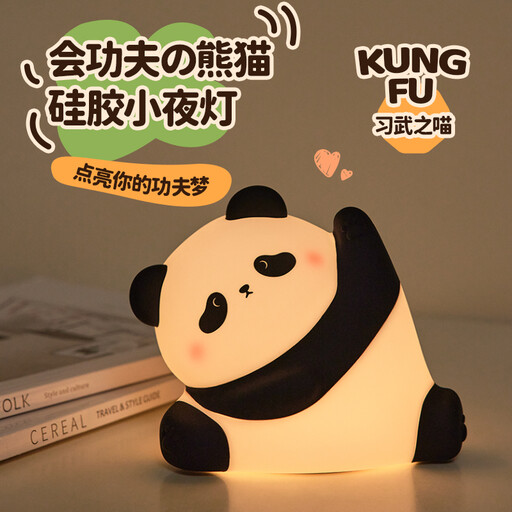
Why it suits this profile: This compact baby night light combines a simple design with touch controls and a rechargeable battery. It is ideal for parents looking for an easy-to-use light for the nursery or bedtime routine.
The product description lists three dimming settings and a 1200mAh rechargeable battery. This means you can see which basic functions are available in advance, rather than relying on appearance alone.
Soft silicone panda shape, touch controls and USB charging. According to the product information, ABS, PP and food-grade silicone have been used.
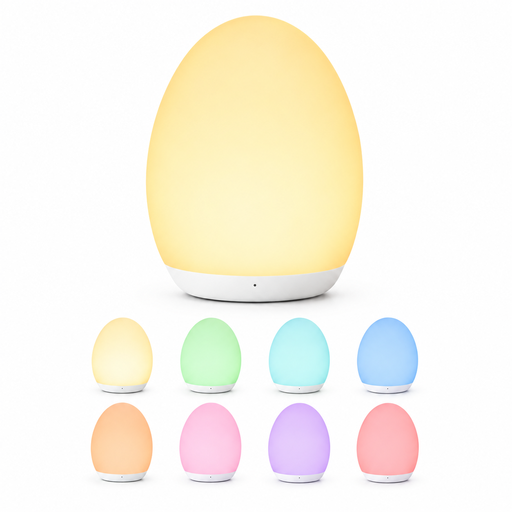
Why it suits this profile: A practical choice for families wanting one light to use during night feeds, nappy changes, bedtime and while travelling.
The specifications distinguish the operating time for each brightness level. The stated operating time of up to 100 hours applies to the lowest brightness, not to night-light mode.
2000mAh battery, dimmable warm white light, eight colour settings, one-hour timer and memory function. Dimensions: 9,2 × 9,2 × 11 cm.
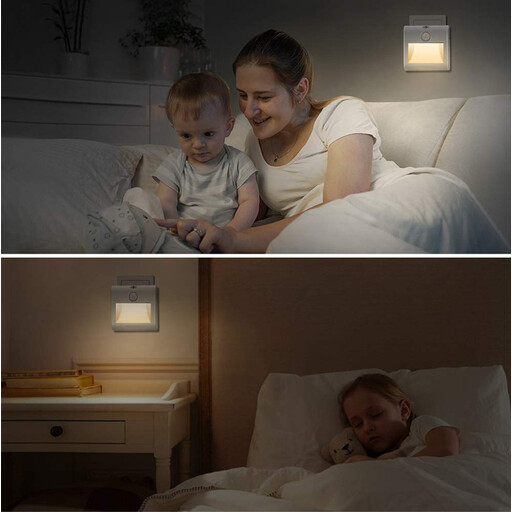
Why it suits this profile: Suitable for anyone wanting to illuminate several dark areas, such as the hallway, bedroom and toilet, without having to operate a switch each time.
The product details list both a constant light setting and automatic motion detection. They also specify a detection range of 3–5 metres and a light threshold of up to 20 lux.
Two lights, stepless touch dimming, memory function and 1W LED technology. The lights work via a standard mains socket.
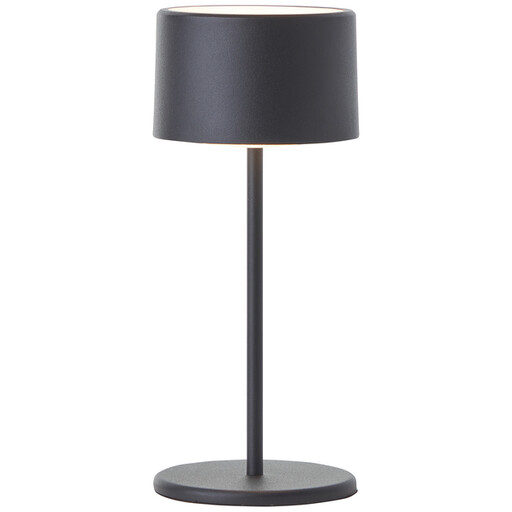
Why it suits this profile: This battery-powered table lamp is suitable for a desk, bedside table or dressing table where a classic design is preferred.
The lamp has three dimming settings and a stated brightness of 210 lumens. This makes it clear that the model is aimed more at table lighting than very subtle orientation lighting.
3000 K warm light, 210 lumens, built-in battery and a compact size of 21,2 × 9 cm. According to the product information, this model is intended for dry indoor areas and has an IP20 rating.
We have put together a complete, up-to-date list of products that fully meet these strict selection criteria and the applicable European safety regulations.
Yes, if you regularly use the light beside the bed or near the changing table. You do not need disposable batteries and can move the light around. Do check the battery capacity, charging time and stated operating time for each light setting. For night feeds, a dimmable warm white setting is usually more practical than RGB lighting alone.
Place it somewhere you walk past, such as a hallway, landing or bathroom. Do not point the sensor directly at a bed if you do not want movement to activate the light. Also take sockets, moisture and a stable surface into account. Follow the distance and light threshold specified in the product details.
This depends on the wattage, operating time and type of power supply. A 1W LED lamp uses approximately 1 Wh after one hour of use, excluding any charging losses. A rechargeable night light uses electricity while charging; the actual cost depends on how often and how brightly you use the light. So check the stated wattage rather than relying solely on the term “energy efficient”.
