
Vandaag of morgen in huis

Kwaliteit gegarandeerd

Welkomstaanbiedingen ontgrendelen: GRATIS bezorging | Tot 80% korting | Gratis 30 dagen JoyPlus-proefperiode
Download de app
A night cream can be a welcome addition to your evening routine, especially if your skin feels dry, tight or dull. But a pot full of promises doesn’t automatically mean you’re getting better skincare. When choosing a night cream for your face, the ingredients, your skin type and the texture are what matter most.
Words such as “lifting”, “cell-renewing” and “anti-wrinkle” sound appealing, but they don’t always tell you how a formula will work for your skin in practice. According to NIVEA’s own research, for example, certain formulas may improve the appearance of wrinkles or skin firmness. Always check whether a claim is based on a consumer study, an in-vitro test or general product information.
A cosmetic product can hydrate your skin and make it feel smoother. It isn’t a medical treatment, and results vary from person to person.
A rich cream may feel comfortable on dry skin, but it could be too heavy for oily or combination skin. Fragrance may also be best avoided if your skin reacts easily. So don’t just look for terms such as night cream for all skin types; check the full ingredients list too.
A fragrance-free formula isn’t automatically right for everyone, but it can be a sensible choice if you prefer to avoid fragrance.
Check the amount, shelf life and instructions for use. Most of the options in this selection contain 50 ml. Depending on the design and how it’s used, an open pot may become contaminated more quickly through frequent contact with fingers than a pump dispenser. Store night-time skincare in a cool, dry place away from direct sunlight, and follow the packaging guidance on how long the product lasts after opening.
A hydrating night cream often contains humectants such as glycerine, panthenol or hyaluronic acid. Glycerine helps attract moisture, while shea butter, oils and certain emollients leave skin feeling soft. A hyaluronic acid night cream may be worth considering if your skin is dehydrated. However, check the full formula: hyaluronic acid alone won’t determine whether a cream feels rich or lightweight.
Richer ingredients such as shea butter, squalane or plant oils are often a good fit for dry skin. If your skin tends to look shiny, a lighter texture and a non-comedogenic formula may be a better choice.
An anti-ageing night cream may contain ingredients such as Q10, niacinamide, peptides, bakuchiol, vitamin C derivatives and hyaluronic acid. These are used in cosmetic formulas to hydrate, leave skin feeling smoother or help create a more even-looking complexion. A brand’s own research may support specific percentages or results from a study, so check the small print.
An anti-wrinkle night cream won’t permanently get rid of wrinkles. Well-hydrated skin may look temporarily plumper and smoother, though. Also use sun protection during the day when your skin is exposed to UV rays.
Use this practical checklist:
Apply the cream in the evening to a cleansed face, neck and, if you wish, décolletage. Avoid contact with your eyes. Stop using it if irritation occurs, and always follow the instructions on the label.
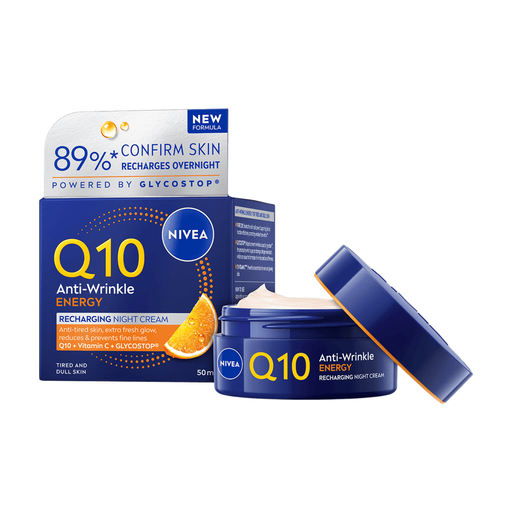
Why it suits this profile: The formula is designed for all skin types and combines Q10 with vitamins C and E. It’s a straightforward option if you’re looking for your first anti-ageing night cream.
The product information lists specific ingredients and a 50 ml size, so you don’t have to choose based on general anti-wrinkle claims alone.
Contains Q10, sodium ascorbyl phosphate, vitamin E and panthenol; dermatologically approved according to the product description.
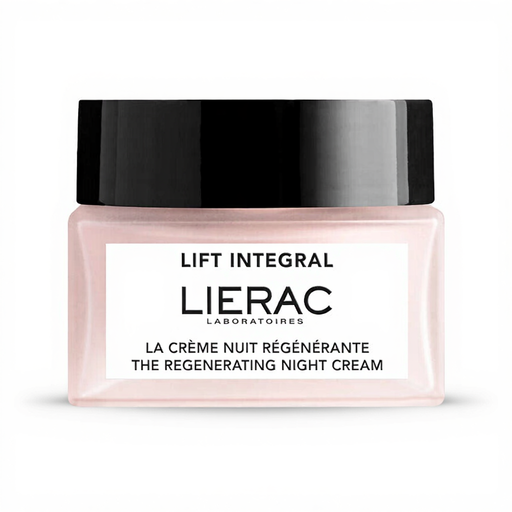
Why it suits this profile: A good fit if you value a rich texture, a vegan positioning and packaging that is refillable according to the product description.
The product description states that 97% of the ingredients are of natural origin and that the formula is free from silicones, PEGs and phenoxyethanol.
Vegan formula, suitable for all skin types according to the product information, and rich in rosehip oil and sunflower wax.
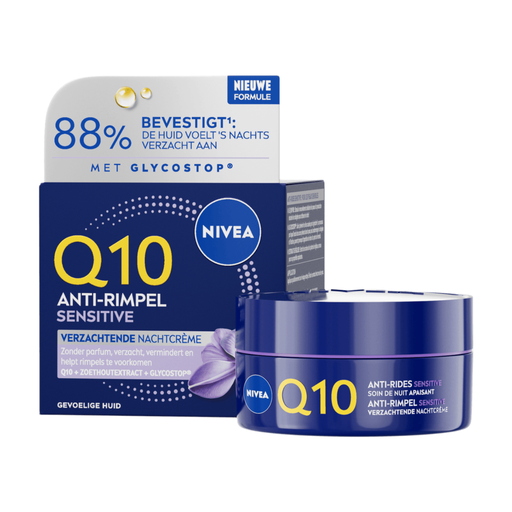
Why it suits this profile: The fragrance-free formula is designed for sensitive skin prone to dryness, tightness or redness.
The product information explicitly states that the cream is fragrance-free. This makes it easier to check for fragrance than with a general night cream.
Contains Q10, panthenol, creatine and liquorice root extract; dermatologically approved according to the product description.
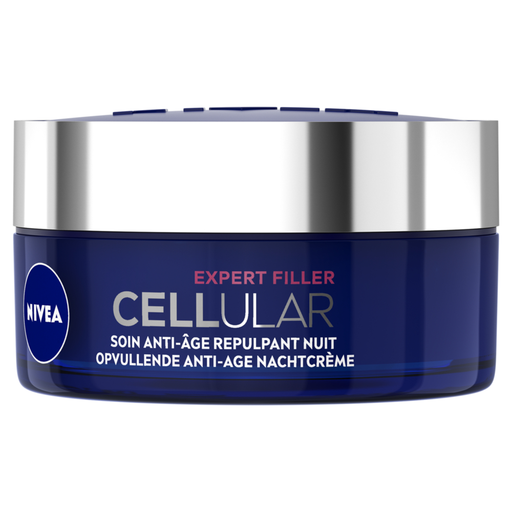
Why it suits this profile: This night cream combines glycerine, panthenol and two types of hyaluronic acid in a richer cream base.
The formula and how to use it are clearly described. According to NIVEA’s own research, some of the claimed results have been tested in vitro; treat these as brand information, not a guarantee.
Contains hyaluronic acid, glycerine, panthenol and squalane; suitable for all skin types according to the product information.
We’ve put together a complete, up-to-date list of products that meet these strict selection criteria and current European safety regulations.
First, cleanse your face and gently pat your skin dry. Then apply a small amount to your face, neck and, if you wish, décolletage. Massage it in gently, avoiding the eye area unless the packaging says the product is suitable for it. You can apply a serum before your cream.
Check the packaging for the expiry date and the symbol showing how long the product lasts after opening. Store the cream away from direct sunlight and use clean hands. Has the smell, colour or texture changed? It’s best not to use the product any more.
It depends on your skin and routine. If your skin is dry or feels tight, using night-time skincare every day may feel good. Normal or oilier skin may need less product. Above all, choose a texture that feels comfortable and don’t use more than you need.
