
Ethernet print server users
You already have a wired print server and want to know how many ports will be left once you connect it to the router and switch. Coolblue explains why you should count the network connection as a port in use.


If your existing print server has an RJ45 port and you want to connect a few wired devices, a compact unmanaged gigabit switch will often suit your setup. Remember to count the connection to your router before choosing the number of ports. Coolblue explains that this network connection uses one of the switch’s ports, so the main difference between five- and eight-port models is how many connections you have left. Connecting a USB printer to a switch won’t make it network-ready by itself: you’ll need a suitable print server or another supported method, as described by StarTech.com Nederland and TP-Link Nederland.
You already have a wired print server and want to know how many ports will be left once you connect it to the router and switch. Coolblue explains why you should count the network connection as a port in use.
You want to check first whether your printer can connect to Ethernet through a suitable print server. StarTech.com Nederland and TP-Link Nederland describe ways to share a USB printer over a network; a switch alone won’t replace the print server function.
You need extra connections, VLAN management or power for a suitable PoE device, as well as printing. Features vary by model: NETGEAR lists VLAN and QoS for the GS305E, while TP-Link describes the TL-SG1005P as having PoE ports.
Start by checking the connection on your printer or print server. Then count the cable to your existing network and your other devices. Only then decide whether your setup needs a compact design, network management or PoE. For equipment covered by the EU Electromagnetic Compatibility Directive, the directive requires a conformity assessment, an EU Declaration of Conformity and CE marking. Check this for the version you intend to buy.
| What to consider | What should you check? | Who is this most relevant to? |
|---|---|---|
| Enough Ethernet ports | Count the connection to the router, the print server and all other wired devices. Coolblue points out that the connection to your existing network also uses a port. | If I want to connect several devices by cable, I don’t want to find out after installation that I’m one port short. Around 31% of consumers mainly need enough ports. |
| Printer connection | Check the connections on the exact printer and print server, along with the required software and operating systems. A switch with RJ45 ports doesn’t provide the USB print server function. | If my printer only has USB, I want to check first whether a suitable print server or supported printer-sharing method will work. Around 25% of consumers are mainly looking into this connection. |
| Desk space and noise | Compare the dimensions and design, and consider how much room the cables and power adapter will take up. Check whether the model is fanless if the switch will sit next to your workspace. | If the switch is going straight on my desk, I want it to fit the available space without adding unwanted fan noise. Around 19% of consumers are mainly looking for a compact, quiet setup. |
| Configurable network management | Check whether you need VLAN separation or other configurable network features, and whether you can manage the settings. NETGEAR lists VLAN and QoS for the GS305E; these features need to be configured. | If my network plan requires a separate VLAN setup, I want features I can actually configure. Around 13% of consumers mainly need VLAN management. |
| Power over Ethernet | Check whether the device supports PoE, which standard and port are required, and whether the available power is sufficient. PoE isn’t an added benefit for every device. | If I want to power a suitable device through its network cable, I need to know whether the switch can meet its power requirements. Around 12% of consumers mainly need PoE power. |
These are different TP-Link models. TP-Link Nederland’s detailed interface specifications list 10/100 Mbps for the LS1005 and five 10/100/1000 Mbps ports for the LS1005G.
Check the full model number and interface specifications of the version on offer before you order.
The cable between the switch and your existing network also uses a port. This means you’ll have fewer connections left than the total number of ports.
Make a note of the cable connections to the network, print server and other devices before choosing a five- or eight-port model.
PoE supplies power through compatible Ethernet ports. This won’t automatically make a print server with its own adapter more useful; the connected device must support the standard and power level provided.
Compare each device’s PoE support and power requirements with the switch specifications.
The TP-Link models mentioned range from a compact unmanaged switch to a model with PoE ports.
The Dutch product information describes the DGS-105GL as a five-port switch and the DGS-108 as an eight-port switch.
The five-port models mentioned differ in their management features: the GS305v3 is unmanaged, while the GS305E offers network management features.
This selection includes wired switches for use with an existing print server, including five-port models and versions with PoE or more ports. Count the network connection and your other devices, and check that any PoE features are suitable for your equipment.
 Image unavailable
A good fit for a wired print server if five ports are enough; remember to allow one port for the connection to your existing network.
The product name specifies a metal design and gigabit connectivity.
Check the applicable conformity information for the version on offer.
 Image unavailable
Consider this PoE version only if, as well as the print server, you want to connect a device that can use the PoE feature provided.
The product name specifies five gigabit ports and four PoE ports.
Check the required PoE standard and power requirements of your equipment before choosing.
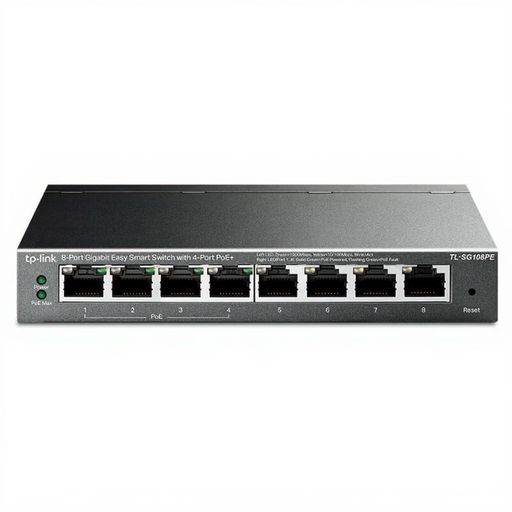 Image unavailable
An option to consider if you want to connect more wired devices and also have compatible PoE equipment.
The product name specifies eight gigabit ports and four PoE ports.
Check whether you need network management and whether the PoE standard and power are suitable for your devices.
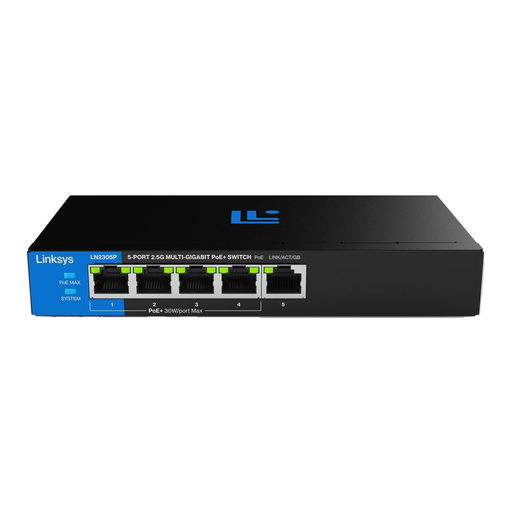 Image unavailable
A wired option to consider if you want to connect a PoE device alongside your print server.
The product name specifies five ports, unmanaged operation and PoE. Check the port specifications and the PoE standard offered to make sure they’re suitable for your devices.
Also check that the version meets the applicable conformity requirements.
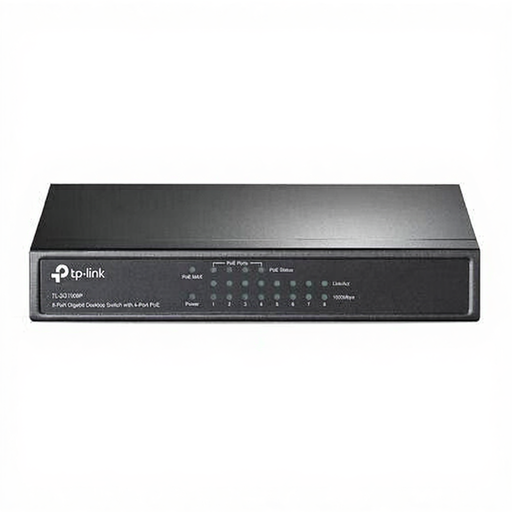 Image unavailable
Could be a good fit if you’re looking for an unmanaged gigabit switch with PoE for a wired setup with compatible equipment.
The product name specifies Gigabit Ethernet, unmanaged operation and PoE. Check the number of ports and PoE specifications for the version on offer.
Also check the applicable conformity information for the exact model.
No, not through the RJ45 ports on these switches. Check whether your printer works with a suitable USB print server or a supported printer-sharing method, and find out which software is needed for each device. StarTech.com Nederland, TP-Link Nederland and Microsoft Support describe these network and sharing options.
Connect one switch port to your existing network and another to the print server’s RJ45 port. Count both cables when choosing the number of ports, and follow your print server’s instructions to install the printer. Coolblue explains that the network connection itself also uses a switch port.
Gigabit won’t make the print server’s own connection faster than its specified 10/100 Mbps. It may still be useful for other devices on the same switch, so check the speed of all the connections involved.
For equipment covered by the EU Electromagnetic Compatibility Directive, the directive requires a conformity assessment, an EU Declaration of Conformity and CE marking. Check this for the version on offer; CE marking is not an independent performance test. EUR-Lex explains the directive’s requirements.
PoE is useful if a connected device supports the PoE standard provided and the available power is sufficient. Check these details for every device you want to power over Ethernet; a print server with its own adapter won’t automatically benefit from PoE.