Who is a switch suitable for?

Printer user with a connection to the garden office

Wants to share an existing network connection with a wired printer and work devices, without configuring network management. HP Support explains how to connect a printer via a router, switch or hub.

Home worker with more wired devices

Needs extra connections as well as the printer, and wants to allow for future devices. According to the manufacturer, TP-Link’s TL-SG105 and TL-SG108 models offer five and eight gigabit ports respectively.

User with a PoE access point or camera

Wants to power a compatible device over the network cable as well as connect the printer. Check the PoE standard and power requirements of both the device and the switch; TP-Link and NETGEAR list these details for specific models.

What should you look for when choosing?

What to consider What should you check? Who is this important for?
Connection between buildings First check that the network reaches your garden office, that the printer has an Ethernet port and where the switch will be positioned. If I don’t yet have a working connection to the garden office, I’ll sort that out before choosing a switch. Around 36% of consumers put a suitable connection first.
Number of ports Add up the connection to your home, the printer and all the other devices you plan to connect. If I want to connect several devices by cable, I need to know how many ports will remain after connecting the link back to my home. Around 29% of consumers prioritise having enough connections.
PoE power Check the required PoE standard and power for each device, then compare these with the power available per port and the switch’s total power budget. If I also want to power a compatible camera or access point, I’ll check that the switch can support it. Around 21% of consumers prioritise this PoE requirement.
Positioning and installation Check the mounting options, power supply requirements and operating limits of the exact model. If I’m looking for a simple, quiet installation in a suitable location, I’ll also consider temperature and condensation. Around 14% of consumers care most about easy positioning.

Common buying mistakes

  • Buying a switch before the connection to the garden office is working

    A switch shares an existing network connection, but it doesn’t establish a connection between buildings. TP-Link advises protecting outdoor cabling separately against the risk of lightning.

    First test the connection to your garden office and assess the outdoor cable route before choosing the number of switch ports.

    You may still need to install or adapt the connection between the buildings.

  • Assuming PoE will power any printer

    PoE is designed for compatible devices; a standard network printer won’t automatically receive power through a PoE port.

    Choose PoE if you also want to power a compatible access point, camera or other PoE device, and check its specifications.

  • Counting every switch port as a spare connection

    The port for the connection back to your home will also be in use. So a five-port switch will have fewer ports available for devices than its total number of ports.

    Add up the connection to your home, the printer and your other devices in advance, then compare the total with the number of ports on the model.

  • Overlooking the operating limits of a desktop switch

    For the TL-SG105, TP-Link specifies an operating temperature of 0–40 °C and relative humidity of 10–90%, non-condensing. These limits apply to this model and don’t automatically tell you anything about other switches.

    Compare the conditions at your chosen location with the specifications of the exact model you’re buying.

Brands to compare

TP-Link

The models mentioned range from unmanaged five- and eight-port gigabit switches to an Easy Smart model with PoE+.

  • TP-Link specifies four PoE+ ports on the TL-SG105PE, with up to 30 W per port.
  • The stated operating limits for the TL-SG105 don’t automatically apply to other models.

NETGEAR

The GS105 is an unmanaged five-port option; the GS105EPP is a separate Easy Smart model with PoE+.

  • NETGEAR describes the GS105 as plug-and-play and fanless. For the GS105EPP, the brand specifies four PoE+ ports and a total budget of up to 120 W.
  • The PoE budget applies to the GS105EPP and is not a feature of the GS105.

D-Link

The DGS-105 is an unmanaged five-port gigabit switch for extending an existing wired connection.

  • D-Link describes the DGS-105 as plug-and-play.
  • The five-year manufacturer’s warranty stated by D-Link applies to revision E1; this doesn’t prove that the model is suitable for outdoor conditions.

Zyxel

The GS-100 series includes the five-port GS-105B V5 and the eight-port GS-108B V5.

  • Zyxel lists plug-and-play setup, fanless operation and built-in QoS for this series.
  • Check the details of the exact model if you need PoE; don’t assume that surge protection listed separately is included.

Switches at Joybuy

This selection includes switches for extending an existing wired connection, from unmanaged port expansion to models with PoE or additional management features.

TP-Link TL-SG105 5-Port Metal Gigabit Switch

TP-Link TL-SG105 5-Port Metal Gigabit Switch

Suitable for a small wired setup with a printer and a few other devices.

Five 10/100/1000 Mbps ports; plug-and-play; suitable for desktop placement or wall mounting.

For the TL-SG105, TP-Link specifies an operating temperature of 0–40 °C and relative humidity of 10–90%, non-condensing.

View at Joybuy
TP-Link 5-Port Gigabit Desktop PoE Switch with 4-Port

TP-Link 5-Port Gigabit Desktop PoE Switch

Suitable for an existing wired connection if you want to connect compatible PoE devices as well as your printer.

Five gigabit ports, including four PoE ports; unmanaged; suitable for desktop placement or wall mounting.

The product description warns against exposure to moisture or rain. Check the power requirements of connected devices before using PoE.

View at Joybuy
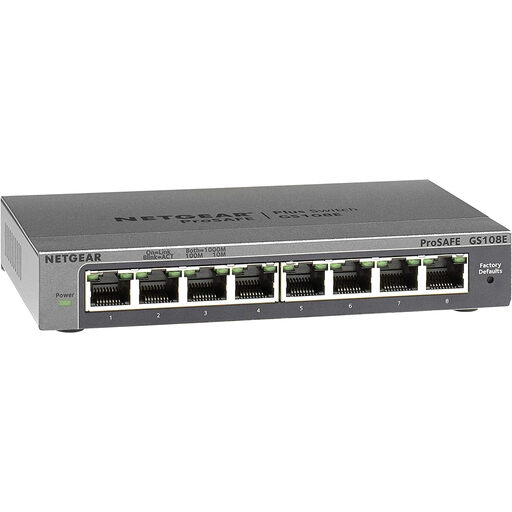
NETGEAR GS108E-400EUS

NETGEAR GS108E-400EUS

Suitable if you want to connect several devices by cable alongside your printer and need management features.

Eight 10/100/1000 Mbps ports; QoS and VLAN support; browser-based management.

View at Joybuy
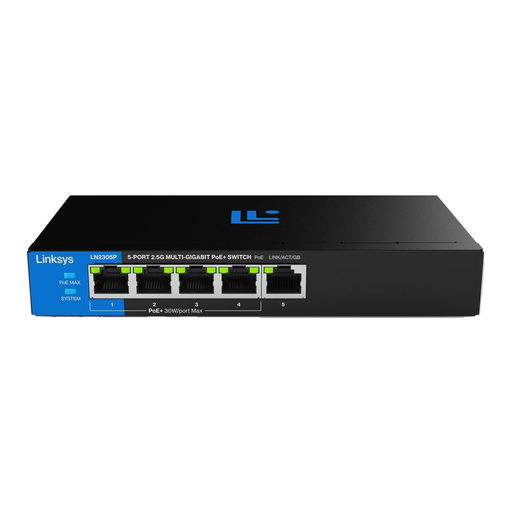
Linksys 5-port unmanaged 2.5 Gigabit PoE switch

Linksys 5-port unmanaged 2.5 Gigabit PoE switch

Suitable for a wired setup with compatible PoE devices alongside your printer.

Five 2.5 Gigabit Ethernet ports; four PoE+ ports; up to 30 W per port and a total budget of 60 W; plug-and-play.

The product description warns against use in wet or very humid environments. A standard network printer won’t receive PoE power automatically.

View at Joybuy
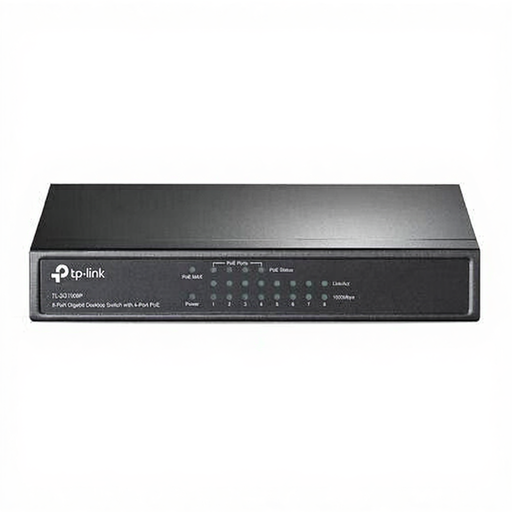
TP-Link TL-SG1008P unmanaged gigabit Ethernet switch

TP-Link TL-SG1008P

Suitable when you want to connect your printer and several other devices by cable, as well as compatible PoE devices.

Eight 10/100/1000 Mbps ports, including four PoE ports; unmanaged; stated switching capacity of 16 Gbit/s.

For PoE, check that the standard and available power meet the needs of each connected device.

View at Joybuy

Frequently asked questions

Can I connect a printer directly to a switch?

Yes, if the printer has a suitable Ethernet port and the switch is connected to your network via a working connection. Connect the printer with an Ethernet cable and follow the setup instructions for the exact printer model. HP Support explains how to connect via a router, switch or hub; a switch doesn’t create a connection to your home network by itself.

What should I check if the printer isn’t detected after connecting it?

Check the cable and the printer’s network settings or IP address. Brother states that network communication requires an IP address; also follow the setup instructions for your printer model.

What costs and rights should I bear in mind after buying?

If necessary, allow for suitable cabling, protection and power supplies. For an online purchase by a consumer in the Netherlands, there is generally a 14-day cooling-off period after delivery, according to ACM ConsuWijzer. Your statutory guarantee applies alongside any manufacturer’s warranty; what you can reasonably expect from the product is also important.

Is CE marking relevant for a switch in the Netherlands?

Yes, the applicable EU rules and CE marking need to be assessed for the specific device. RVO states that requirements depend on the type of product and that several rules may apply. CE marking is not an independent quality mark and doesn’t show that a switch is suitable for outdoor use.
