Who is this choice relevant to?

Access point without its own power socket

Want to power a wired access point using the same cable as the network connection? First, check which PoE method the exact access point supports, as confirmed by the specifications from TP-Link Netherlands and D-Link.

Desk with a separately powered access point

Already have a suitable power supply for your access point and mainly want extra wired connections with little configuration? TP-Link Netherlands states that the TL-SG1005D requires no configuration.

Desk with separate networks

Want features such as VLAN settings or visibility of PoE ports, and are happy to manage the switch? The specifications from TP-Link Netherlands, Zyxel Networks and Ubiquiti describe these features for specific models.

What should you look for when choosing?

What to consider What should you check? Who is this important for?
Powering the access point Check which PoE standard the access point supports and compare the power per port with the total PoE budget. TP-Link lists a maximum of 30 W per PoE port and 65 W in total for the TL-SG105PE. If I want to power my access point via the network cable, the power supply must be suitable for the exact model. Around 31% of consumers put PoE at the top of their buying priorities.
Extra wired ports Count the router connection, access point and any other devices. A standard switch does not supply PoE power itself; also check whether you need gigabit ports. If I already have a separate power supply for my access point and mainly want to connect devices by cable, simplicity matters. Around 31% of consumers prioritise adding simple port capacity.
Room to expand Count all your current connections, including the one to the router, and decide how many spare ports you want. For example, compare five-port and eight-port models. If I want to connect more devices to my desk later, I want to set aside enough ports now. Around 19% of consumers consider room to expand their top priority.
Network management Decide whether you need features such as VLAN settings or visibility of PoE ports. Check that the rest of your network supports the settings you want. If I want to separate networks or manage ports, these features are useful; if I don't, simplicity may matter more. Around 19% of consumers prioritise network management.

Common buying mistakes

  • Adding together the maximum power per PoE port

    The maximum power per port is not the same as the switch's total budget. TP-Link lists a maximum of 30 W per PoE port and 65 W in total for the TP-Link TL-SG105PE.

    Compare the power requirements of each connected PoE device with both the maximum per port and the total budget.

  • Assuming every PoE rating is compatible

    Access points can support different power methods. For example, TP-Link lists both 802.3af and passive PoE for the EAP225-Outdoor; this doesn't automatically apply to other access points.

    Check the power specifications of the exact access point and compare them with the switch output. Don't assume a PoE switch will work with every access point.

  • Counting every switch port as a free device connection

    The connection to the router also uses a port. This means that not every port on a five-port model is available for devices on your desk.

    Count the router connection, access point and all your other wired devices before choosing the number of ports.

Brands worth considering

TP-Link

The models listed range from simple gigabit switches to compact PoE+ switches with management features.

  • According to TP-Link, the TL-SG1005D requires no configuration.
  • According to TP-Link, the TL-SG105PE has four PoE+ ports and a total budget of 65 W.
  • The TL-SG1005D does not power the access point via PoE; for the TL-SG105PE, check that the power requirements of all connected devices stay within the total budget.

D-Link

The DGS-1005P is worth considering if you want to connect a compatible PoE access point without managing the switch.

  • D-Link specifies five gigabit ports, four IEEE 802.3af/at ports and a total budget of 60 W.
  • According to D-Link, this is a plug-and-play model, so it doesn't offer the settings available on a web-managed switch.

NETGEAR

The GS305EP is a five-port model with PoE+ and basic management features.

  • NETGEAR specifies four PoE+ ports and a total budget of 63 W for the GS305EP.
  • The specifications alone don't confirm whether a particular access point is compatible; check its power method and requirements.

Zyxel

The GS1200-5HP v2 is designed for a compact setup with PoE and web management.

  • Zyxel lists five gigabit ports, four PoE+ ports, VLAN features and a 60 W PoE budget for the GS1200-5HP v2.
  • Check the full model name: according to Zyxel, the GS1200-5 without ‘HP v2’ has no PoE ports.

Ubiquiti

The UniFi Lite 8 PoE may be a good fit if you want more ports in a UniFi setup.

  • Ubiquiti specifies eight gigabit ports, four of which support PoE+.
  • According to Ubiquiti, the total PoE budget is 52 W. Also check which version of UniFi Network is required for management.

Joybuy products for a wired access point

This selection includes switches for adding basic port capacity, an access point with suitable PoE power and setups that need more ports. Before using PoE, check the exact power specifications for each model.

TP-Link TL-SG105 5-port metal gigabit switch

TP-Link TL-SG105 5-port metal gigabit switch

A five-port gigabit switch for connecting wired devices on a desk; the product description says it's plug and play.

Five RJ45 ports with 10/100/1000 Mbps. Check the product information before assuming the switch supports your access point's power method.

View at Joybuy
TP-Link 5-port gigabit desktop PoE switch with 4 PoE ports

TP-Link 5-port gigabit desktop PoE switch with 4 PoE ports

Worth considering if your access point can receive PoE from the switch and you need five gigabit ports.

The product information lists four PoE ports. Check the supported standard and available power for your access point.

View at Joybuy
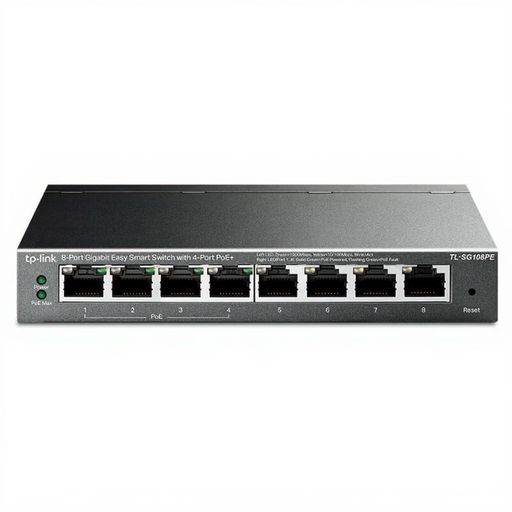
TP-Link 8-port gigabit Easy Smart switch with 4 PoE ports

TP-Link 8-port gigabit Easy Smart switch with 4 PoE ports

An option if you want to connect more wired devices as well as your access point, and need PoE for compatible equipment.

The product information lists eight gigabit ports and four PoE ports. Check the exact PoE specifications for both the switch and the access point.

View at Joybuy
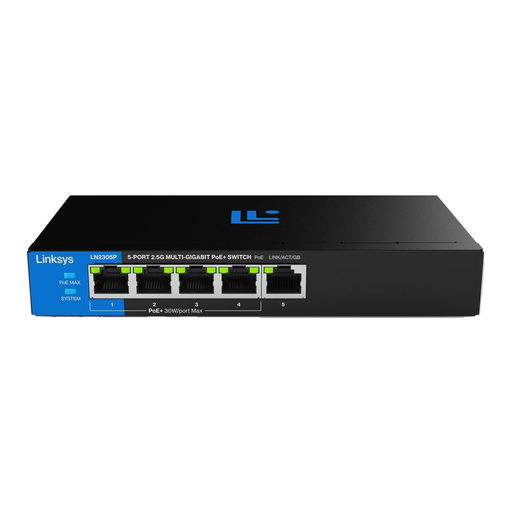
Linksys 5-port 2.5-Gbps unmanaged PoE switch

Linksys 5-port 2.5-Gbps unmanaged PoE switch

Worth considering if you're looking for a five-port PoE switch and the stated port speed suits your network equipment.

The product information lists five 2.5-Gbps ports, four PoE+ ports and a total budget of 60 W. Check that your access point supports the PoE power supplied.

View at Joybuy
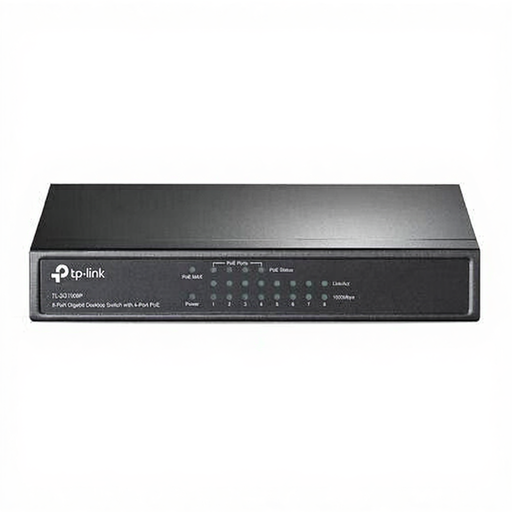
TP-Link TL-SG1008P gigabit PoE switch

TP-Link TL-SG1008P gigabit PoE switch

An eight-port model worth considering if you're connecting several wired devices and need PoE for compatible equipment.

The product information lists eight gigabit ports, four of which support PoE, and a PoE budget of 64 W. Check the power specifications for all connected PoE devices.

View at Joybuy

Frequently asked questions

Can I connect an access point with its own power adapter to a switch without PoE?

Yes, you can use it for the network connection as long as the Ethernet connections are compatible; the access point will use its own suitable power supply. The TP-Link TL-SG1005D has gigabit ports and no specified PoE output.

How do I connect the switch to my desk setup?

Connect the switch using the specified adapter, then connect one port to the router or uplink. Connect the access point to another port; only use PoE if the output matches the access point's power specifications. Remember to include the other devices when checking the available PoE budget.

What can I do if the switch develops a fault early during normal use?

For consumer purchases, you have statutory rights in addition to any manufacturer's warranty. ACM ConsuWijzer explains that if a product breaks during normal use sooner than you could reasonably expect, the seller must put it right free of charge, for example by repairing or replacing it, or refunding you. This is not simply a fixed two-year period.

What cooling-off period applies to an online purchase?

According to ACM ConsuWijzer, you often have up to 14 days from delivery to change your mind about an online purchase. Check which exceptions and returns terms apply to your purchase.

What should I check about product safety in the Netherlands?

The Dutch government states that electronic devices placed on the market in the EU must carry a CE mark. Check the product information and make sure the power supply is suitable, especially if you're buying from an online shop outside the EU.
