If you already have an amplifier or active speakers, choose a separate network streamer with an output that matches an input on your setup and a playback option that supports your brass band recordings. If you have passive speakers without an amplifier, a streaming amplifier is a better fit. To get started without separate hi-fi components, consider an all-in-one Wi-Fi speaker. Only choose extra features such as NAS playback or multi-room audio if you really need them.
Who is a network streamer suitable for?
Owner of an existing stereo system
You want to keep your amplifier or active speakers and add network playback. Compare the streamer's output with an available input on your setup; WiiM, Bluesound and Sonos describe models for connecting to existing equipment.
Listener with their own recordings
You store brass band recordings on a USB drive or NAS and want to play them from that storage. Cambridge Audio lists USB and NAS playback for the MXN10; check that your chosen model and playback option are compatible with your files.
Listener in multiple rooms
You want to add your kitchen-diner to an existing system or group rooms together later. Bluesound and Sonos describe ways to expand within compatible setups, so check that they work with the devices you already use.
What should you look for when choosing?
Separate network streamer
Suitable if: you want to keep using your existing amplifier or active speakers.
Keep in mind: the output must match an input on your setup; a separate streamer does not amplify passive speakers.
Streaming amplifier
Suitable if: you have passive speakers but no compatible amplifier.
Keep in mind: you’ll also need compatible speakers and speaker cables; check that the amplifier is suitable for your speakers.
All-in-one Wi-Fi speaker
Suitable if: you want to play music in your kitchen-diner without putting together a separate streamer, amplifier and speakers.
Keep in mind: check app and playback support; a stable Wi-Fi network is important for wireless listening, according to the Consumers’ Association.
| What to consider |
What should you check? |
Who is this most important for? |
| Connection to your setup |
Compare the streamer's RCA, optical or coaxial output with an available input on your amplifier or active speakers. Passive speakers need an amplifier. |
I want to keep using my current amplifier or active speakers and need a compatible connection. This is the top priority for around 36% of consumers. |
| Music service and controls |
Check that the exact model supports your preferred service and control option, such as AirPlay 2 or a manufacturer's app. |
I want to play brass band music through a service or device I already know, without having to switch how I control it. Around 29% of consumers put control options first. |
| Your own recordings |
Check that the player can access your USB or NAS storage and play the files you want. |
I store my recordings myself and want to play them from USB storage or a NAS. This matters most to around 21% of consumers, who prioritise access to their own music collection. |
| Music in other rooms |
Check that the player can be grouped with your other devices and works within the same supported system. |
I want to connect my kitchen-diner to other rooms while continuing to use my existing devices. Around 14% of consumers consider adding other rooms their top priority. |
Avoiding common buying mistakes
-
Assuming a separate streamer is an amplifier
The separate players mentioned have audio outputs for connecting to a compatible amplifier, DAC or active speakers. You can’t simply connect passive speakers directly to them.
Before choosing a model, check whether you have active speakers, an amplifier and speakers, or passive speakers only.
-
Assuming multi-room features work across different systems
The expansion options described for Bluesound, Sonos and WiiM apply to compatible devices within the relevant setup. A feature in one system doesn’t mean devices from different brands can be grouped together.
Check which devices and control options you want to use in your kitchen-diner and other rooms.
You may need an additional compatible device to group rooms.
-
Taking a high-resolution specification as proof of better brass band sound
A specification for supported audio formats doesn’t, on its own, tell you how brass band recordings will sound through your speakers in your kitchen-diner.
Check the connection, music source and controls first. Don’t draw conclusions about audible differences without comparing them in similar listening conditions.
Brands to compare
WiiM
According to WiiM, the WiiM Pro Plus adds streaming to an existing amplifier or active speakers.
- WiiM lists RCA, optical and coaxial connections, as well as several control options, for the Pro Plus.
- The Pro Plus doesn’t replace an amplifier for passive speakers. The WiiM Amp’s features don’t automatically apply to this model.
Cambridge Audio
Cambridge Audio describes the MXN10 as a streamer that adds streaming or USB and NAS playback to an existing setup.
- The manufacturer lists StreamMagic, AirPlay 2, and RCA, optical and coaxial outputs.
- Check that the playback option and output suit your source and audio setup; these features alone don’t tell you how it will sound in your kitchen-diner.
Bluesound
According to Bluesound, the Bluesound NODE NANO is a separate streamer for an existing audio setup.
- Bluesound lists RCA, optical, coaxial and USB audio outputs, with control via BluOS.
- The listed outputs don’t amplify speakers. Multi-room is relevant if you use or plan to build a compatible Bluesound setup.
Sonos
The Sonos Port is designed to add an existing stereo system or receiver to a Sonos setup.
- Sonos lists app control, AirPlay 2, RCA connections and a coaxial output.
- Passive speakers need an external amplifier. The Port and Sonos Amp have different functions.
Products for music in your kitchen-diner
This product selection features an all-in-one Wi-Fi speaker for wireless listening in your kitchen-diner, rather than a separate streamer for connecting to an existing amplifier.
 No image available
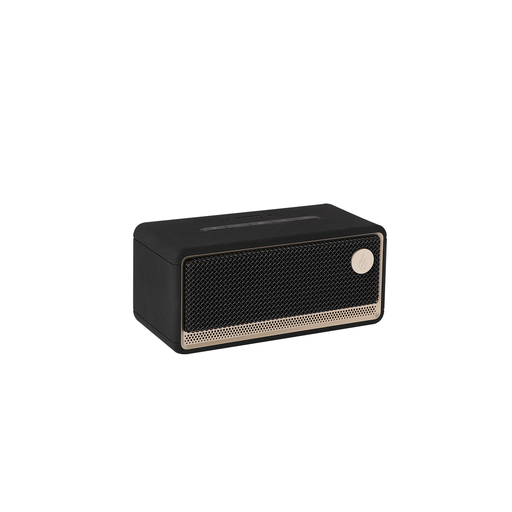
Edifier ES300 Wi-Fi and Bluetooth speaker, 60 W
An all-in-one wireless speaker for playing music in your kitchen-diner without a separate streamer; this model isn’t a network player for connecting to an existing stereo.
Listed features: Wi-Fi, AirPlay 2, Bluetooth, USB and AUX.
View at Joybuy
Frequently asked questions
Can I connect a separate network streamer directly to passive speakers?
Don’t assume you can with the separate players mentioned: their documented line-level and digital outputs are designed for a compatible amplifier, DAC or active speakers. If you only have passive speakers, look for a suitable streaming amplifier.
How can I play brass band recordings stored on a NAS?
Choose a model that supports NAS or network file playback, and check that your storage and files are compatible with that option. Cambridge Audio lists NAS playback for the MXN10; Bluesound describes access to a digital music library for the NODE NANO.
What product regulations apply to a wireless network player?
Radio equipment placed on the EU market is subject to the Radio Equipment Directive and applicable requirements. The Dutch Authority for Digital Infrastructure states that, once compliance has been established, the manufacturer affixes the CE mark; a product listing alone doesn’t show that a specific model meets the requirements.
What can I do if the player doesn’t meet my expectations after purchase?
For a consumer purchase in the Netherlands, the seller must offer an appropriate solution if the product doesn’t meet reasonable expectations. The Dutch government states that there is no fixed statutory two-year guarantee period; normal wear and tear or damage you cause yourself isn’t automatically covered by free repair.
Do I always have a cooling-off period when buying online?
According to the Dutch government, when you buy online as a consumer from a business, you usually have a 14-day cooling-off period, although there are exceptions. Check who the seller is and which terms apply to your specific purchase.


