
Listener with an existing stereo
You want to keep using your amplifier or active speakers and are looking for a player with compatible connections and controls for your music service.


Start with the amplifier or active speakers you want to keep using, then check that the network player’s connections are compatible. Next, consider whether you mainly want to adjust the sound at low volumes or reduce volume differences between tracks. EQ and track normalisation are different features, and they aren’t available for every playback source.
You want to keep using your amplifier or active speakers and are looking for a player with compatible connections and controls for your music service.
You listen at low volumes and want to work out whether you’d prefer to adjust the sound or reduce volume differences between tracks. The right setting depends on the player and playback source.
You have passive speakers but no suitable amplifier. You’re therefore comparing a network receiver with a separate streamer paired with an amplifier.
First, check your speakers and connections. Then compare the controls and features available for your music service.
| What to consider | What to look for | Who should consider it? |
|---|---|---|
| Sound and controls at low volumes | Check whether the exact model offers EQ and where you’ll adjust the volume day to day: on the player or the amplifier. | If you listen quietly, you’ll want to adjust the sound at your usual listening level. Around 29% of consumers prioritise comfortable listening and ease of use. |
| Compatibility with your equipment | Note whether your speakers are active or passive, then compare the devices’ inputs and outputs. | If you want to keep your existing amplifier or speakers, compatible connections are essential. Around 29% of consumers put compatibility with their own equipment first. |
| Playlists and music services | Check that your service and playback method are supported. Also find out whether any volume adjustment feature works with that source. | If you mainly want to start your own playlists easily, the player needs to work with your app and usual way of listening. This is the top priority for around 21% of consumers. |
| Equipment you’ll need | Compare what you can already use with anything else you’ll need, such as an amplifier for passive speakers. | If you only want to add streaming and keep your current setup, having a complete, compatible system matters more than extra features you won’t use. Around 21% of consumers focus first on the equipment they need to buy overall. |
EQ changes the sound. According to Bluesound, ReplayGain uses metadata to better match the level of a track or album to other music. The two features therefore serve different purposes.
Decide whether you want to adjust the sound or reduce volume differences between tracks. Then check that the feature you want is available for your model and playback source.
WiiM confirms that the Ultra isn’t an AirPlay receiver. Bluesound lists AirPlay 2 for the NODE, so support varies by model.
Before buying, check that the exact player supports your preferred playback method.
A separate streamer sends audio to compatible equipment, but it doesn’t automatically replace an amplifier for passive speakers.
First, map out the route from your music service to your speakers. If you also need amplification, compare a network receiver.
The WiiM Ultra is a separate network player for use with an existing amplifier or active speakers.
The NODE is a separate streamer for use with an existing stereo or active speakers.
The compact MXN10 is designed for streaming through a hi-fi or desktop system and is controlled with StreamMagic.
The Sonos Port adds Sonos streaming to existing audio equipment.
The R-N600A is a network receiver for anyone who needs amplification for passive speakers as well as network playback.
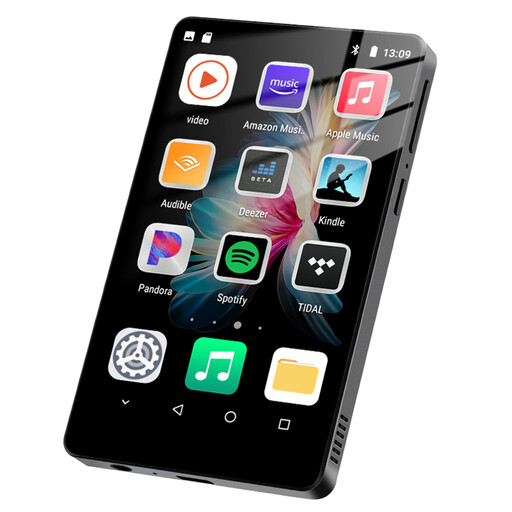
This product selection features a Wi-Fi MP3 player for anyone looking for a Wi-Fi source with apps. Check that its connections and music service are compatible with your stereo.
 No image available
An option if you’re looking for an MP3 player with Wi-Fi. First, check that the music service and connection you want are suitable for your setup.
The product has a 4-inch touchscreen and Android 11.
Listed specifications include 2 GB RAM and 16 GB storage, expandable to 256 GB. FM radio and a speaker are also listed.
No. Sound adjustment and volume levelling are different features. WiiM describes EQ as a sound adjustment, while Bluesound describes ReplayGain as using track or album metadata. Check which setting your model offers for your chosen playback source.
Don’t assume that a separate streamer can drive passive speakers: the separate players described here send audio to an amplifier or active speakers. If you have passive speakers but no amplifier, also compare a network receiver such as the Yamaha R-N600A.
For the WiiM setup described here, WiiM recommends updating the Spotify app and device firmware, and connecting your phone and player to the same network. If you use another brand, follow the setup instructions for that model.