Start by considering where your speakers are positioned and which connections your existing system has: a network player won’t automatically eliminate reflections from the wall. EQ or room correction can help you fine-tune the sound, but it won’t replace suitable placement. Also choose a player that works with your jazz source, such as a music service, NAS or local files.
Who is this buying guide for?
Listener with speakers close to the wall
You can only make limited changes to your setup and want to find out what better placement could achieve before considering EQ or room correction. Genelec notes that calibration won’t solve every acoustic problem; WiiM describes RoomFit as a feature for fine-tuning the sound.
Owner of an existing stereo system
You want to play jazz without replacing your amplifier or active speakers. The connections on your chosen player need to work with your equipment; Cambridge Audio and WiiM describe models with outputs for connecting to existing systems.
Listener with a personal jazz collection
Your albums might be stored on USB or a NAS, and you want to know how a player finds and plays them. Cambridge Audio describes USB and NAS playback for the MXN10; the Eversolo manual for the DMP-A6 Gen 2 covers local files and UPnP, among other things.
What should you look for when choosing?
First assess the placement and connections of your existing system, then compare the fine-tuning options and music sources supported by the exact player you’re considering. Genelec emphasises that calibration won’t solve every acoustic problem.
| What to consider |
What should you look for? |
Who will find this most important? |
| Sound with speakers near the wall |
Follow your speakers’ placement guidance and check whether the exact player offers EQ or room correction. |
If I can’t move the speakers further from the wall, I want to know what better placement could still achieve. Around 33% of consumers prioritise this placement question. |
| Connecting to your system |
Compare the player’s outputs with the inputs on your amplifier or active speakers; passive speakers need a suitable amplifier. |
I want to keep using my existing system and find a connection that works with it. Around 27% of consumers give system connectivity top priority. |
| Your own jazz albums |
Check that the player supports your storage location, file formats and preferred way of browsing. |
If my albums are on USB or a NAS, I want to play my collection the way I choose. Around 20% of consumers prioritise access to their own album files. |
| Service and controls |
Check that your music service and preferred control method are supported by the exact player and in your region. |
I want to listen to jazz through my usual music service and control the player easily. Around 20% of consumers prioritise service support and ease of use. |
Common buying mistakes
-
Buying a streamer as if it will automatically eliminate reflections from the wall
Speaker placement and the room both affect the sound. Genelec notes that calibration can’t resolve every acoustic problem.
Start by following the guidance for your speakers and listening position. Only then compare the player’s sound-adjustment options.
-
Overlooking the extra equipment needed for room correction
Dirac Live Ready doesn’t mean that everything needed for calibration is included with the player.
Check that the exact Bluesound NODE version is compatible, and allow for the separate licence and calibration kit mentioned by Bluesound.
-
Confusing a standalone streamer with an amplifier
The network players described here are designed to connect to an amplifier or active speakers. A player’s output won’t provide the amplification that passive speakers need.
Before buying, check the inputs on your amplifier or active speakers. If you have passive speakers, make sure you already have a suitable amplifier.
Brands to consider as a guide
WiiM
WiiM describes the Ultra as a standalone streamer with RoomFit, EQ, and analogue and digital connections. The Pro Plus is a more compact model that, according to WiiM, can connect to an amplifier or active speakers.
- Worth considering if you’re looking for sound-adjustment options for a setup that’s difficult to change.
- WiiM says the Ultra doesn’t support AirPlay 2, while the Pro Plus does. These features aren’t proof of a measured improvement in your room.
Bluesound
Bluesound describes the NODE as a BluOS streamer for a stereo system, with analogue and digital connections and Dirac Live available as an add-on.
- Worth considering if you’re looking for BluOS or measurement-based sound adjustment.
- Bluesound says Dirac Live requires a separate licence and calibration kit on compatible players. Check the exact NODE version.
Cambridge Audio
Cambridge Audio describes the MXN10 as a compact StreamMagic network player with USB and NAS playback, plus RCA, coaxial and optical outputs.
- Worth considering if your own albums and connections to your existing equipment are top priorities.
- Source and connection features don’t prove that reflections from a wall will be resolved. Check the sound-adjustment options for the version and firmware you’re considering.
Eversolo
Eversolo’s DMP-A6 Gen 2 manual covers music services, local files, UPnP, several outputs and an M.2 storage option.
- Worth considering if you manage an extensive digital album collection.
- The features listed apply to the Gen 2; don’t confuse it with the original DMP-A6 or the Master Edition. A DAC specification alone isn’t proof of an audible benefit.
Joybuy product picks
Joybuy product picks related to listening to jazz over Wi-Fi and using a wireless or analogue audio connection.
 No image available
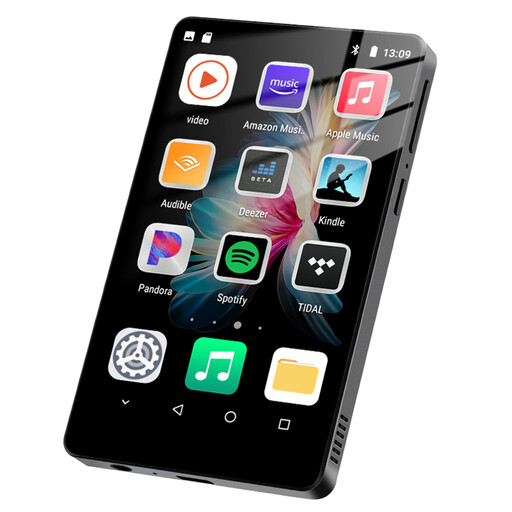
MP3 player with Wi-Fi and Bluetooth 5.0, Android 11, 16 GB
This player is designed for listening through Wi-Fi apps and outputting audio via Bluetooth or a 3.5mm connection. It’s an MP3 player, not a standalone network player designed for room correction.
Listed specifications: Android 11, 2 GB RAM, 16 GB storage, expandable to 256 GB, Bluetooth 5.0 and a 4-inch touchscreen.
The product description mentions Wi-Fi access to music apps and streaming services, Bluetooth audio output and a 3.5mm headphone socket. Check that these connections work with your speakers or amplifier.
View at Joybuy
Frequently asked questions
Can you connect passive speakers directly to a standalone network player?
No, not using only a player output: the standalone players described here are designed to connect to an amplifier or active speakers. Check whether your system already has a suitable amplifier for passive speakers.
Should you move your speakers before using room correction?
First assess their placement and follow the guidance for your speakers. Genelec explains that reflections from the wall behind a speaker can change bass response, and that calibration won’t solve every acoustic problem. A recommended distance for studio monitors isn’t a universal measurement for all living-room speakers.
What extra equipment might you need for Dirac Live on a Bluesound player?
For Dirac Live on a compatible player, Bluesound lists a separate licence and calibration kit. Check that the exact version is compatible and factor in both requirements when making your choice.
What are your rights when buying online in the Netherlands?
According to ACM ConsuWijzer, when you buy a standard product online, you generally have 14 days from delivery to change your mind, subject to statutory exceptions. Your statutory guarantee is separate from any manufacturer’s or seller’s guarantee: a product must meet what you could reasonably expect from it.
What product requirement applies to a wireless network player sold in the Netherlands?
The Dutch Authority for Digital Infrastructure says that manufacturers, importers and sellers of radio equipment must comply with the applicable European requirements; when a product complies, the manufacturer applies a CE marking. Check the information for the specific version, as general brand details don’t prove that a particular offer meets the requirements.


