Who is this choice relevant to?

Owner of an existing stereo system

You want to stream choir recordings to your current amplifier or active speakers without replacing your entire set-up. The available input determines which output on the player you can use; WiiM, Sonos and Bluesound describe different connection options for their models.

Listener of full choir albums

You want to play tracks back to back and control playback easily from your desk. Check gapless support and how you control the exact model; WiiM specifically lists gapless playback for the Pro.

Manager of your own recordings

You store recordings on a NAS or USB device, or listen through headphones at your desk. These needs call for different features: Cambridge Audio lists USB and NAS playback for the MXN10, while Bluesound specifies a headphone output for the NODE.

What should you look for when buying?

Buying consideration What should you check? Who is this important for?
Connecting to your existing audio equipment Check whether your speakers are active or passive, and whether the player and amplifier have suitable RCA, optical or coaxial connections. I want to keep using my existing active speakers or amplifier and make sure the connections are compatible first. Around 31% of consumers prioritise compatibility with existing audio equipment.
Continuous album playback and control Check gapless support for your playback source, compatibility with your music service and the controls you want to use while working. When I play choir albums with consecutive movements, I want to avoid unwanted pauses and control playback from my desk. Around 31% of consumers prioritise continuous album playback and control.
Access to your own choir recordings For the exact model, check which storage sources and file formats it supports, and how the app finds your library. I want to play my own choir recordings from a NAS or USB device, so I check which storage options are supported. Around 23% of consumers prioritise access to their own recording library.
Listening through headphones Check whether the exact model has a headphone output, which type of connection it uses and where you control the volume. If I want to listen through headphones directly at my desk, I need a dedicated output. Around 15% of consumers prioritise using headphones at their desk.

Common buying pitfalls

  • Mistaking a standalone streamer for an amplifier

    A standalone network player such as the WiiM Pro or Sonos Port cannot drive passive speakers on its own. You’ll need a suitable amplifier; a streaming amplifier is a different type of product.

    Before buying, map out the complete connection from the player to your speakers and check whether your set-up already includes an amplifier.

  • Taking a high resolution figure as proof of better sound

    A stated resolution alone doesn’t tell you how choir recordings will sound in your set-up. WiiM describes conditions for bit-perfect output; this is not a listening comparison.

    Check your source and connections, and see whether the features suit the way you play albums. Don’t draw conclusions about sound from a single specification.

  • Using a ranking description as a technical specification

    The original Bestenu ranking does not independently confirm connections or model features. The product description for the WTX-MicroStream differs in some respects from the information on Advance Paris’s manufacturer page.

    Use a ranking as a source reference at most, and check the connections and model details for the exact version with the manufacturer.

Brands to consider

WiiM

The WiiM Pro is a standalone streamer for an existing amplifier or active speakers. The Amp Pro is an alternative for passive speakers when you need amplification.

  • WiiM lists gapless playback and analogue and digital outputs for the Pro.
  • The Pro is not an amplifier. Check the connections on your existing equipment; specifications do not prove an audible benefit with choir recordings.

Cambridge Audio

The MXN10 is designed for a compact desktop or existing hi-fi set-up, with control via StreamMagic and playback of USB and NAS files, according to Cambridge Audio.

  • Cambridge Audio lists RCA, coaxial and optical outputs, as well as support for streaming services.
  • Check that the connections and file formats suit your equipment and library.

Bluesound

The NODE is worth considering if, alongside streaming, you’re looking for a headphone output, digital connections or BluOS control of a personal library.

  • Bluesound lists a 1/4-inch headphone output, multiple audio outputs and five presets for the NODE.
  • Check the current features of the version on offer; a stated future Bluetooth feature does not mean it is already available.

Sonos

According to Sonos, the Port can add streaming to an existing stereo or receiver. It may be a good fit if you already have a Sonos system at home.

  • Sonos lists AirPlay 2, an analogue input and multi-room use.
  • The Port does not power passive speakers; Sonos recommends using an external amplifier for those.

Denon

The DNP-2000NE is worth considering if you want to use HEOS and an HDMI ARC connection for a compatible TV, as well as stream music.

  • Denon lists HEOS, AirPlay 2 and USB DAC input as features of this model.
  • HDMI ARC and USB DAC are only relevant if you’ll actually connect those sources. Manufacturer sound claims are not an independent listening comparison.

Joybuy products

Joybuy product options related to networked music playback at a desk.
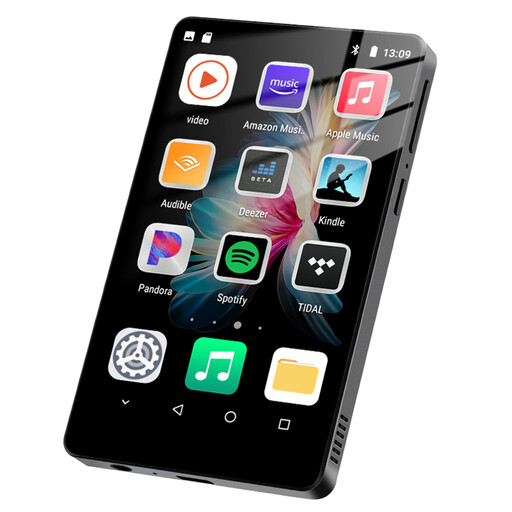
MP3 player with Wi-Fi and Bluetooth 5.0

MP3 player with Wi-Fi and Bluetooth 5.0

If you’re looking for an MP3 player with Wi-Fi and Bluetooth for your desk, check that the music app and playback method you want to use are compatible with this version.

The product name lists a 4-inch touchscreen, Android 11, 2 GB RAM, 16 GB storage, expandable storage up to 256 GB, FM radio and a speaker.

Joybuy

Frequently asked questions

Can I connect a standalone network player directly to passive speakers?

Not through the line or digital outputs on a player such as the WiiM Pro or Sonos Port. Use a suitable amplifier, or choose a streaming amplifier designed for passive speakers if you don’t already have an amplifier.

How do I connect a player to my existing equipment?

First check which inputs your amplifier or active speakers have, then choose a suitable output on the exact player model. WiiM lists RCA, optical and coaxial outputs for the Pro; don’t connect a digital output to an analogue line input.

What should I check if my own choir recordings don’t appear?

First check that the model and its app support your storage method and files. Cambridge Audio lists USB and NAS playback for the MXN10; also check that your own files and network configuration work with the version you’ve chosen.

What are my rights when I buy a network player online in the Netherlands?

For a standard online purchase by a consumer, ACM ConsuWijzer says you’ll generally have a statutory cooling-off period of up to 14 days after delivery; exceptions may apply. Your statutory guarantee is separate from a manufacturer’s warranty: if a product does not perform as you could reasonably expect under normal use, contact the seller.

Must a wireless network player sold in the Netherlands have a CE mark?

RVO lists electrical and electronic equipment, including radio equipment, among the product groups that must carry a CE mark; the applicable requirements depend on the device. Check the mark and product information for the version on offer. RVO published this product group information on 24 November 2025.
