
Listener with their own blues files
You want to find and play albums from a NAS, computer or USB source. The sharing method you use can help determine which player is right for your collection.


First, choose a player that can access your music collection and connect to an available input on your existing audio equipment. The sharing methods described for a NAS vary by brand: WiiM mentions DLNA, Bluesound uses SMB, and Sonos offers a shared music library with a specific SMB requirement for the NAS configuration described. A screen or headphone output is most useful if you’ll actually use those features at your desk.
You want to find and play albums from a NAS, computer or USB source. The sharing method you use can help determine which player is right for your collection.
You want to keep using the amplifier or active speakers in your home office and are looking for a player with a suitable output.
You want to control your music easily while working or listen through headphones. A screen and headphone socket are features that vary by model.
First, work out where your blues files are stored and which inputs your amplifier or active speakers have. Then consider whether app control, a screen or a headphone output would make a difference in your home office.
| What to consider | What should you check? | Who is this important for? |
|---|---|---|
| Access to your blues collection | Check whether your files are available via DLNA, SMB or USB, and whether the specific player supports that method. WiiM describes DLNA, Bluesound uses a configured SMB share, and Sonos offers a shared music library; the Sonos NAS configuration described requires SMBv2 or SMBv3. | If I want to play albums from my NAS, computer or USB source, the player needs to work with my storage method. Around 36% of consumers say access to their own collection is their top priority. |
| Connecting to your system | Compare the available inputs with the outputs on the specific model. Also check whether your speakers are active or need a separate amplifier. | If I want to keep my existing amplifier or active speakers, the audio connection needs to be right. Around 29% of consumers put this connection first. |
| Control while you work | Check which app and music services you use, and whether you need AirPlay 2. According to WiiM, the Ultra does not support AirPlay 2. | If I want to choose or pause an album quickly from my desk, the control method matters. Around 21% of consumers prioritise ease of control during the working day. |
| Listening with headphones | Check whether the specific model has a headphone output and whether the plug size is right. Bluesound describes a 1/4-inch output for the NODE; this feature is not automatically available on every generation. | If I want to listen directly through wired headphones at my desk, a headphone output on the player is important. Around 14% of consumers make personal listening their main consideration. |
Local music libraries don’t always use the same network method. So having a NAS on your network isn’t enough, by itself, to tell you whether a player can access your files.
Make a note of how your collection is currently shared and compare this with the manual for the specific model. Sonos specifies SMBv2 or SMBv3 for the NAS configuration described.
Setting up a DLNA server or SMB share may take extra configuration time.
The WiiM Pro Plus and Sonos Port described here connect to an amplifier or active speakers. Their stated outputs don’t replace an amplifier for passive speakers.
Map out the full chain from player to speaker and check whether your system already has an amplifier.
If you only have passive speakers, you’ll also need a separate amplifier.
A feature mentioned for one model doesn’t automatically apply to another model from the same brand. For example, WiiM states that the Ultra doesn’t support AirPlay 2.
Check the full model name and the control features you want on the model you’re considering.
The Pro Plus is an option for connecting to an existing system; the Ultra is designed for those who also want screen controls or access to a USB or network music collection.
The NODE is worth considering if you want to use a BluOS library with an existing stereo system or would also like a headphone output.
The Port lets you use an existing amplified system as part of a Sonos setup.
The CXN100 is an option for an existing hi-fi system if you want screen controls and a choice of streaming methods.
The DNP-2000NE is a separate player to compare for an existing system if you also want to play files from a computer, NAS or USB device.
This selection includes a Wi-Fi-compatible MP3 player for music streaming. It’s a portable music player, not a model described as a network player for an existing hi-fi system.
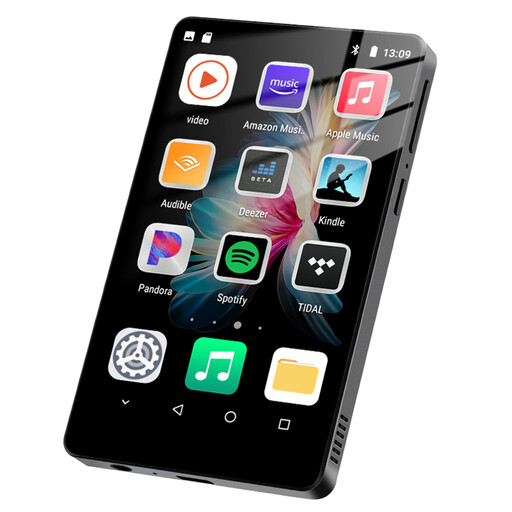 Image unavailable
A portable option if you want to listen to music via Wi-Fi or headphones at your desk. The product information describes this model as an MP3 player, not as a network player for an existing stereo system.
The product name lists Android 11, 2 GB RAM, 16 GB storage, expandable up to 256 GB, FM radio and a built-in speaker. The product description also mentions a 3.5mm headphone socket.
First, check how your files are shared. WiiM describes a DLNA media server on the same network, Bluesound uses a configured SMB share, and Sonos offers a shared library; the Sonos NAS configuration described requires SMBv2 or SMBv3.
Not via the line or digital outputs described here. The WiiM Pro Plus connects to an amplifier, receiver or active speakers; the Sonos Port connects to an amplified audio component. Passive speakers also need an amplifier.
Check that the shared source is accessible and, if needed, update the library index. Sonos explains that changes to the library only appear in the app after the index has been updated.