If you already have an amplifier or active speakers, choose a separate streamer with an output that matches an available input on your system. Passive speakers also need amplification; if you don’t already have an audio system, a network speaker may be a better option. Check that your music service, multi-room requirements and available space are all compatible with the exact model.
Who is a network audio player right for?
Listener with an existing stereo system
You want to play background music through the amplifier or active speakers you already own. WiiM and Sonos describe separate streamers that connect to existing audio equipment; check that the output matches an available input.
Cook who wants to start a playlist quickly
You want to control your music service with ease. WiiM lists Spotify Connect for the Mini; check that your preferred service and playback method are supported by the exact model.
Listener with several rooms
You may want to group your kitchen-diner with another room. WiiM and Denon describe multi-room control within their systems; check which devices work together.
What should you look for?
Separate streamer with existing audio equipment
A good fit if: you already have active speakers or an amplifier with speakers.
Bear in mind: a separate streamer does not amplify passive speakers; connections vary by model.
Streaming amplifier with passive speakers
A good fit if: you want to use passive speakers and don’t have a suitable amplifier. WiiM describes the Amp and Amp Pro as streaming amplifiers for passive speakers.
Bear in mind: check speaker compatibility and the casting features you need for each version. According to WiiM, the Amp supports AirPlay 2, but the Amp Pro does not.
Network speaker without a separate player
A good fit if: you don’t yet have an audio system and want to place a speaker somewhere suitable.
Bear in mind: this is not a separate streamer for your existing stereo. Sonos says that the Era 100 requires separately sold adapters for Ethernet and line-in.
| What to consider |
What should you check? |
Who is this important to? |
| Connecting to your audio system |
Compare the streamer’s outputs with the inputs on your system. Also check whether passive speakers need an amplifier. |
If I want to keep using my existing amplifier or speakers, I need to know that they’ll connect properly. Around 36% of consumers give this connection top priority. |
| Music service and control |
Check that the exact model supports your music service, app or preferred casting method. |
If I want to quickly start and control my own playlist while cooking, the available playback method matters a lot. Around 29% of consumers prioritise easy control. |
| Grouping with another room |
Check which devices can play together within your chosen system and how to group the rooms. |
If I want to hear the same music in a second room, I need to know in advance whether my devices will work together. Around 21% of consumers give multi-room use top priority. |
| Space and setup |
Allow room for the player, speakers, cables and power. Follow the placement instructions and avoid areas where spills or heat could pose a risk. |
If I have limited workspace in my kitchen, I need to know how much room the complete setup will take. Around 14% of consumers start with the space available. |
Common buying mistakes
-
Mistaking a separate streamer for an amplifier
WiiM describes the Pro as a streamer, not an amplifier. A model with only line-level or digital outputs won’t provide the amplification passive speakers need.
Before choosing, work out whether you have active speakers, an amplifier or passive speakers only.
-
Assuming all models have the same connections and features
Connections and casting features vary between models and versions. For example, Sonos lists RCA and digital coaxial outputs for the Port, while WiiM also lists optical outputs for the Pro.
Compare the full model name, the inputs on your system and your preferred playback method before ordering.
-
Overlooking a required Era 100 adapter
According to the Sonos guide, separately sold adapters are required for Ethernet and line-in on the Era 100.
If you want to use a wired connection or line-in, check which type of adapter you’ll need.
Brands to compare
WiiM
WiiM describes the Mini and Pro as separate streamers for an existing system; the Amp and Amp Pro are designed for passive speakers.
- The manufacturer lists several playback methods for the Mini and a range of connections for the Pro.
- A separate streamer is not the same as an amplifier. According to WiiM, the Amp supports AirPlay 2, but the Amp Pro does not.
Sonos
Sonos Port adds streaming to an amplifier or receiver. Era 100 is a network speaker, rather than a separate player.
- Sonos lists RCA and digital coaxial outputs for the Port.
- The Era 100 requires separately sold adapters for Ethernet and line-in.
Cambridge Audio
Cambridge Audio describes the MXN10 as a compact, separate network player for an existing hi-fi system.
- The manufacturer lists control via StreamMagic, playback from USB or NAS, and RCA, optical and coaxial outputs.
- The MXN10 is not a speaker that plays audio on its own; you’ll still need a suitable system.
Bluesound
Bluesound describes NODE as a separate streamer that connects to an amplifier or active speakers.
- Bluesound lists BluOS, AirPlay 2 and a range of analogue and digital connections.
- Treat the manufacturer’s sound quality claims as claims, not as an independent comparison for your kitchen-diner.
Denon
Denon HEOS is worth considering if you already have HEOS devices or want to group rooms within that system.
- Denon describes controlling and grouping rooms via the HEOS app.
- The HEOS Link HS2 is listed in the product archive on Denon’s Dutch website; don’t treat this model as a confirmed current purchase option.
Joybuy products for network streaming
The Joybuy products below are a Wi-Fi MP3 player and a Wi-Fi speaker. Check that each model supports your preferred music service and control method, and works with your audio system.
 No image available
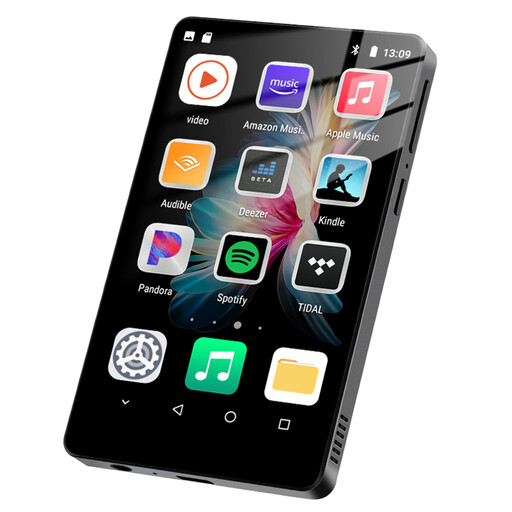
Wi-Fi MP3 player, Bluetooth 5.0, 4-inch touchscreen, Android 11, 2 GB RAM and 16 GB storage
This could be a good fit if you’re looking for a Wi-Fi MP3 player with on-device controls. Check in advance that the app and playback method you want are supported by the exact model.
The product name lists a 4-inch touchscreen, Android 11, 2 GB RAM and 16 GB of storage, expandable to 256 GB. It also mentions FM radio and a speaker.
Joybuy
 No image available
Edifier ES300 Wi-Fi and Bluetooth speaker, 60 W, AirPlay 2
This could be a good fit if you’re looking for a network speaker rather than a separate streamer. Check that its controls and connections suit the setup you have in mind.
The product name lists Wi-Fi, Bluetooth, AirPlay 2, USB and AUX. It also mentions a battery with a stated 12-hour operating time and app control. If multi-room use matters to you, check that it can be grouped with your other devices.
Joybuy
Frequently asked questions
Can a separate network player connect directly to passive speakers?
Not if the model you choose has only line-level or digital outputs. Connect those speakers through a suitable amplifier, or compare streaming amplifiers designed for passive speakers.
What should I check when placing it in a kitchen-diner?
Check the audio inputs, network connection and space for the power supply and cables. Follow the installation instructions for the exact model, too; Sonos warns that stacking several Port units can lead to insufficient ventilation.
Do I need any extra parts for a wired connection?
That depends on the model and connection. Sonos lists separately sold adapters for Ethernet and line-in on the Era 100; passive speakers may also need a suitable amplifier.
Do I have a cooling-off period when I buy online?
ACM ConsuWijzer says that online purchases from a business usually come with a statutory 14-day cooling-off period from delivery. Check the terms and any exceptions that apply to your order.
What does a CE mark mean for a wireless player?
Radio equipment is covered by an EU framework for placing products on the market; the Government of the Netherlands says that electronic devices in the EU must carry a CE mark. A CE mark alone does not mean that a device is suitable for a place where it could be splashed with water.


