
Map and legend comparer
You want to keep the neighbourhood map, legend and source information visible at the same time, so usable window space is your first priority.


If you want to keep a neighbourhood map, legend and notes open side by side, a 34-inch ultrawide is a sensible choice if your desk can accommodate a screen around 81 cm wide. For a narrower desk, you could choose a 27-inch 4K monitor for fine detail or a 27-inch QHD monitor for a more compact setup with fewer panels visible at once. Whichever option you choose, check the available desk space and laptop connections, and make sure text remains comfortable to read at your preferred display scale.
You want to keep the neighbourhood map, legend and source information visible at the same time, so usable window space is your first priority.
You look at small place names, boundaries or annotations and want to be able to adjust the balance between resolution and readable text.
You need to be able to fit a screen on your desk and adjust it for comfortable, extended use, without relying on a second display.
First decide whether you mainly want to view the map, legend and notes side by side, or examine small labels on a more compact screen. Then measure your workspace and check that the connection and any power requirements are suitable for your laptop.
| Consideration | What to look for | Who is it most relevant to? |
|---|---|---|
| Viewing the map, legend and notes at once | Compare horizontal resolution, aspect ratio and screen width with your window layout and desk. | If you want to keep the map and supporting information side by side while studying a heatmap, available window space is a major factor. Around 36% of consumers put this first. |
| Reading small labels and map details | Compare the resolution and check a representative map and text at the scale you plan to use. | If you want to assess place names, boundaries and annotations clearly, check that text remains readable at your chosen scale. Around 29% of consumers prioritise fine map details. |
| Positioning and adjusting the screen | Measure the available desk space and check the adjustment options on the exact model. | If you have limited workspace, the monitor needs to fit and be adjustable to suit your setup. Around 21% of consumers mainly choose based on fit and adjustability. |
| Connecting a laptop | Check that video works through your laptop port and compare the required charging power with the monitor’s power delivery. | If you want video and possibly power through a single cable, first check that your laptop port supports video and is compatible with the monitor. Around 14% of consumers prioritise the laptop connection. |
A USB-C port does not automatically support video. A monitor’s stated charging power may not be suitable for every laptop either.
Check your laptop documentation, supported video connection, monitor port and required charging power.
Depending on the connections available, you may also need a different cable or power solution.
4K on a 27-inch screen means more pixels, not a larger physical display. Your chosen display scale also affects how readable text is and how many windows fit comfortably side by side.
Check a representative map, legend and text at the scale you actually plan to use.
LG lists the 34WR55QC-B as 809 mm wide with its stand. This measurement could determine whether it will fit in your available space.
Measure the clear width of your desk and also check the stand depth and adjustment options for the exact model.
ACM ConsuWijzer distinguishes between your statutory rights and any manufacturer’s or seller’s warranty that may be offered.
Read the terms of any additional cover separately and check what your statutory rights against the seller include.
An additional warranty may cost extra, so consider what cover you actually need.
The Dell Pro Plus P2725D and P2725QE illustrate a 27-inch QHD option and a 27-inch 4K USB-C hub option.
The LG 34WR55QC-B is an ultrawide example for anyone who wants to view a map and supporting panels side by side.
The Philips 27E1N1600AE/00 is an example of a 27-inch QHD monitor with USB-C.
These product choices cover the QHD, 27-inch 4K and ultrawide options for studying neighbourhood maps on a single screen.
 No image available
A 27-inch QHD option for a map with a smaller legend or text section on a more compact screen.
27 inches, 2560 × 1440 pixels, IPS and 16:9.
 No image available
A 27-inch 4K option when fine map details matter and you can read text comfortably at a suitable scale.
27 inches and 3840 × 2160 pixels.
USB-C with DP Alt Mode and 98 W Power Delivery.
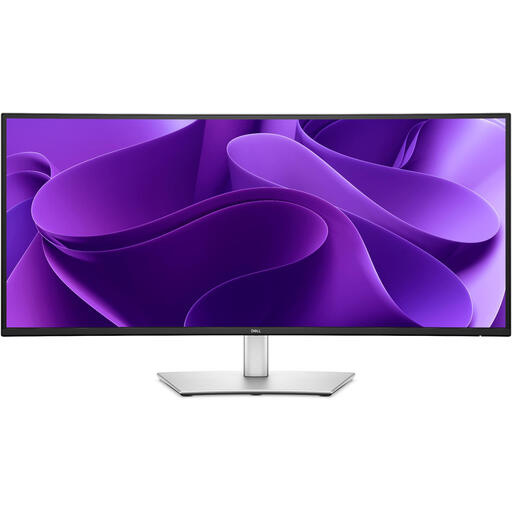 No image available
An ultrawide option for anyone who wants to keep the map, legend and notes side by side and has enough desk width.
34.1 inches, 21:9 and 3440 × 1440 pixels.
The stated product width is 81,60 cm; check that it will fit on your desk.
USB-C with 90 W Power Delivery and a built-in RJ45 port.
 No image available
A 27-inch 4K option for map details on a narrower screen, if the text scale is comfortable for you to read.
27 inches and 3840 × 2160 pixels.
Height-adjustable stand and USB-C with 65 W Power Delivery.
 No image available
A 27-inch 4K option for anyone who wants to view small labels and fine map details without an ultrawide setup.
27 inches and 3840 × 2160 pixels.
120 Hz; connections include HDMI, DisplayPort and Thunderbolt.
Use the legend and the selected colour classes to understand what the colours mean. The QGIS documentation explains how to display a heatmap with a colour gradient; the monitor’s resolution itself does not explain what a colour represents in the source data.
No. The laptop port must support video, for example through DisplayPort Alt Mode or a suitable Thunderbolt connection. Also compare the monitor’s stated charging power with your laptop’s requirements; a USB-C port that supports data or power only is not sufficient for USB-C video.
Adjust the height and contrast to suit you, and minimise distracting reflections. Arboportaal describes these as workplace requirements for employees; those employment rules do not automatically apply as legal obligations to someone studying in their own time.
Compare the energy label or EPREL listing for the exact model. The European Commission confirms that computer monitors fall under the energy labelling rules for electronic displays, with a scale from A to G.
For a standard online consumer purchase, you generally have a statutory cooling-off period of up to 14 days after delivery, according to ACM ConsuWijzer. Your statutory rights are separate from any manufacturer’s warranty: if a product is faulty, the seller is responsible for providing an appropriate remedy free of charge under the applicable terms.